Back when Lyndon Johnson was commander‑in‑chief and the Vietnam War was escalating, Mr. Henry’s Victorian Pub in Downtown D.C. provided a rare safe haven for residents of all backgrounds to find fellowship, live jazz music and a great burger.
Now as Mr. Henry’s prepares to celebrate its 60th anniversary, the pub is reflecting on its place in D.C. history.
“It’s a place where families feel comfortable. The gay community has always felt comfortable. The Black community has always felt comfortable,” Mr. Henry’s owner Mary Quillian said. “And that is kind of a unique identity, really.”
Quillian credits the pub’s vibe to Henry Yaffe, who opened Mr. Henry’s in 1966. Quillian’s father Larry took over five years later.
“My dad won Mr. Henry’s in a poker game in 1971,” Quillian said with a smile. “He always told me that he got Mr. Henry and me in the same month.”
With a new business and a young daughter, Larry gave up poker. His family has spent the last 55 years on the corner of Pennsylvania Avenue and 6th Street SE running the pub with the same mantra as Yaffee: All are welcome.
Not only is the clientele diverse; so was the staff — which is why the restaurant was spared during the riots that followed the Rev. Dr. Martin Luther King, Jr.’s assassination in 1968.
Yaffe put plywood to the windows and spray-painted “SOUL BROTHERS & SISTERS WORK HERE; DON’T PUT US OUT OF WORK!” Quillian said, pointing to a picture of the scene that still hangs on the wall.
A generation later, during the pandemic, Mr. Henry’s could only provide takeout service. And Quillian again felt love and devotion from the community.
“Longtime customers that live in Virginia would literally get in their car and drive across the bridge to come get a burger and a drink from Mr. Henry’s to help support us through that,” she said.
What most people know about Mr. Henry’s is its place in music history. It’s the spot where a music teacher from D.C.’s public schools took her first steps to winning four Grammys and becoming a global superstar.
“Henry is the one that found Roberta Flack,” Quillian said. “She told him: ‘If you can give me three nights a week, I can quit my day job.’”
Yaffe had so much faith in Flack that he converted two apartments above Mr. Henry’s into a jazz room for her.
“She played three or four nights a week for several years upstairs, and this is where she was discovered,” Quillian said. “The photograph on her very first album is literally taken upstairs at Mr. Henry’s.”
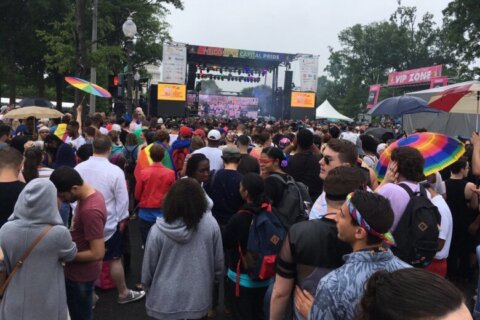
As Quillian shared her business’s origin story, staff decorated for Pride Month by putting rainbow-colored bunting around the outdoor seating area. They joked with guests — some with kids, others with dogs — who all made themselves at home, like Washingtonians have been doing for sixty years.
Get breaking news and daily headlines delivered to your email inbox by signing up here.
© 2026 WTOP. All Rights Reserved. This website is not intended for users located within the European Economic Area.