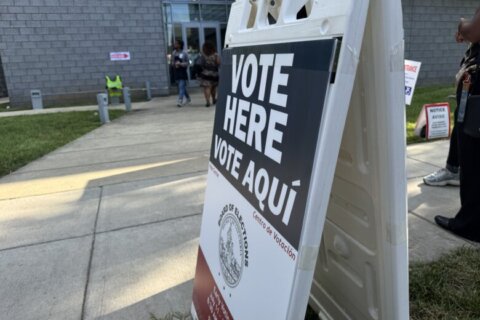
Follow WTOP’s team coverage of the D.C. primary and Election 2026 online, on air at 103.5 FM or on the WTOP News app.
Ahead of D.C.’s primary election in June, WTOP sent a questionnaire to all the candidates in each contested race, asking them to introduce themselves to voters, share their priorities and weigh in on some of the most pressing issues facing the District.
Candidates submitted their responses through an online form, and the answers published are verbatim.
The answers below are from Leniqua’dominique Jenkins, who’s running for an at-large seat on the D.C. Council against Dwight Davis, Oye Owolewa, Candace Tiana Nelson, Dyana Forester, Greg Jackson, Lisa Raymond, Fred Hill and Kevin Chavous.
- WTOP:
Please briefly describe your professional background. What is your current job, and what experience or skills best prepare you to serve in this role?
- Leniqua'dominique Jenkins:
I bring experience as a former ANC Commissioner, educator, Council staffer, nonprofit leader, and small business owner. I’ve drafted legislation, served East of the River communities, and led efforts in education, housing, and public safety. My global work informs my local advocacy. I am running on the three E’s: equity, education, and environmental justice—ensuring every D.C. resident has access to opportunity, quality services, and a healthier, more just city across all eight wards.
- WTOP:
What are your top three priorities if you are elected?
- Leniqua'dominique Jenkins:
If elected, my top three priorities are the three E’s: Equity, Education, and Environmental Justice.
Equity means ensuring every resident—regardless of zip code, income, or background—has access to safe housing, quality healthcare, public safety, and economic opportunity.
Education means investing in our schools, supporting teachers, expanding youth programs, and creating pathways to careers and higher education.
Environmental Justice means addressing pollution, illegal dumping, flooding, and climate inequities that disproportionately impact underserved communities while building a cleaner, healthier, and more sustainable D.C. for future generations.
- WTOP:
Crime remains one of the top issues residents talk about, especially violent crime and youth‑involved offenses. At the same time, there are concerns about civil rights and over‑policing. As a Council member, what would you push for legislatively to improve public safety and how would you know those changes are actually working?
- Leniqua'dominique Jenkins:
Public safety and civil rights must go hand in hand. I would push for a comprehensive public safety strategy that invests in violence prevention, youth opportunities, mental health services, and community-based crisis response alongside effective policing. That means expanding violence interruption programs, strengthening school and afterschool investments, supporting returning citizens, and increasing accountability and transparency within MPD.
I also believe we must address the root causes of crime—poverty, housing instability, lack of opportunity, and untreated trauma—especially for young people. Arrests alone will not create lasting safety.
We would measure success by looking at real outcomes: reductions in violent crime and recidivism, faster emergency response times, increased trust between residents and government, improved school attendance, and greater participation in youth and workforce programs. Residents should not only be safer, but also feel safer and more supported in their communities.
- WTOP:
Some residents say youth‑involved crime cannot be solved by enforcement alone, while others worry there are not enough consequences when serious crimes occur. What role should the D.C. Council play in reducing youth‑involved crime, and how should prevention, intervention, and accountability work together? Please include where you stand on youth curfews and how, if at all, they should fit into a broader public safety approach.
- Leniqua'dominique Jenkins:
The D.C. Council must take a balanced approach to youth-involved crime that prioritizes prevention, intervention, and accountability together—not one over the other. Prevention starts with investing in young people before they enter the justice system: quality schools, mental health support, recreation programs, mentorship, job training, and safe spaces in every ward.
Intervention means identifying youth at risk early and connecting them with credible messengers, violence interruption programs, family support services, and trauma-informed care. We must treat many young people involved in violence as youth in crisis, not disposable.
At the same time, serious offenses must have meaningful accountability. Accountability should focus on rehabilitation and reducing repeat offenses while ensuring victims and communities are protected.
I support targeted youth curfews only as one limited tool within a broader public safety strategy—not as a standalone solution. Curfews should be data-driven, narrowly tailored, fairly enforced, and paired with safe late-night programming, transportation options, and outreach efforts so we are not simply criminalizing young people for being outside. Long-term public safety comes from opportunity, stability, and trust, not enforcement alone.
- WTOP:
The D.C. Council does not run schools directly but controls funding and oversight. How would you use that authority to improve outcomes in DCPS and public charter schools?
- Leniqua'dominique Jenkins:
The D.C. Council has a responsibility to ensure every student—whether in DCPS or public charter schools—has access to a high-quality, equitable education. I would use the Council’s funding and oversight authority to prioritize smaller class sizes, mental health supports, modern facilities, teacher retention, and expanded afterschool and career-readiness programs.
We must also address inequities between schools and wards by ensuring funding reaches students and communities with the greatest needs, including students with disabilities, English learners, and youth experiencing homelessness.
Oversight is equally important. I would push for stronger accountability measures around academic outcomes, school safety, absenteeism, and how education dollars are spent. Schools should be transparent with families and communities about performance and progress.
I also believe we need stronger partnerships between schools, families, nonprofits, and local employers so students are prepared not only for graduation, but for college, careers, entrepreneurship, and civic engagement. Education should create pathways to opportunity for every child in every neighborhood across D.C.
- WTOP:
Housing costs, including rents and home prices, have increased in many cities. What specific policies would you support regarding housing affordability, and how would you balance new development with protecting existing residents and neighborhoods?
- Leniqua'dominique Jenkins:
Housing in D.C. must be affordable for working families, seniors, and longtime residents. I support expanding affordable housing production, preserving existing affordable units, strengthening tenant protections, and increasing pathways to homeownership.
This includes fully funding the Housing Production Trust Fund, protecting and expanding rent stabilization, supporting first-time homebuyer assistance, and building more deeply affordable housing near transit, jobs, and schools. We must also address homelessness through housing-first strategies and wraparound services.
At the same time, we must ensure development does not lead to displacement. I support responsible, community-driven growth that includes strong tenant protections, anti-displacement measures, local hiring, and investment in neighborhood infrastructure.
Balancing affordability and development means allowing D.C. to grow while ensuring longtime residents can remain in their communities. The goal is a city where people can move here, stay here, and thrive here.
- WTOP:
Some residents have raised concerns about response times, service consistency, and follow‑through by District agencies. What role would you, as a Council member, play in using oversight and legislation to strengthen accountability and improve city services?
- Leniqua'dominique Jenkins:
As a Council member, I would take oversight seriously as one of my most important responsibilities to residents. Strong oversight means ensuring District agencies are responsive, consistent, and delivering services effectively across all wards.
I would use hearings, performance reviews, and data-driven audits to identify breakdowns in response times, service delivery, and follow-through. When agencies are not meeting expectations, the Council must ask clear questions, demand corrective action plans, and track whether improvements are actually implemented.
Legislatively, I would support measures that strengthen transparency, including better public reporting on agency performance, clearer service timelines, and accessible dashboards so residents can track requests and outcomes in real time. I would also push for interagency coordination reforms so services are not delayed due to bureaucratic silos.
Equally important is making sure residents are heard. I would maintain strong constituent services and regularly engage communities to identify recurring issues early. Oversight should not be reactive/ it should be continuous, preventative, and focused on ensuring government works efficiently and equitably for every D.C. resident.
- WTOP:
The Council has a major say in how the city spends its money. When the budget is tight, what should come first, and how would you decide which programs get protected and which don’t?
- Leniqua'dominique Jenkins:
As a Council member, I would treat oversight as a core responsibility to ensure District government delivers timely, consistent, and reliable services. Residents should not have to repeatedly report the same issue or wait excessive time for basic city services.
I would use hearings, performance oversight, and data-driven reviews to hold agencies accountable for response times, service quality, and follow-through. When gaps are identified, I would require clear corrective action plans, timelines, and public reporting so progress can be tracked—not just promised.
On the legislative side, I would support stronger transparency requirements, including real-time service tracking, standardized response benchmarks, and public dashboards that allow residents to see whether agencies are meeting expectations across all wards. I would also push for better interagency coordination so issues are resolved efficiently rather than getting lost between departments.
Just as important, I would stay closely connected to residents through constituent services and community engagement to identify recurring problems early and ensure they are elevated quickly. Oversight should be continuous, not reactive, and focused on making government more accountable, responsive, and equitable for every D.C. resident.
- WTOP:
Because Congress has authority to review and overturn District laws, what do you see as the Council’s role in addressing congressional involvement in local governance? How assertive, if at all, should Council members be in advocating for home rule?
- Leniqua'dominique Jenkins:
The relationship between the Council and the Mayor should be one of partnership grounded in accountability and healthy checks and balances. We are most effective when we collaborate early—especially during the budget process and major policy development—so that legislation is practical, funded, and responsive to community needs.
At the same time, the Council must maintain its independent oversight role. That means regularly reviewing agency performance, holding public hearings, and using data to ensure executive agencies are delivering services effectively and equitably across all wards. Collaboration cannot replace accountability.
I would aim to build a working relationship focused on shared goals—safer communities, stronger schools, affordable housing, and reliable city services—while also being willing to challenge the administration when outcomes are not being met.
Clear communication, transparency, and follow-through are key. Ultimately, residents don’t care about branch politics—they care about results. The Council and Mayor must work together to deliver them, while the Council ensures the government remains responsive, transparent, and accountable.
- WTOP:
From buses and Metro to traffic safety and street conditions, transportation complaints come up across the city. What changes or investments would you focus on to improve how people get around D.C.?
- Leniqua'dominique Jenkins:
Improving how people get around D.C. requires investing in reliable transit, safer streets, and well-maintained infrastructure across all neighborhoods.
First, I would prioritize stronger investment and coordination with WMATA to improve Metro and bus reliability, reduce delays, and expand frequent service. Especially in Ward 7, Ward 8, and other underserved areas. Public transit must be dependable, affordable, and accessible for everyone.
Second, I would advance Vision Zero by investing in safer streets: protected bike lanes, better lighting, traffic calming measures, and safer pedestrian crossings near schools, transit stops, and high-crash corridors. Too many residents are injured or killed in preventable traffic incidents.
Third, I would push for faster repair of basic infrastructure-potholes, sidewalks, curb ramps, and bus stops-so mobility is safe and accessible for seniors, people with disabilities, and families.
Finally, I would support better coordination between DDOT, WMATA, and public safety agencies to ensure projects are completed efficiently and disruptions are minimized.
Transportation is not just about movement—it is about access to opportunity. My focus would be making D.C.’s transportation system safer, more reliable, and more equitable for all residents.
- WTOP:
Development can involve tradeoffs between growth, neighborhood input, and quality of life. How would you approach development decisions, so neighborhoods have a meaningful voice while the city continues to grow?
- Leniqua'dominique Jenkins:
Development must balance growth with protecting the people who already live in our communities. My approach is simple: residents should have a real voice before decisions are finalized, not after they are already decided.
I would strengthen early, transparent community engagement so neighbors can shape projects from the beginning. That includes improving support for ANC input, making zoning and planning processes more accessible, and ensuring meetings and materials are easy for residents to understand and participate in.
At the same time, D.C. must continue to grow in a way that is equitable and sustainable. I support development that expands affordable housing, prevents displacement, and includes community benefits such as local hiring, small business opportunities, and investments in schools, parks, and infrastructure.
We also need clear and consistent standards so developers know expectations upfront and communities know what they are getting in return.
Ultimately, development should not feel like something that happens to neighborhoods—it should happen with them. When residents are meaningfully engaged, when benefits are shared fairly, and when accountability is built into the process, we can achieve growth that strengthens rather than disrupts our communities.
- WTOP:
How would you approach the relationship between the Council and the mayor, particularly with respect to collaboration and oversight?
- Leniqua'dominique Jenkins:
The relationship between the Council and the Mayor should be one of partnership grounded in accountability and healthy checks and balances. We are most effective when we collaborate early. Especially, during the budget process and major policy developmentthat legislation is practical, funded, and responsive to community needs.
At the same time, the Council must maintain its independent oversight role. That means regularly reviewing agency performance, holding public hearings, and using data to ensure executive agencies are delivering services effectively and equitably across all wards. Collaboration cannot replace accountability.
I would aim to build a working relationship focused on shared goals-safer communities, stronger schools, affordable housing, and reliable city services-while also being willing to challenge the administration when outcomes are not being met.
Clear communication, transparency, and follow-through are key. Ultimately, residents don’t care about branch politics-they care about results. The Council and Mayor must work together to deliver them, while the Council ensures the government remains responsive, transparent, and accountable.
- WTOP:
Residents continue to raise concerns about D.C.’s 911 system, from long wait times to delayed emergency response. What should the Council’s role be in fixing these problems, and what specific changes would you push for to make the system more reliable?
- Leniqua'dominique Jenkins:
The Council’s role is to provide strong oversight, ensure adequate funding, and demand measurable improvements from the 911 system until residents receive timely, reliable emergency response. This is a core public safety function, and failures must be treated with urgency.
I would push for increased staffing and better working conditions for 911 call takers and dispatchers, including competitive pay, mental health supports, and retention incentives to reduce burnout and turnover. We must also invest in updated technology so calls are routed efficiently and responders receive accurate, real-time information.
In addition, I would require clear performance benchmarks for response times and public reporting so residents can track whether the system is improving. Persistent delays should trigger mandatory corrective action plans from responsible agencies.
Finally, I would support stronger coordination between 911, MPD, fire and EMS, and community-based emergency response programs to ensure calls are handled by the right responders as quickly as possible. Residents deserve confidence that when they call for help, the system will respond quickly, effectively, and without delay.
- WTOP:
Concerns about ethics and accountability at the D.C. Council have repeatedly surfaced in recent years. As a Council member, how would you help rebuild public trust and what should happen when members violate ethical standards?
- Leniqua'dominique Jenkins:
Rebuilding public trust starts with leading by example and strengthening the systems that hold all Council members accountable. As a Council member, I would fully support stronger ethics rules, clearer disclosure requirements, and independent enforcement that is not influenced by politics or personalities.
We also need transparency that the public can easily understand open data on lobbying, contracting, and financial disclosures, as well as timely reporting when issues arise. Trust is built when residents can clearly see how decisions are made and who is influencing them.
When ethical standards are violated, there must be real consequences. That should include swift, transparent investigations, public findings, and penalties that are consistently enforced-up to and including censure or removal when warranted.
Equally important is a culture shift: the Council must prioritize integrity over convenience or relationships. I would also encourage ongoing ethics training and clearer guidance so members and staff understand expectations from the start.
Public service is a public trust, and every action must reflect that responsibility.
- WTOP:
At‑large Council members represent the entire city, not a single ward. How would you balance citywide priorities with the distinct needs of different neighborhoods, and what issues do you believe at‑large members should focus on that ward members cannot?
- Leniqua'dominique Jenkins:
As an at-large Council member, I would approach every decision with a citywide lens while staying closely connected to the distinct needs of neighborhoods across all eight wards. That requires consistent engagement with residents, community leaders, and stakeholders so policy decisions reflect both shared priorities and local realities.
Citywide issues like housing affordability, public safety, transportation, education, and economic opportunity must be addressed in a way that ensures no community is left behind. I would focus on equity in how resources are distributed so historically underserved neighborhoods receive the investment and attention they deserve.
At-large members also have a unique responsibility to focus on system-wide challenges that cut across ward lines—such as agency performance, budget fairness, transportation networks, public safety strategy, and environmental justice. These are areas where coordination, oversight, and long-term planning are essential.
While ward members focus on hyper-local concerns, at-large members should help ensure the entire system is functioning effectively, efficiently, and equitably for every D.C. resident.
- WTOP:
What’s one place, tradition, or moment that makes DC feel like home to you?
- Leniqua'dominique Jenkins:
For me, D.C. feels like home in the everyday moments of community.Especially seeing neighbors gather at local schools, rec centers, and block events across the city. There is something powerful about people showing up for one another, sharing space, and building together despite challenges. Those moments of connection, resilience, and pride remind me why I love this city and why I am committed to serving every corner of it.
- WTOP:
What’s something about you that voters would never learn from your résumé or campaign website?
- Leniqua'dominique Jenkins:
What voters may not see on a résumé is how deeply personal this work is for me. I’ve experienced the impact of systems that don’t always respond the way they should, and that’s what drives my commitment to equity, education, and environmental justice. I lead with listening first, and I believe real leadership means showing up consistently, not just during election season, but every day in service to the community.
Get breaking news and daily headlines delivered to your email inbox by signing up here.
© 2026 WTOP. All Rights Reserved. This website is not intended for users located within the European Economic Area.