Maryland Transportation Secretary Paul Wiedefeld said he is stepping down at the end of July following a career that spanned four decades, including leading the Metro system.
He spoke with WTOP’s Nick Iannelli on some of the biggest challenges and successes in his transportation career.
Listen to the interview below or read the transcript, which has been lightly edited.
- Nick Iannelli:
We’re hearing from Maryland Transportation Secretary Paul Wiedefeld after he announced he would be stepping down at the end of this month. His career in local transportation has spanned four decades. Among other roles, he’s led D.C.’s Metro system, BWI Marshall airport and the Maryland Transit Administration.
Over the past couple of years as transportation secretary, Wiedefeld helped steer the department through the collapse of the Key Bridge in Baltimore, delays in cost overruns on the purple line and funding crises across Metro and MARC.
We talked with Wiedefeld about his career and why he’s stepping aside now.
- Paul Wiedefeld:
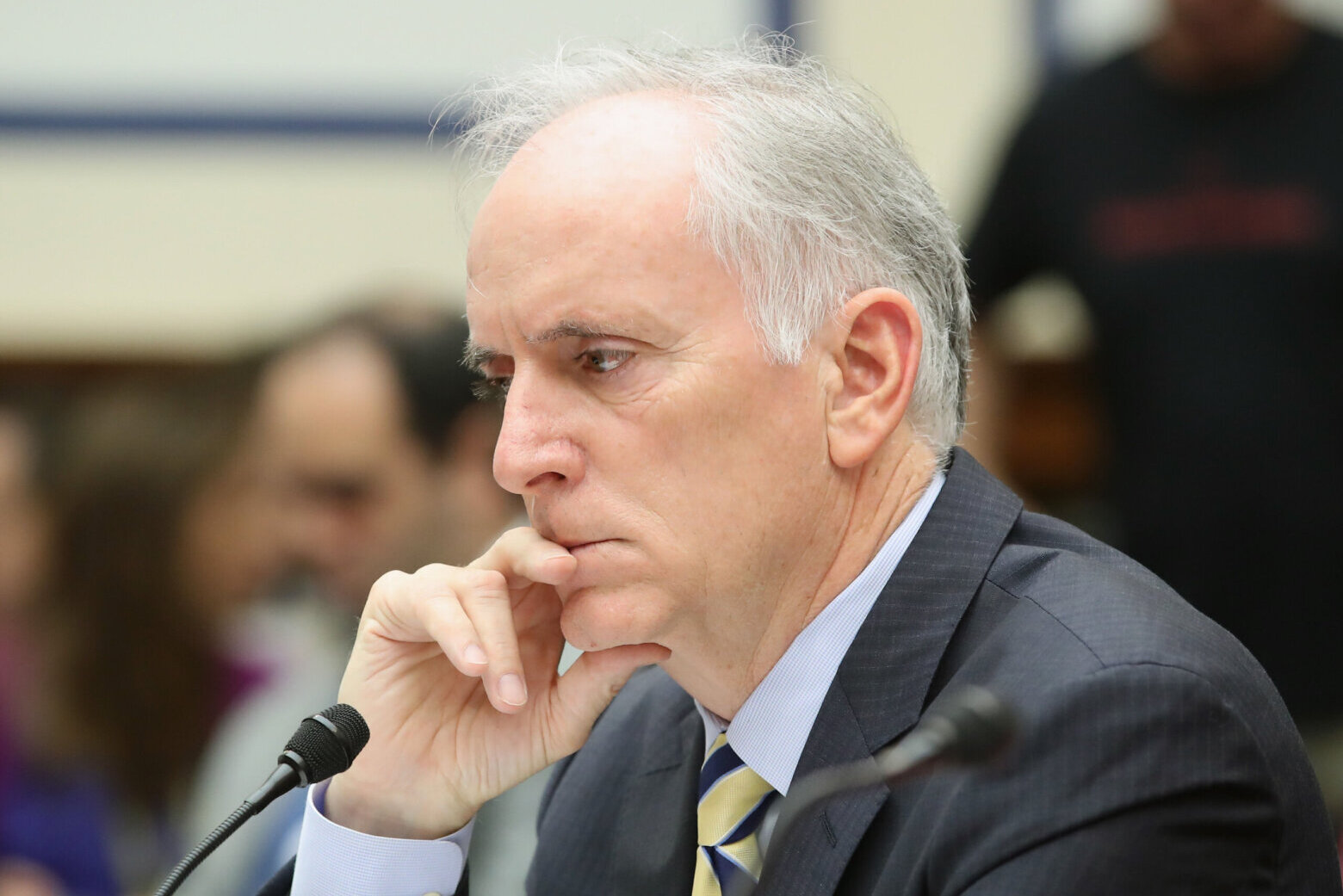
WASHINGTON, DC – MAY 24: Paul Wiedefeld, general manager of the Washington Metropolitan Area Transit Authority, participates in a House Transportation Committee hearing on improving the safety of Washingtons Metro system, on Capitol Hill May 24, 2016 in Washington, DC. (Photo by Mark Wilson/Getty Images) I’ll be 70 in August, and these jobs are, as you can imagine, very demanding, and there’s some things I want to do on a personal level. And even some on a professional level, with some boards and different things that I’ve been thinking about, and nonprofits and things of that sort. So really, that’s what’s driving it.
- Nick Iannelli:
When I first heard that you were going to leave your post, I started thinking more about your career and read a little bit about you over the past 24 hours, as well. And what stands out is your leadership during times of crisis.
You dealt with the fallout on Metro after that deadly smoke incident, and there was the Key Bridge collapse in Baltimore last year, and you also had to shut down a portion of Baltimore’s light rail system for safety reasons when you were head of the Maryland Transit Administration.
So when you look back at your career, what do you think was the most challenging situation that you had to deal with?
- Paul Wiedefeld:
Actually, they’re all similar in a lot of ways because you’re dealing with a tragedy or potential tragedy, and you’re trying to protect people from any harm. So a lot of it was around that type of thinking.
For instance, at Metro and in Baltimore, we stopped something from happening, but we had to take some serious actions to do that. The Key Bridge and actually the terrible tragedy that we had on the Baltimore Beltway, where we lost six workers just over two years ago in March, those are totally different, because that’s purely about the poor families and what they’re going through.
- Nick Iannelli:
One of the most notable moments in your career was after D.C.’s smoke incident on the Metro system, after that 2015 incident when a train got stuck and filled with smoke, leaving one person dead and dozens injured. You were not in charge during that but you took over after that incident, and you made the incredibly difficult decision to shut down the entire Metrorail system for a day as crews looked for electrical problems. That’s a pretty drastic move.
- Paul Wiedefeld :
Well, it’s interesting. I went home that evening, and I’d ask the staff, ‘All right, give me all the data where these potential incidents could occur.’
And I literally met with my wife, and I said, ‘Tomorrow’s going be either the shortest day at my job here or my longest because if they can’t give me the answers, I’m shutting this down and it’ll be extremely long, or I’ll shut it down and they’ll fire me.’
So it was the right thing to do, and we found more of those exact situations in that inspection, which then set the tone for, ‘OK, we really have to get our arms around this.’ So those were hard decisions for the region.
- Nick Iannelli:
Did you get a lot of pushback from local leaders? You don’t have to name any names, obviously, but was it a lot of pushback that you had to deal with on that?
- Paul Wiedefeld:
I did get some really some very aggressive like, ‘Who in the, you know, do you think you are to do this without consulting?’
And I said, ‘Well, if I had consulted, I know where it would go. I would get the answer, ‘No, you’re not.’
And I’d have to say, ‘Yes, I am.’
And you would say, ‘No I’m not.’
I would say, ‘Yes, I am.’
And so my position was, I said, ‘Look, put it on me. I’m the one making the decision. You’re not. Let it be me that takes the hit. But we have to do what’s right here.’
And everyone came around to that.
- Nick Iannelli :
The Key Bridge collapse in Baltimore. What went through your head when you first heard about that? Just the gravity of it, and, as you said, the human element of it, but then also the logistics of it.
- Paul Wiedefeld:
When I first got that call, you know, like 1:50 a.m., and was told that had occurred. Some of the information was wrong, and I knew would be wrong because it’s just in the heat of the moment. But as that started to come into focus, the sense of that tragedy, the first thing in all of our minds is, ‘How many people? Who’s out there? What can we do to find the people?’
But also, we were all thinking, was there a terrorism-related element to this? The world that we live — a structure going down like that. You obviously would want to rule that out. So those were immediate issues that we were dealing with.
And then the safety of the people, that we’re trying to find the people. It was very dark. You had debris all over the entire harbor there. It’s something that you train for to a degree, but then you also just have to keep your head about you and try to do the best you can under tremendous stressful situations.
Get breaking news and daily headlines delivered to your email inbox by signing up here.
© 2025 WTOP. All Rights Reserved. This website is not intended for users located within the European Economic Area.