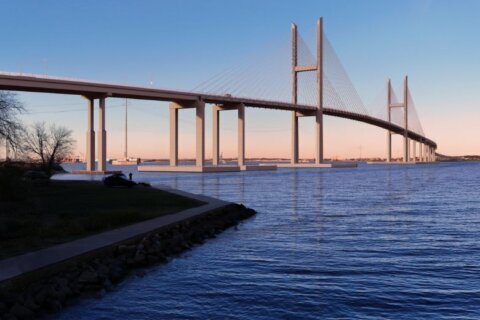
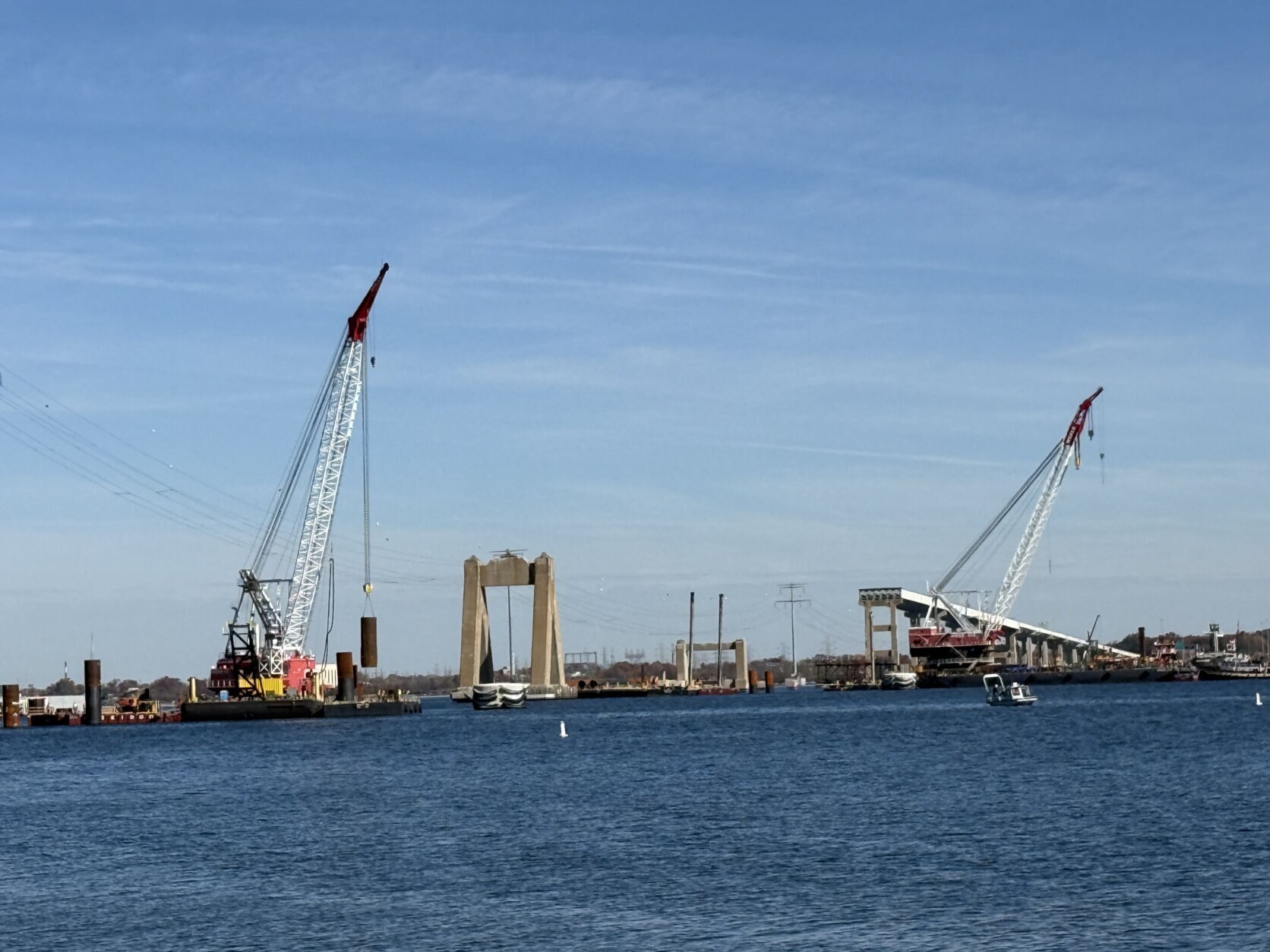
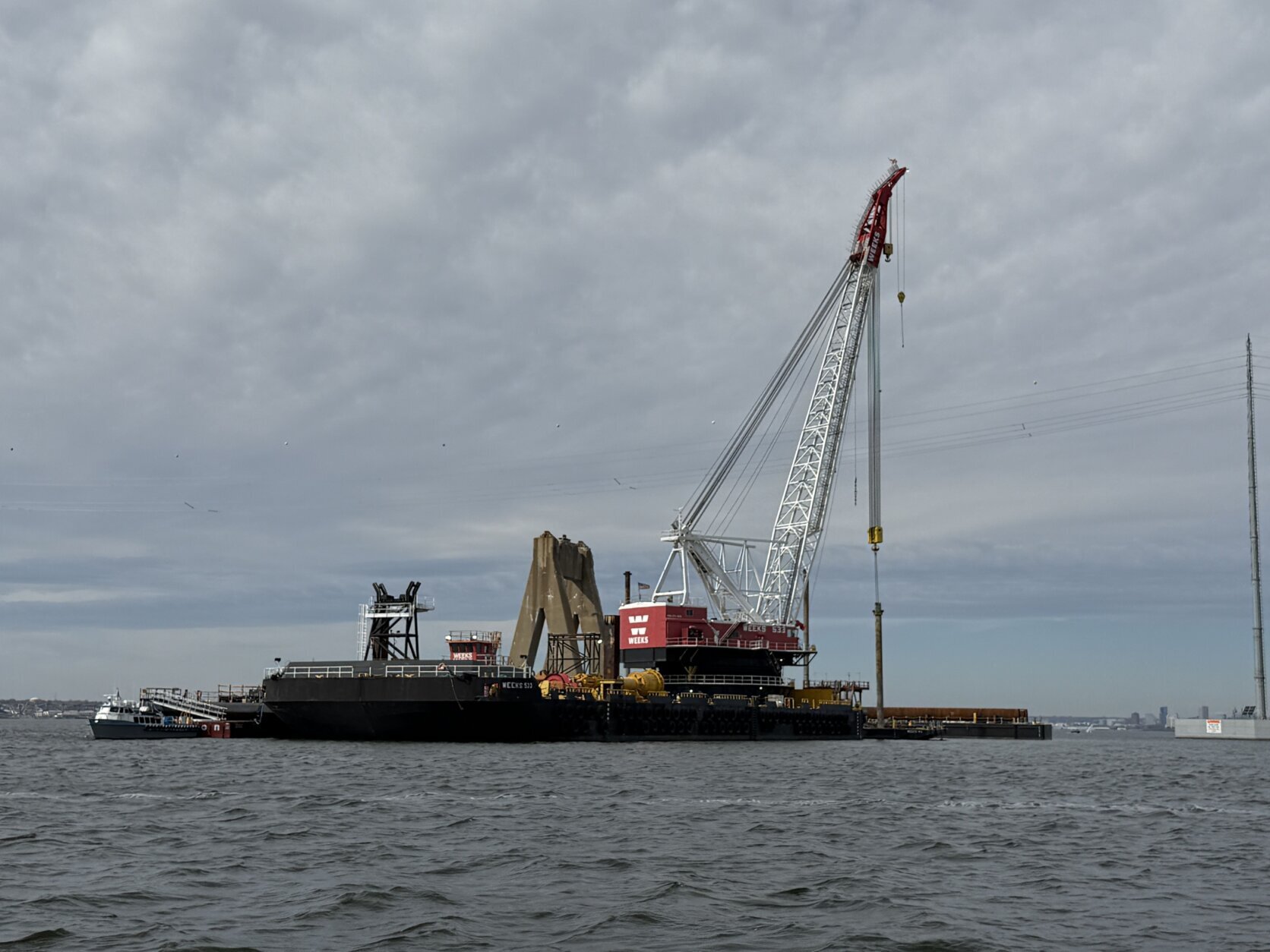
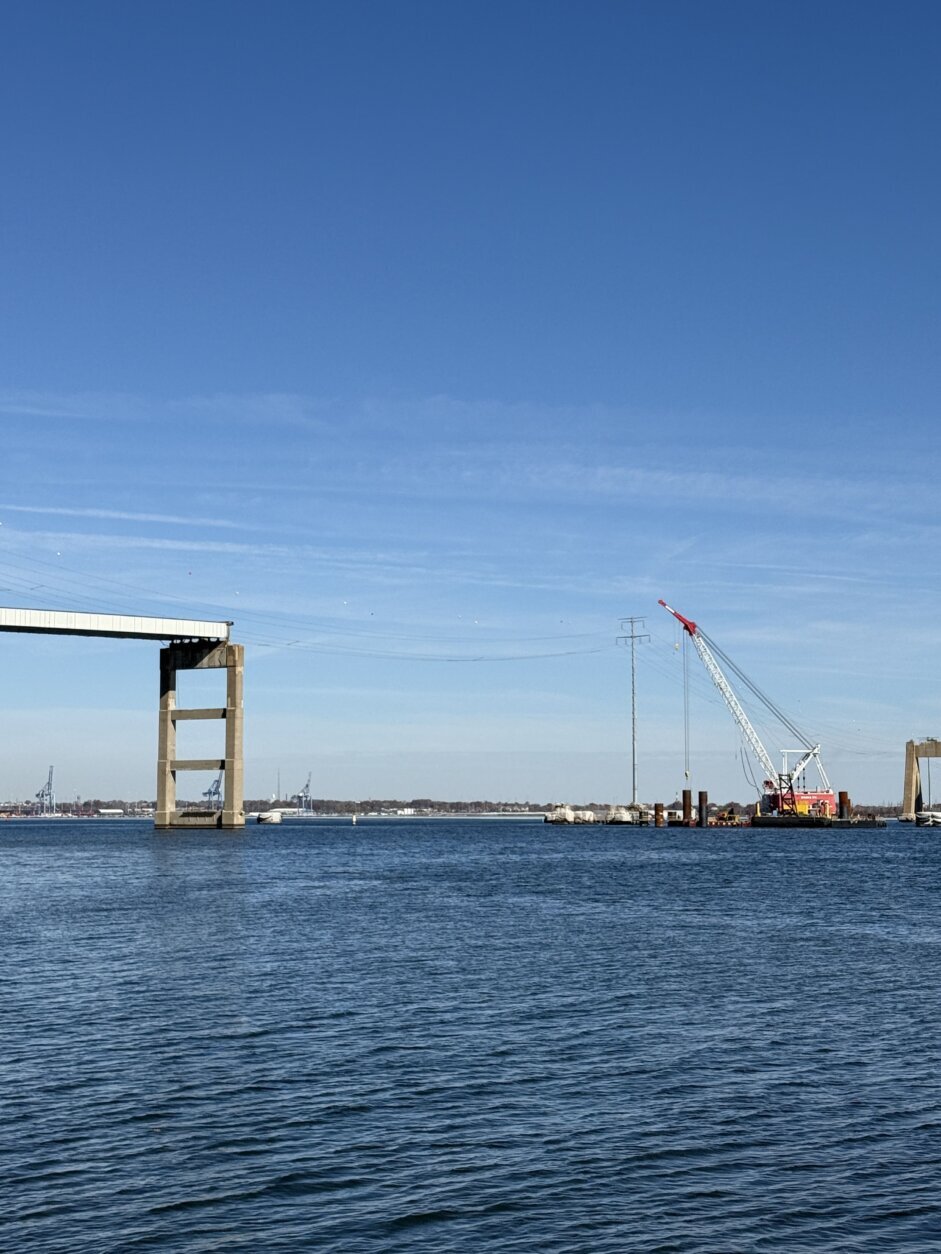
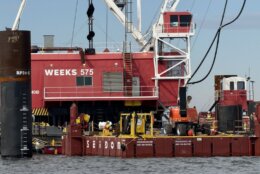
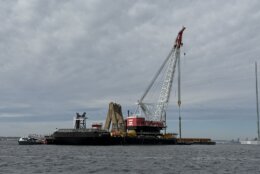
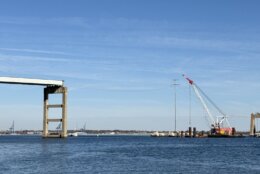
There are two floating construction sites set up inside the gap where Baltimore’s Key Bridge used to stand. And as crews continue to dismantle the old bridge — which is about halfway done — test pilings are being put in place that could support the next bridge, if those tests go as planned.
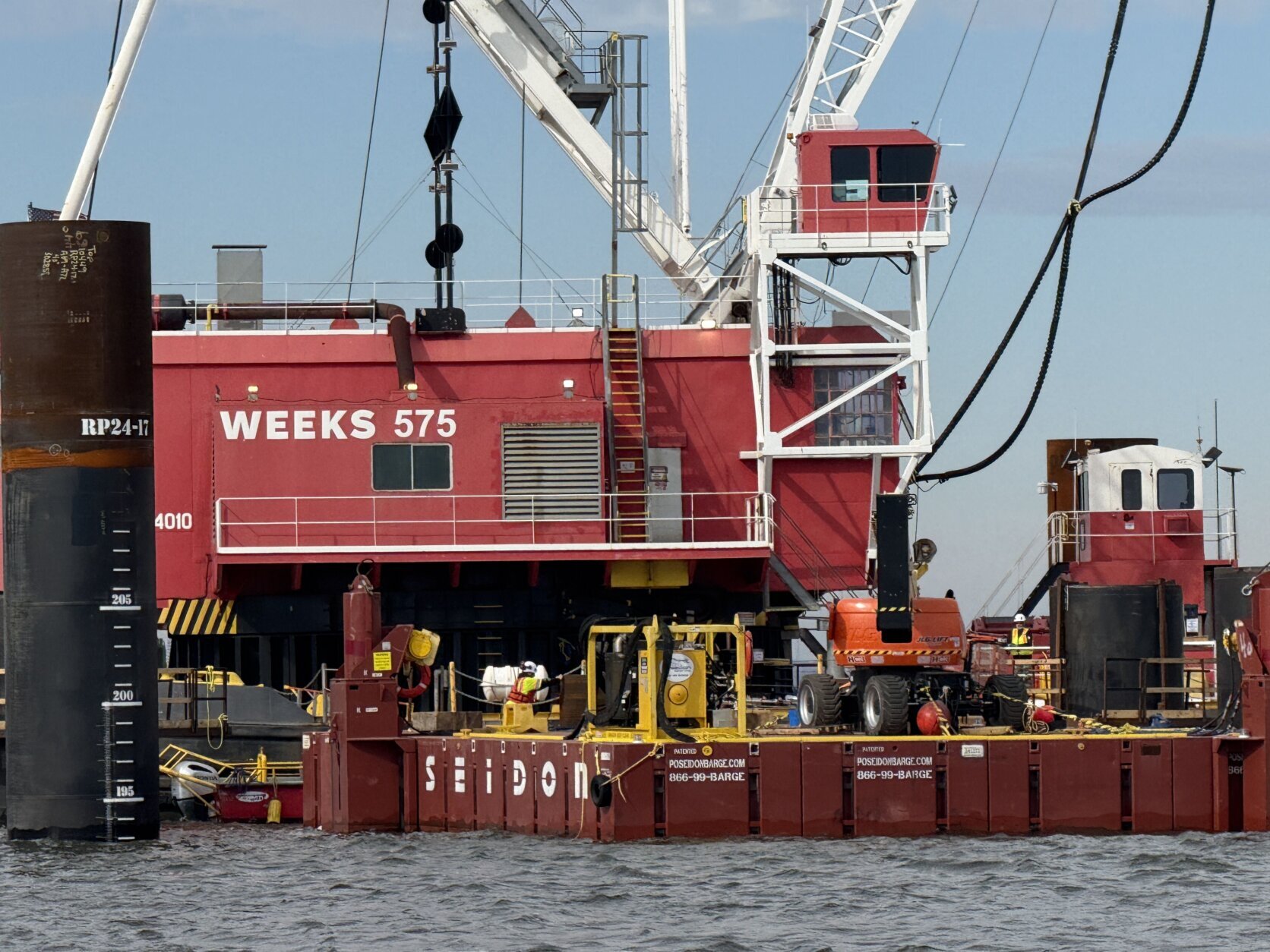
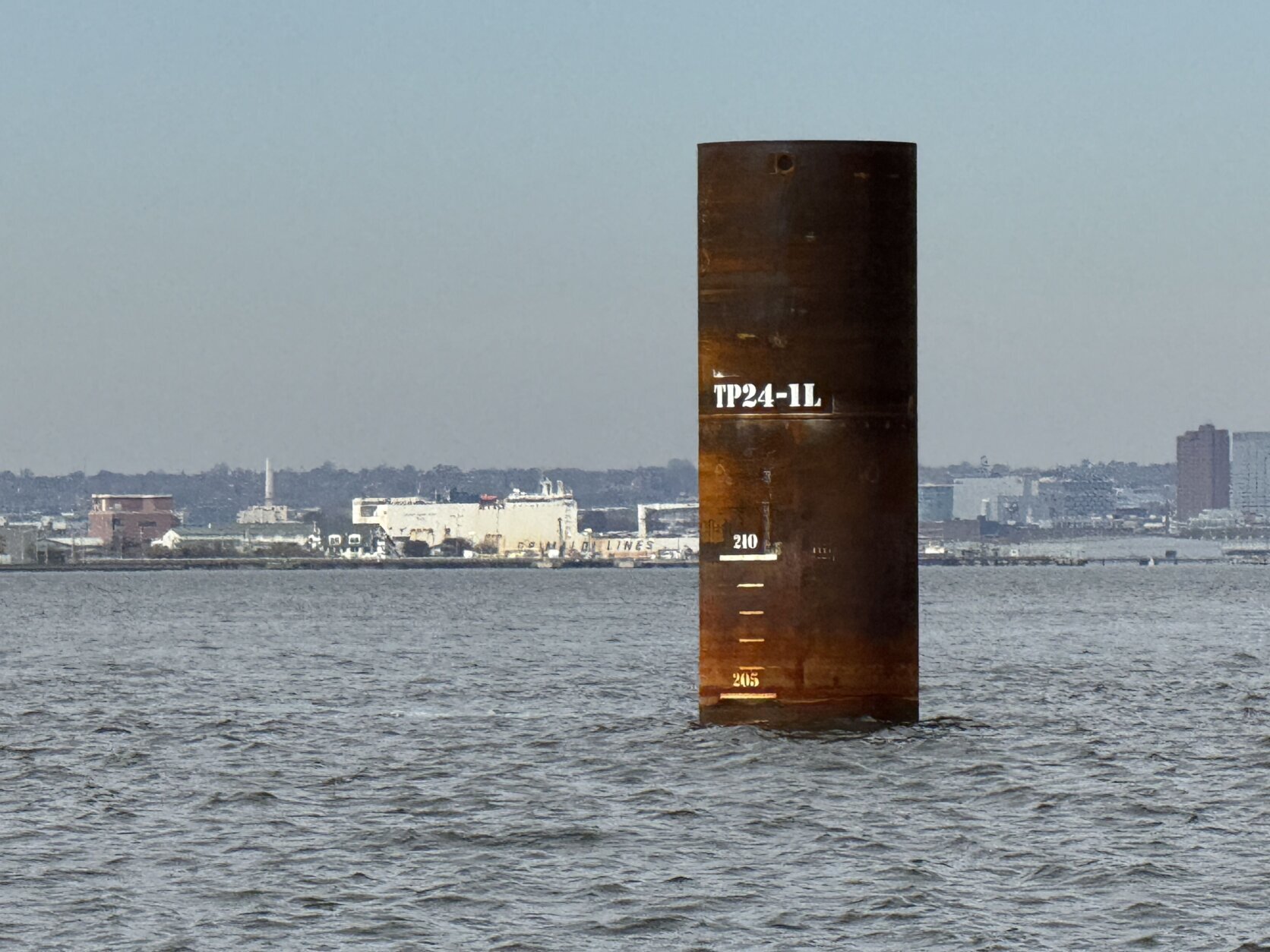
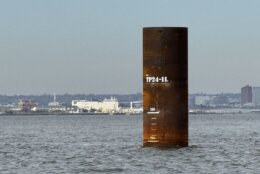
Some of the more than 200 feet-long piles are still on the flotilla, but some are in the water already.
Most of those piles can’t be seen from the surface. The water there is about 30 feet deep, and those piles then have to be drilled down about 60 feet into the soupy mud on the bottom. Getting through the mud isn’t the issue; it’s the 60 feet or so of hard rock underneath the mud that also has to be drilled into.
“We know the piles can carry the load just based on if it’s steel,” said Brian Wolfe, the director of project development for the Maryland Transportation Authority. “What’s unknown is that river bottom. We know it’s hard, we’ve done testing on it. This is to verify how far down do we need to drive those piles into it in order to get the load that we need to carry the bridge.”
Next month, a giant steel template, about 65 feet by 65 feet, will be put on top of the pilings that are in the water. Then, about 10 million pounds of force will be applied to them.
Right now, the engineers overseeing the project are confident that everything will hold up the way it’s supposed to — they just won’t move ahead without being certain.
“We don’t want to make an assumption that doesn’t prove out to be true, and then have all of the material and men and equipment show up to do this at full scale,” said Jason Stolicny, who works within the Maryland Department of Transportation State Highway Administration. “So this is really ensuring that, at a small scale, our assumptions are correct, and then we move on to that full-scale operation.”
If next month’s testing goes well, they can start putting the permanent pilings in before the end of the year, or shortly after. Though at least some of the test pilings in there now might also be part of the new permanent structure.
So where do things stand?
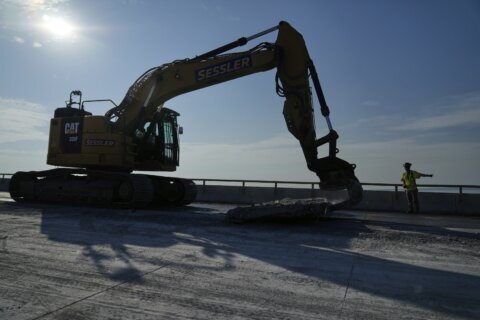
Demolition of the old bridge is about halfway complete. While several spans of the bridge remain over the water, the focus is more on the pieces of bridge that are on land right now.
“The critical demolition activities is actually the land, and we’re advancing that now because we’re focusing on the critical work early. And the equipment required to remove the bridge over land is not the same as what’s required to remove it over water,” Stolicny said. “So in order to minimize separate mobilizations of equipment, we’re focusing on that land removal and the portion over water will stay for a bit as we advance into construction.”
He said the entire bridge deck has been removed — 10,000 of tons of material — but only about 20% of the steel.
“This is an activity that’s going to run into the early 2026 as far as the demolition work on the existing bridge,” Stolicny said.
Officials initially estimated the new bridge would be finished in 2028, and it’s still possible it will be. But state officials are no longer willing to say that’s definitely going to be the case.
“We are moving at breakneck speed on delivering this project,” MDTA Chief Engineer James Harkness said. “We’ve taken the steps that we’ve outlined here, with our preconstruction activities, with our demolition activities on our test pile and upcoming other trestle installation. We’re advancing those while we’re still designing, in the effort to continue to advance schedule as quickly as possible.”
While it’s not clear exactly when permanent construction will begin, the hope is that it will happen either by the very end of 2025 or early into 2026.
Get breaking news and daily headlines delivered to your email inbox by signing up here.
© 2025 WTOP. All Rights Reserved. This website is not intended for users located within the European Economic Area.