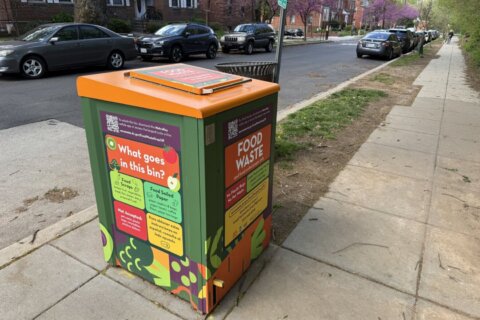
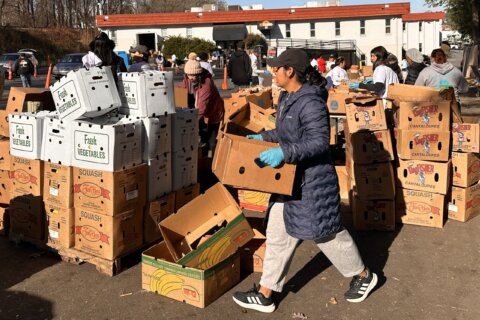
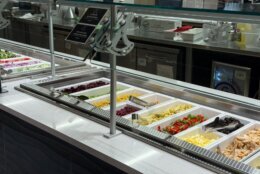
College dining halls often have as many options as a restaurant, but without the reservations. It’s a revolving door of students, staff and faculty, with a different number of diners every day. This unpredictability means a lot of prep and food go to waste.
A group of students and staff at American University in D.C. figured out a way to fix both of those problems, saving thousands of pounds of food this semester.
The AU chapter of the Food Recovery Network, a national nonprofit dedicated to mobilizing college students to “engage in food recovery, hunger-fighting, and food justice work,” according to their website, is leading the charge.
This student-led group collaborated with AU’s Office of Zero Waste, which tracks the school’s waste and runs its sustainability programs on campus.
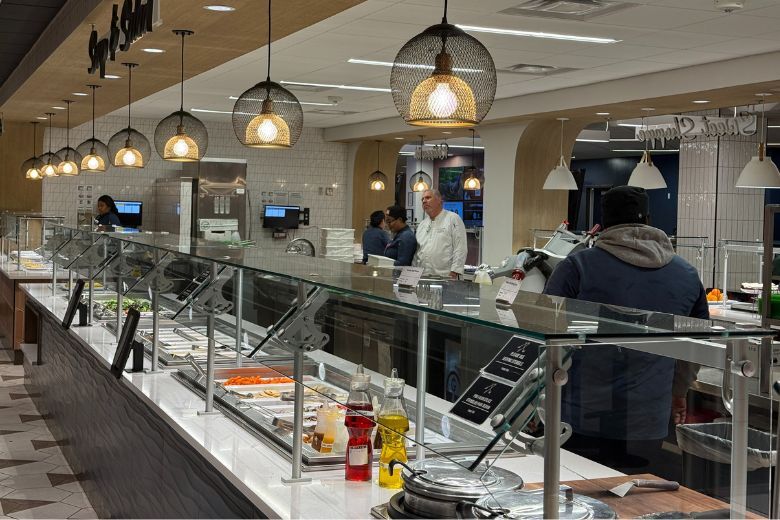
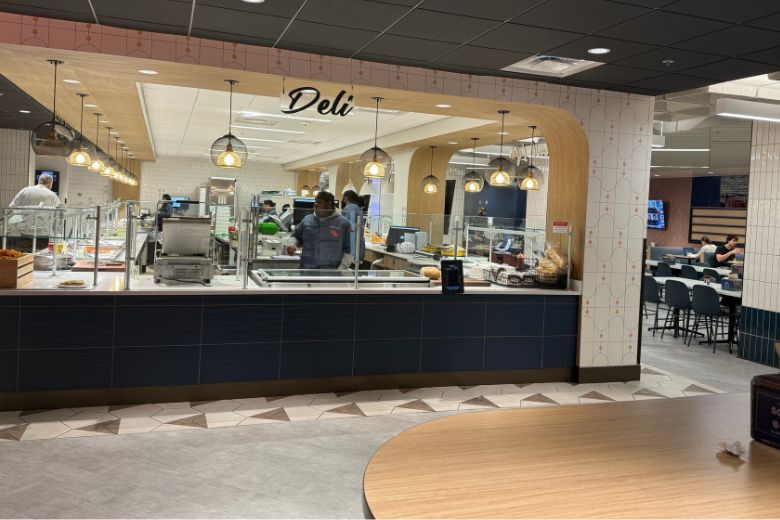
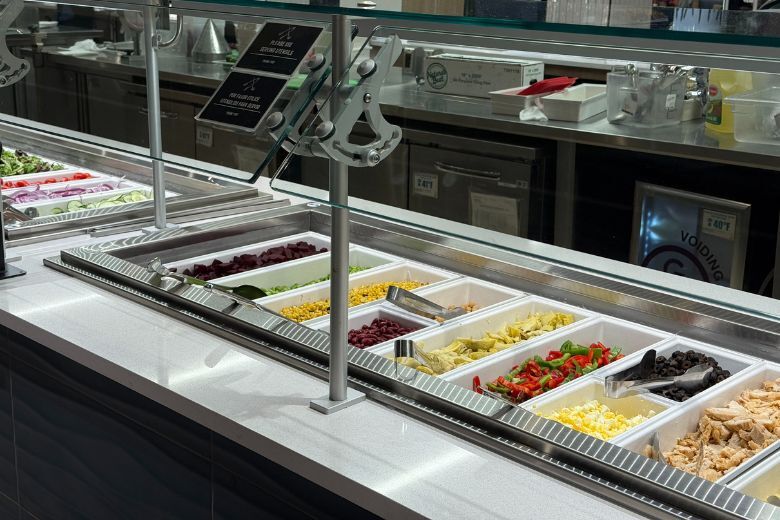
Alongside the Terrace Dining Hall staff, these groups fought to save everything considered “food safe.” That means even if it was cooked, it never actually made it out of the kitchen to be served.
In the past, that food would get tossed or composted. Now, it goes into a refrigerator.
“We’re currently recovering about 400 to 500 pounds of food a week,” said John Boyle Ruiz, an AU graduate student and Zero Waste coordinator. “We’ll bring food like shrimp, it could be beef, it could be green beans, mashed potatoes, any kind of these bulk vegetables, proteins that have been prepared. And this can be different cuisines as well.”
The school has donated nearly 5,000 pounds of food to local food banks during this semester alone, a dramatic increase from the amount donated at the same time last year, when it was just canned food drives and the occasional bulk donation, according to Zero Waste manager Caroline Boone.
This initiative has led to a big decrease in the amount of overall waste produced by the school. In January 2024, 30% of waste was diverted from landfills and was instead either recycled or composted, Boone said.
“Our current diversion rate is around 45%,” Boone said. “It’s a lot of stuff. There’s a lot of students, staff, faculty. People produce a lot of waste.”
Deliveries are made three days a week to various D.C. area food banks.
Wesley Fenimore, a junior majoring in justice and law, is one of the students who helps make those deliveries happen.
“I load up like eight or nine pans usually, and sometimes some other random stuff,” Fenimore said. “We’ll give them waffles or pancakes, because we have tons of frozen waffles that aren’t being used. And then I just drive 30 minutes in a certain direction. … I unload it with the people and talk to them about what they’re looking for, because different places have different needs.”
It varies depending on which day they’re taking food to which nonprofit.
“I’m grateful for the experience,” Fenimore said. “I think it’s been very formative for me.”
WTOP has reached out to the D.C. food banks receiving donations for comment.
Get breaking news and daily headlines delivered to your email inbox by signing up here.
© 2025 WTOP. All Rights Reserved. This website is not intended for users located within the European Economic Area.