Throughout June, WTOP is recognizing and honoring the rich history and diversity of the LGBTQ+ community in the region. Find stories celebrating Pride on air, online and on the WTOP News app.
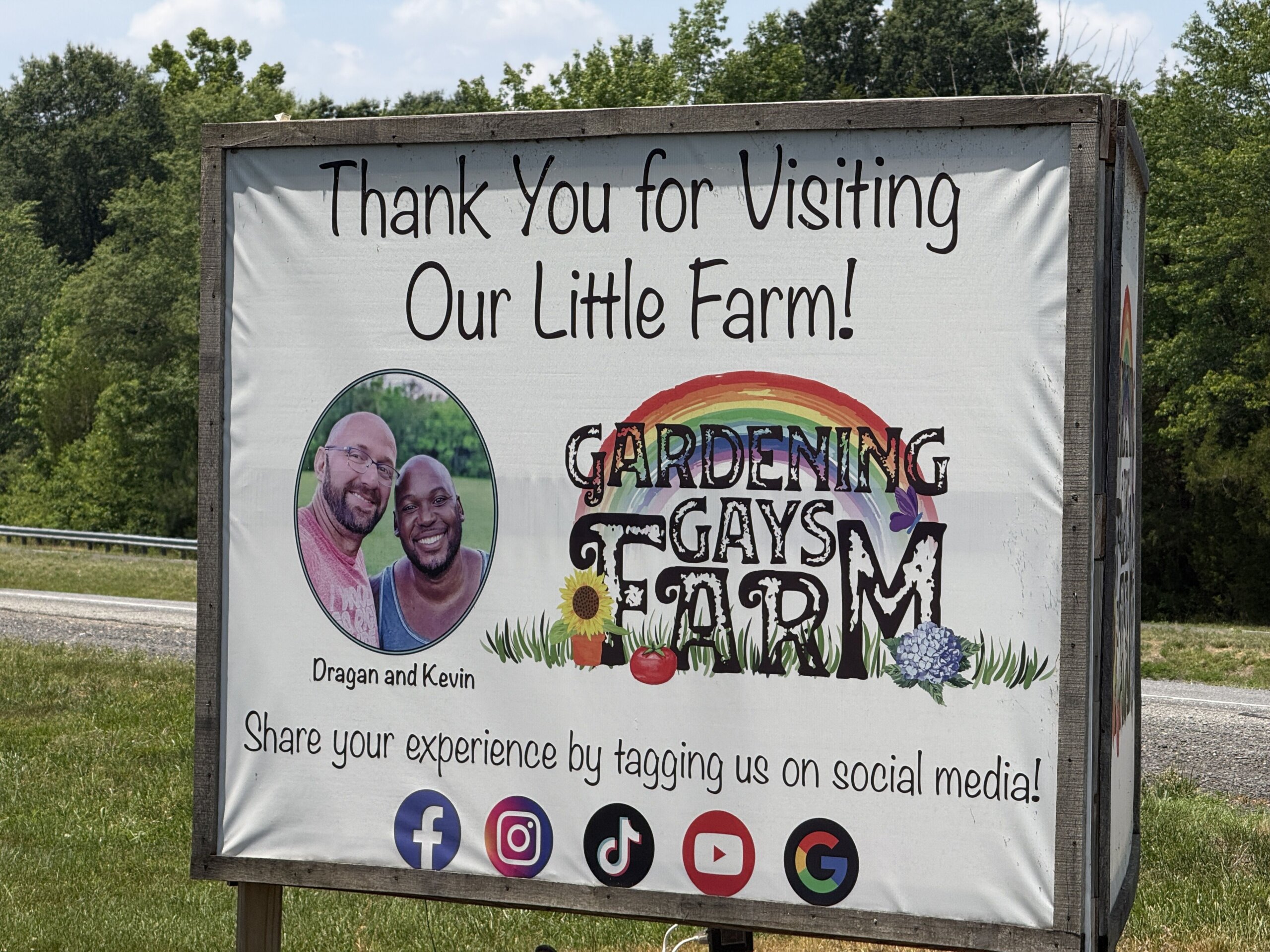
It is hard to miss as you travel down U.S. 301 through King George County, Virginia: a colorful sign with arching rainbow that reads, “Gardening Gays Farm.”
Now in their fifth season, the married couple who own the farm called this pivot in their lives a little unexpected at first but incredibly rewarding.
“I never thought that I was going to go back to it,” said Dragan Kurbalija, a Gardening Gays Farm co-owner.
He grew up on a farm in Croatia, and when he was young, vowed to never work a farm again.
It is a similar promise that his husband Kevin Graham made after working during his childhood for his father’s lawn service business in Florida.
“It’s not foreign to me, being outside, the hard work and ‘eating dust’, as my dad would call it,” Graham said. “My brothers and sisters and I vowed that we never wanted to have a flower bed in our yard when we became adults.”
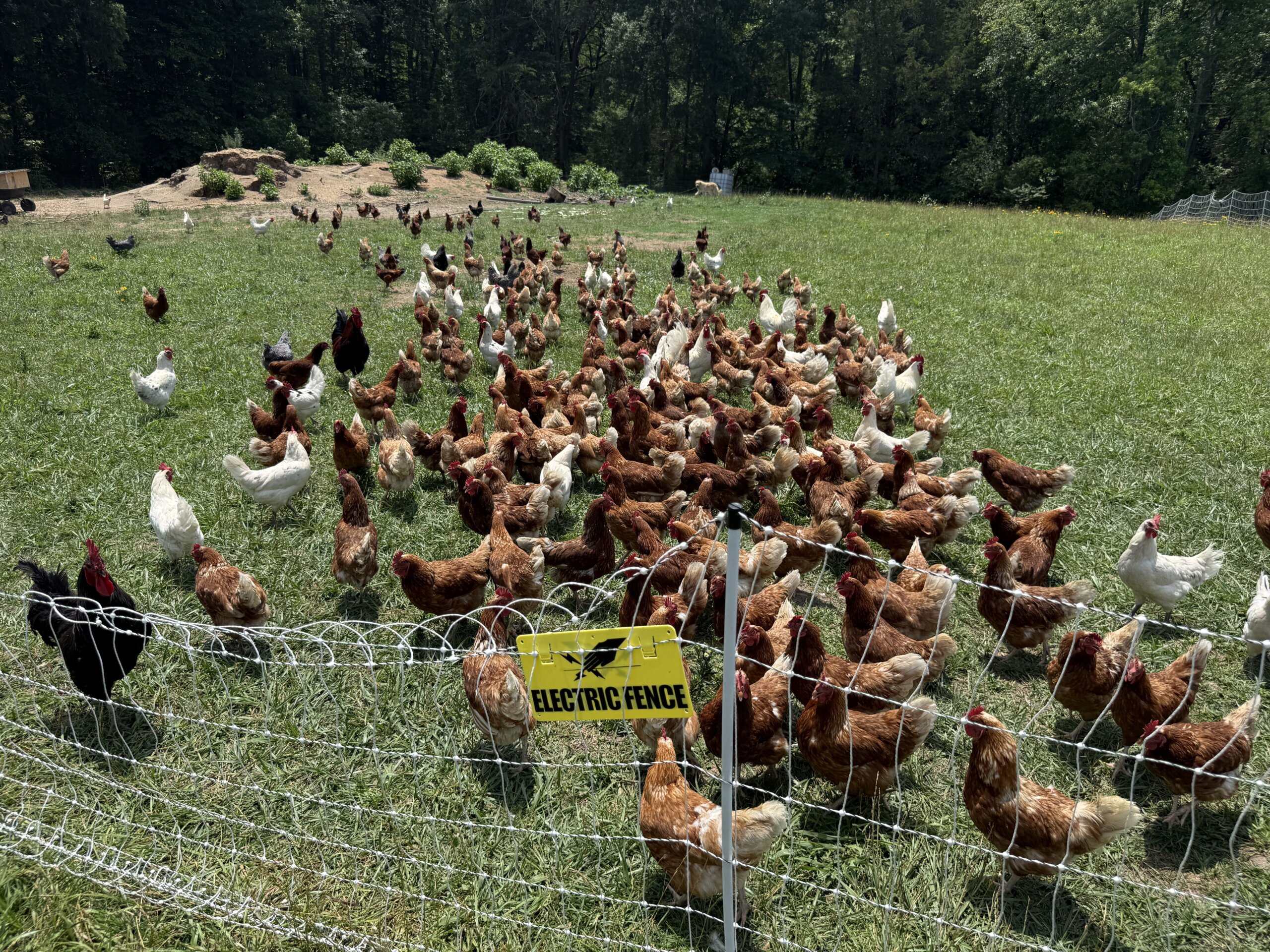
Instead, the two now oversee a 27-acre farm, growing fresh produce such as tomatoes, peppers and watermelon, and watching over flocks of sheep, chickens and ducks.
“We pride ourselves on, first and foremost, being a working farm,” Graham said. “We have a farm store and a garden center.”
Gardening Gays Farm is open to the public year round, and welcomes customers seven days a week during the growing season.
In addition to whole chickens, just-laid eggs and other farm-fresh products, visitors will find items made by 20 or so local vendors.
“It’s like having a farmer’s market experience at your disposal without having to get up early on a Saturday morning and fight the crowd somewhere,” Graham said.
Every Saturday in the spring and fall, the farm invites food trucks and serves brunch. Farm festivals held four weekends a year attract up to a thousand people each day.
Gardening Gays Farm started as a garden in the backyard of their Upper Marlboro, Maryland, townhouse. Graham and Kurbalija grew enough to begin giving friends their produce, and Gardening Gays was born there as a hashtag on photos they would post on social media.
In March 2020, Graham had a friend sketch their Gardening Gays logo, and for Kurbalija’s birthday, they printed tank tops.
“Never in a million years thinking that it was going to be this,” Graham said. “It was the two of us, just our little hobby that we enjoyed enough to put it on a T-shirt.”
During the pandemic, they saw how empty grocery store shelves had become and decided they wanted to become more self-sufficient. That’s when the idea of a full farm came to be.
They originally wanted to stay close to D.C., but were priced out of any land that would be able to support a working farm. They looked in Delaware, Maryland, Pennsylvania and even New Hampshire before finding their spot in Virginia, moving there in August 2021.
“Our friends thought we were crazy,” Graham said. “Being a gay couple moving to some place — like D.C., where there’s so much acceptance, so much freedom, so much ability to be yourself — walking away from all of that to come back to a place that has a lot of question marks.”
The move tore some of their friendships apart. But they described the move as the next chapter in their lives. Where once they could walk into a D.C. bar and the bartender would instantly know their drink order, they now enjoy watching their five dogs roam and enjoy the farm.
“Just to watch nature unfold in front of your eyes, and to know that all of this stuff depends on you every single day,” Graham said.
Kurbalija agreed. “There’s more to life than a Friday afternoon happy hour. We decided to build this and enjoy it every day. Yes, there’s absolutely hard days when it’s 100 degrees and stuff needs to get done, but overall there’s just such a joy of being here,” he said.
But with that joy comes hard work.
“I don’t know many people in their 40s who decide to work this hard,” Graham said.
There are constant chores: feeding and watering chickens, sheep, guineas and ducks, or planting the latest crop after bush hogging the field.
The new focus has changed their perspectives, they said. Things that used to stress them out don’t matter nearly as much because there are more important responsibilities on their daily to-do list.
“If we don’t get out of bed in the morning, these animals don’t eat. They don’t get fresh water,” Graham said.
Kurbalija appreciates how the farm made him more patient and less reliant on the instant gratification of modern life with smartphones.
“It just makes you slow down, like you plant stuff in April, you don’t harvest it until August, September,” he said.
Ultimately, they said, the rural move and career shifts dramatically improved their quality of life.
“The deep connections that we make with people, with the conversations that we have, is beyond anything that we ever had by living in D.C.,” Graham said. “We get to know people on such an intimate level, who their kids are, when they’re vacationing, all those types of things. It unlocks something inside of your spirit to be able to develop that type of community here, and we’ve never had that anywhere that we’ve ever lived before.”
What has the reaction been to a gay-owned farm in the largely rural King George County?
“It’s been amazing. I mean, beyond our expectations,” said Kurbalija.
According to the farmers, the community is driven to support local businesses, and they’ve been voted best agricultural business, best family-owned business and best overall business in the county for two years running.
“We were accepted by this community. Yes, absolutely it was risky. It’s a conservative community,” said Kurbalija. “But we also believed in our work and what we do.”
For the first year of its existence, their famous “Gardening Gays Farm” sign was not installed. They instead wanted to show neighbors that their farm about more than their branding.
Kurbalija and Graham said they do only what feels authentic to themselves, while it is Pride month, the number of rainbows at the farm is the same as any month in the year.
“We don’t need an extra month to be proud,” said Kurbalija. “Find what do you enjoy doing, and do that, and do it every day of the week.”
Get breaking news and daily headlines delivered to your email inbox by signing up here.
© 2026 WTOP. All Rights Reserved. This website is not intended for users located within the European Economic Area.