Frustration has been mounting over the snow and ice covering streets, sidewalks and neighborhoods around the D.C. region. Residents of Prince George’s County, Maryland, say it’s particularly bad there, and their complaints are being heard by county leaders.
For the last two days, county leaders have been going airborne to get a bird’s-eye view of the situation by riding in a county police helicopter 500 feet in the air.
“I started taking notes from the very beginning,” said Melvin Powell, deputy chief administrative officer for public safety in Prince George’s County, while he was somewhere over the Fort Washington and Clinton area of the county. “Having an aerial perspective does a lot, and it helps out with dealing with some of the roadways that may not be visible.”
On Wednesday afternoon, County Executive Aisha Braveboy made a promise to residents, who said they still couldn’t get out of their neighborhoods, that their streets would be passable by midnight on Thursday.
“Now, when I say substantially passable, that doesn’t mean that your streets will be clear to the pavement. I want that to be clear,” she said. “It means that a plow or heavy equipment has passed through at least once, one travel lane is accessible and the road can be traveled with reasonable care. So you may see some snow, but it is passable, meaning a normal car can drive on it.”
From up high, most of the residential roads appeared to meet that criteria, though Powell conceded things weren’t perfect and some were going to need more attention from the county.
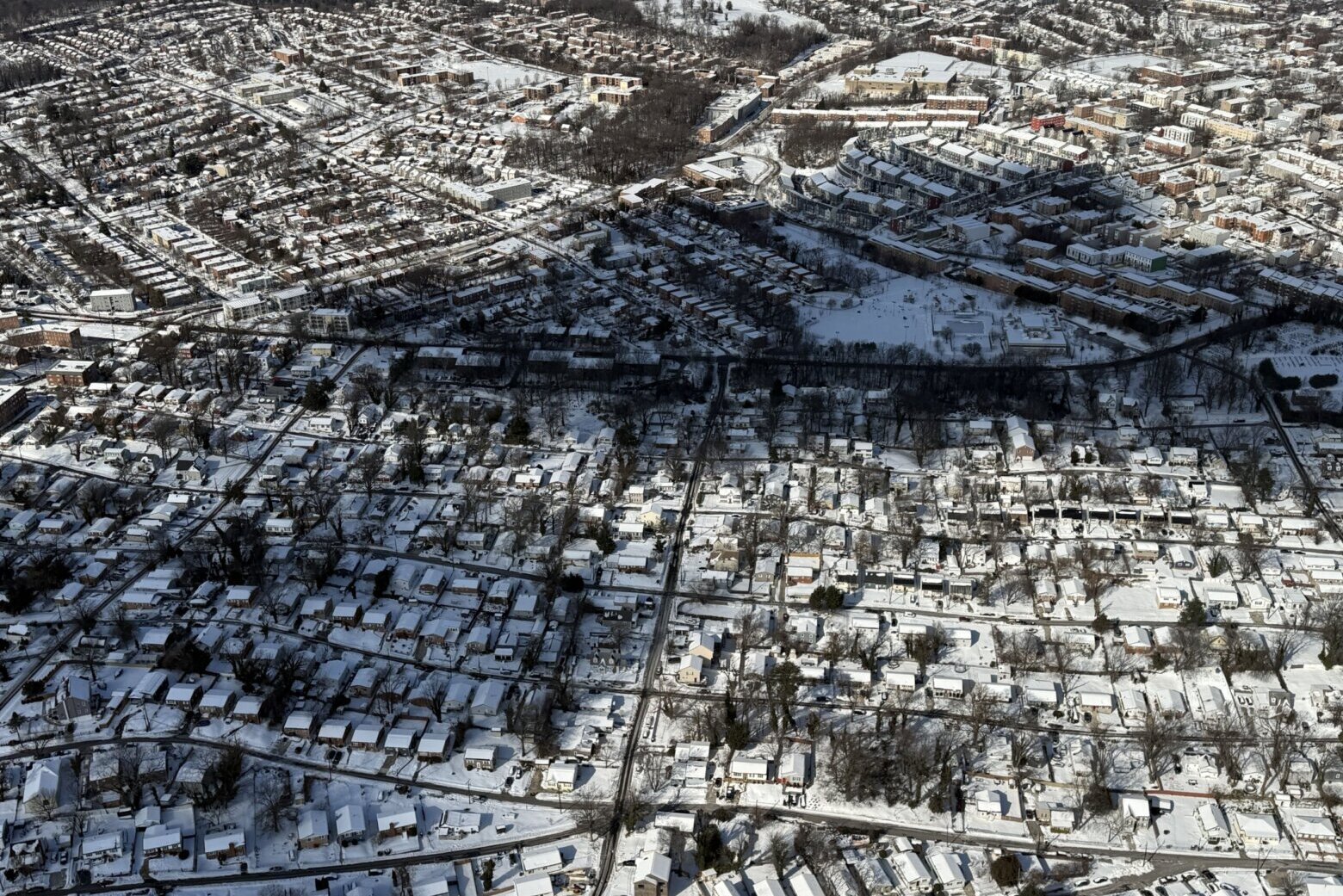
“There’s some roadways that can use an additional plowing — to have the trucks come out and do some additional work,” Powell said.
On Wednesday, Braveboy deployed what she called a “strike force” to blitz the areas that are still blocked with snow, with a special focus on cul-de-sacs and some of the more narrow roads the county maintains. In some cases, residents made it difficult for plows to get through.
“We’ve seen on many streets, folks are parking on both sides of the street. That makes it very difficult for trucks to go down,” Braveboy said.
She’s asking cars be parked on the even side of streets so plows can access them.
Braveboy mostly cast blame on “2 to 4 inches of compacted ice” for hindering response efforts, and said the same complaints in Prince George’s County mirror those in other parts of the region. She also said the larger size of the county means there are more roads to plow.
“Now it’s really about execution, and it’s about continuing to add assets where we can, and just listening to the residents, making sure that we’re hitting those streets and those side streets,” she said. “Letting residents know when we can’t hit their streets because there’s too many cars parked in some areas, not in all, but in some areas on those cul-de-sacs, which makes it very difficult.”
Another complaint WTOP has been hearing is about the snowplow tracker available to county residents to monitor progress. Those who live in Fort Washington say their neighborhoods are listed as having seen a plow recently, but they say that’s not the case.
County leaders insist that hasn’t happened.
“Something did probably happen,” Braveboy said, referring to the arrival of a plow. “And it’s not that they’re not going to go back through your area.”
But when you see your street listed in the tracker as having gotten attention, “it just shows that there was some progress made there, and then they’ll come back to complete it,” she added.
“The plows do go through the routes, and they will go through multiple times in a snow operation,” Department of Public Works and Transportation Director Michael Johnson added. “So when someone looks out the window and they say, ‘Well, listen, my street hasn’t been serviced.’ That’s not always the case. That’s not necessarily what has happened.”
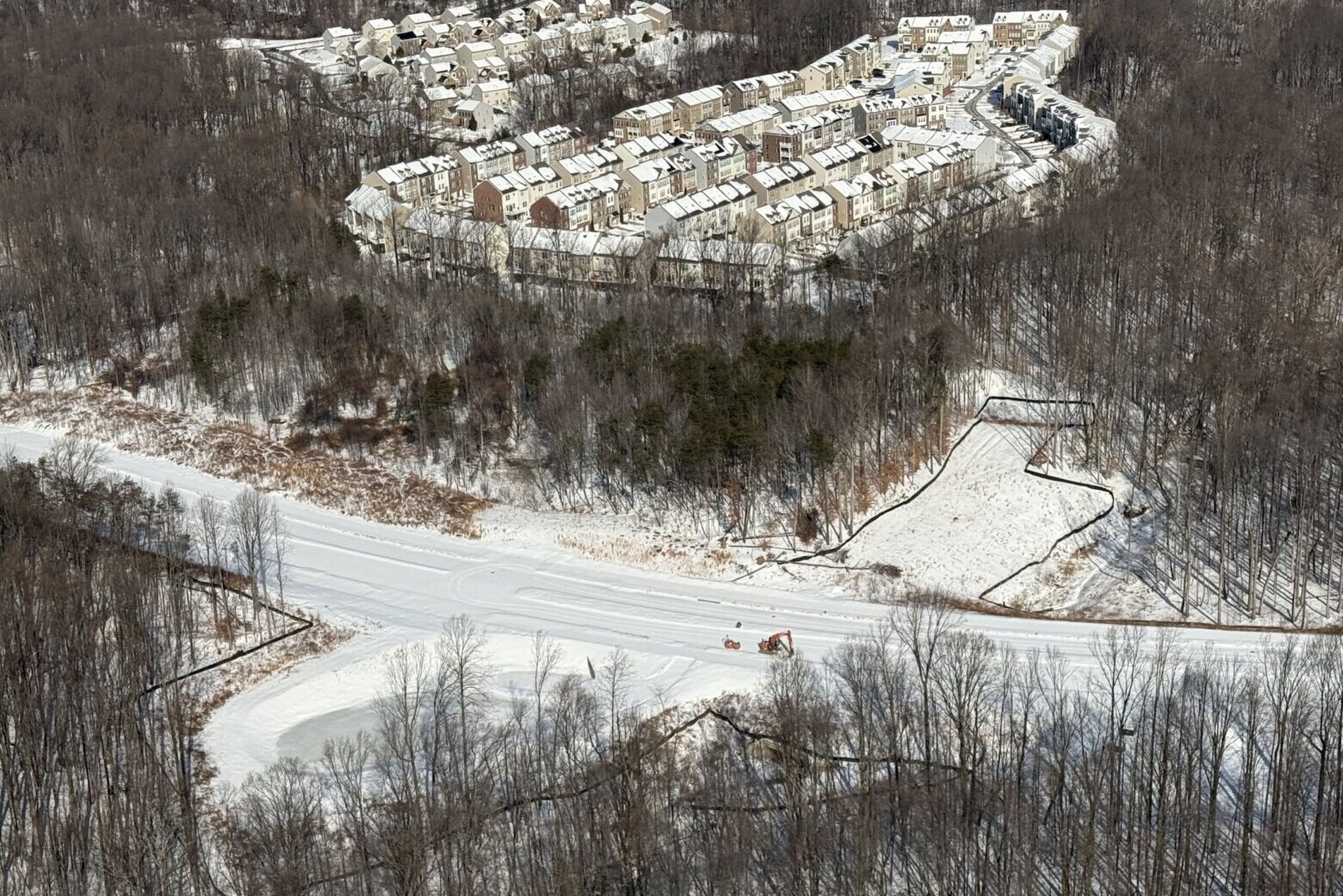
He conceded there are variables, such as too many cars parked on the roads, that could make it so a plow arrived but couldn’t do any work.
From the air, the county was able to pinpoint where crews would need to return.
“It gave us a different perspective,” Powell said once the helicopter had landed in College Park. “Being up in an aircraft where you can see everything from a wide-angle. … What I can see is we haven’t gotten it perfect. Everything is not a perfect set of circumstances. But I’d say, in my opinion, 90% of what we saw were actually cleared roadways.”
He said what wasn’t cleared still looked compacted and treated.
“We’ll circle back to make sure that those plow trucks get to those streets that have already been done, two or three times,” he said. “We are not going to stop until we get through everybody’s neighborhood. Obviously, there’s a lot. There’s a lot to do. We’re not going to quit until it’s all done.”
Get breaking news and daily headlines delivered to your email inbox by signing up here.
© 2026 WTOP. All Rights Reserved. This website is not intended for users located within the European Economic Area.