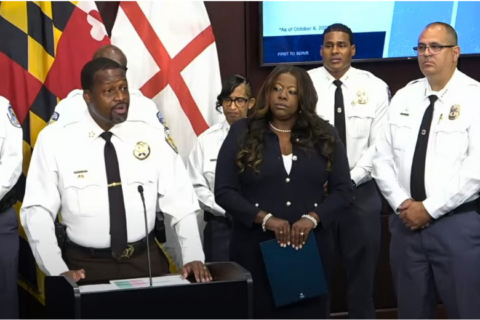
A surge in domestic violence cases in recent years has leaders in Prince George’s County, Maryland, teaming up to figure out a way to reverse the saddening trend.
While overall crime has been declining in recent years, crimes of domestic violence, which includes more than just romantic partners, is up about 30%.
“A fourth of Prince George’s County will be impacted by domestic violence, whether you are a victim, a family member or a friend,” Council member Wanika Fisher said. “When you go home, you should not be experiencing violence in any aspect.”
The new task force will be far bigger than most that get put together by the county. The 24-member board will be represented by law enforcement and social service agencies, nonprofits, religious groups and even developers.
“We’ve only really had a very reactionary footprint when it comes to DV victims and their families, which is, you are a victim of domestic violence, there is a crime, there is a case, you go to court,” Fisher said. “But there hasn’t been a strategy when it comes to housing, when it comes to resources, when it comes to wraparound services.”
Council member Krystal Oriadha, who said she’s a survivor of domestic violence, said covering all those bases is important, because the abuse isn’t always just physical, but also verbal, psychological or financial.
“One of the biggest issues we’ve had when we’re trying to help survivors leave the home is the ability to say, ‘Well, I haven’t been in the workforce or I can’t afford to pay for rent and food and child care and to take care of the kids. And where am I going to go?’” Oriadha said. “So there’s a lot of isolation that’s very intentional that happens in abusive situations.”
Jeanette Brandon, CEO and founder of the nonprofit Together, We Can, said that’s the recurring theme she sees with people trying to get out.
“The abuser controls with the money,” she said. “So when the victims want to get out, they have nowhere to go. Most of the time, the victims are not working. So that’s how the abuser controls them, because they’ll control their financials.”
Denise McCain, director of the Prince George’s County Family Justice Center, said that’s also why so many victims go back to their abusers after they leave.
“Sadly, it is a factor of socioeconomics, lack of housing,” McCain told WTOP. “’Where am I going to go? Who’s going to help me take care of my children? Help me pay my bills? I can’t do that by myself.’”
And she said the resources often available tend to serve as more of a Band-Aid than a solution.
“We’ll give them a resource, we’ll take them to counseling, we’ll get them connected with legal aid, someone that can help with the problem,” McCain said. “But the larger issue is that they are not self-sufficient, and so they feel that they have no options.”
Get breaking news and daily headlines delivered to your email inbox by signing up here.
© 2025 WTOP. All Rights Reserved. This website is not intended for users located within the European Economic Area.