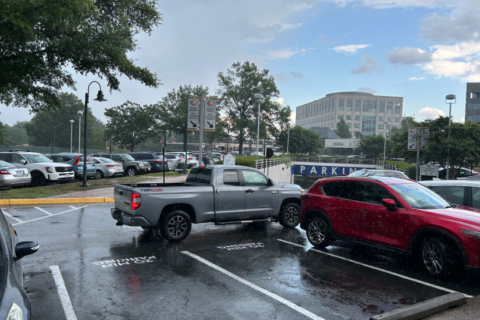
Two years ago, Montgomery County, Maryland, officials introduced 35 flood sensors designed to give emergency personnel more time to take action when flash flood watches turn into warnings.
The sensors were provided through a national pilot program to enhance early warning systems, and county officials said they’ve already seen positive results.
“Our number of water rescues, as a result of flooding, has gone down precipitously,” Earl Stoddard, the county’s assistant chief administrative officer and a former director of the county’s Office of Emergency Management and Homeland Security, told WTOP’s Kate Ryan.
He cited the installation of the sensors as the reason, although he said the county is still compiling data on the program.
Stoddard said that’s a benefit not only to the public, but also to first responders.
“We’ve seen a reduction in the risk that the public is exposed to, and that first responders are exposed to,” he said.
Matt Miziorko, an emergency management specialist with Montgomery County’s Office of Emergency Management and Homeland Security, said the sensors in low-lying areas, such as those near Sligo Creek and Rock Creek Parkway, provide vital early warnings to first responders.
“If we detect that these predetermined thresholds or these water levels at certain locations are getting close to or they’re outright flooding, Park Police can get a heads up and we can start closing these roads down and keep motorists, bikers and hikers off these areas,” Miziorko told WTOP.
Safety tips for surviving a flash flood
Motorists are often reminded to “Turn Around, Don’t Drown” during flash flood watches and warnings, and Miziorko said it’s important to heed those advisories.
“It is not safe, it is not practical to drive through floodwaters,” Miziorko said.
-
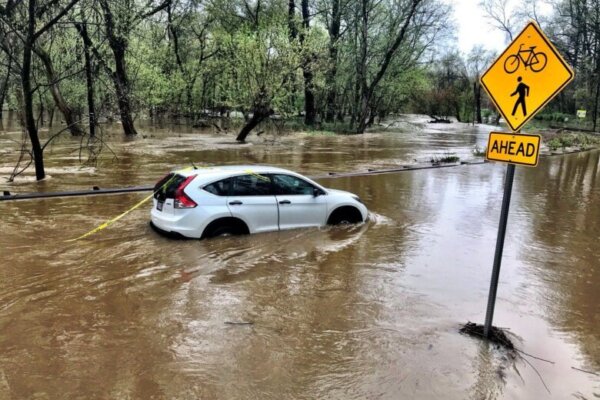
A file photo from 2018 when roads flooded in several locations in Northwest D.C. and Montgomery County. (WTOP/Neal Augenstein)
If you do get stuck, he said, “You have to be rescued, your vehicle then is unrecoverable because it’s flooded out and that’s property loss.”
“You’re endangering yourself and you’re also endangering first responders that are coming out to come get you,” he said.
Montgomery County has what Stoddard calls a number of “high hazard dams.”
“If they were to fail, or they were to be overtopped or be breached, they would affect human-inhabited properties,” Stoddard said.
Those dams have been mapped, and are monitored by the county, Stoddard said.
“In certain events, we actually pre-deploy people out to certain dams that are particularly high-hazard,” so people can be evacuated, Stoddard said.
Miziorko said one of the best things the public can do is to become aware of the alert systems available to them in their area. Maryland’s Department of Emergency Management has a feature that lets users choose a number of counties to get alerts from on their cellphone.
In Montgomery County, residents can sign up for Alert Montgomery.
“You can sign up for flood alerts, traffic alerts, things of that nature that tells you what conditions are like across the county,” Miziorko said.
Asked about the temptation to capture extreme weather events, such as flash floods on their phones for social media, Stoddard said, “Whether it’s fire, flood or tornado, your social media hits are not going to be as valuable as your life and the lives of those people you may put at risk.
“It’s not worth it. It’s just not worth it,” he added.
Maryland emergency resources can be found here.
Montgomery County emergency resources can be found here.
Virginia emergency resources can be found here.
D.C. emergency resources can be found here.
Get breaking news and daily headlines delivered to your email inbox by signing up here.
© 2025 WTOP. All Rights Reserved. This website is not intended for users located within the European Economic Area.