A bill to legalize autonomous vehicles has cleared one legislative chamber in Richmond, and this week, it’s something that Maryland lawmakers started considering.
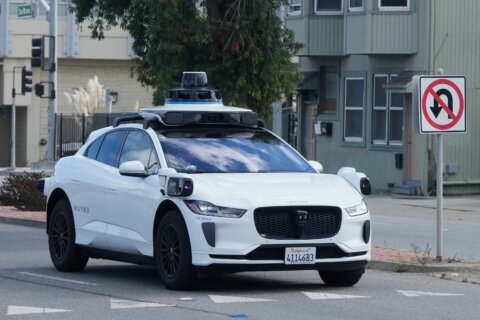
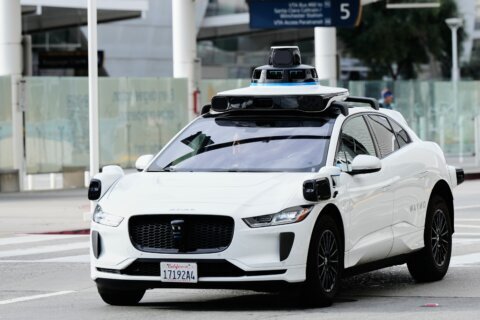
What are known as robotaxis are available in plenty of other states beyond the D.C. region, and D.C. itself has at least tested the technology, though red tape has kept them from going live.
On Wednesday, a Maryland state Senate committee spent about two hours hearing testimony for and against creating regulations to allow the technology to move forward — though mostly for it.
On Thursday, lawmakers in the House of Delegates also heard about it.
“Why should we permit autonomous vehicles in Maryland?” asked Del. Natalie Ziegler, the sponsor of the bill in the House. “Because they are so much safer than human drivers who cause an average of 40,000 deaths a year, not to mention life-altering injuries.”
She cited numbers from Waymo, one of the tech companies leading the charge for autonomous taxis around the country, to back up her assertion that those vehicles are safer.
“They show 92% fewer crashes involving pedestrians; 90% fewer crashes causing a serious injury; and 81% fewer crashes with any injury at all compared to a human driver,” Ziegler said.
“The great thing about autonomous vehicles, obviously, is they don’t do the dumb things that people do,” she also argued. “They don’t drive drunk. They don’t text while they’re driving. They don’t speed.”
Safety was one concern supporters said would be solved by this technology, but advocates for the blind also testified in support of the measure.
“The transportation options that exist are insufficient, inefficient and costly,” said Ronza Othman, president of the National Federation of the Blind of Maryland. “Independent travel for an individual with a disability is filled with indignities. Throw in the discrimination that we experience because of our guide dogs, our long white canes, our other mobility aids, and simply being disabled, and it is intolerable.
Othman cited a recent interaction with a rideshare driver that “refused to take” her to work “because he said it wasn’t worth the money, since he could get more rides in the time it would take him to help me.”
On Wednesday, she also spoke in favor of the Senate bill to the Senate Judicial Proceedings Committee.
Pushback came in both committees from drivers and labor organizations worried about job displacement among professional drivers.
“This all sounds like sunshine and daisies,” said Albert York, who told the Senate committee he makes a living driving a truck. “They left out the 1,400 accidents Waymo had since 2021 to 2025 — which they claim none of them were their fault. Well, maybe so. But if I have 1,400 accidents the last four years, and none of them are my fault, Giant would still fire me, and they’d be right to. This technology is not ready for prime time.”
The impact on driving jobs was also brought up during both hearings.
“What’s going to happen is some of the most professional, experienced drivers, some of the safest drivers, because they cost these companies the most, they’re going to be some of the first to go,” said Brian Wivell with Amalgamated Transit Union, Local 689 and Local 1300.
Opponents of the measure said they were worried the more than 100,000 trucking jobs that exist in Maryland would end up disappearing if the technology is legalized there.
“I pay taxes, I buy meals out, and all of that comes from these high paying jobs that this bill will not protect,” York said. “Because eventually, these corporations will just outsource us to automated vehicles. The corporations do not care about us.”
David Pendleton with SMART, a national transportation union, also rose the issue.
“What’s the plan for the state to pay for the numerous unemployment benefits? What’s the plan to replace close to 100,000 jobs?” Pendleton asked. “What’s the plan for retraining workers, and frankly, would there be a place left in the middle class if we could just wholesalely wipe out an entire sector of employment?”
The bills’ sponsors will meet with labor leaders Monday to try to hash out those concerns.
But delegates representing some of the state’s more rural communities suggested automated vehicles could fill a need in their communities.
“We have a shortage of CDL drivers that are capable of driving our vehicles,” said Del. Kevin Anderson, who represents the lower Eastern Shore. “So we don’t have the luxury that you have in the urban areas with drivers. We don’t have a taxi cab company in our county.”
He gave an example of the difficulties faced by a friend who can’t drive, such as needing to schedule paratransit rides for doctors appointments a month in advance, acknowledging companies like Waymo could help solve that issue.
During Wednesday’s hearing, Kelly Schulz, CEO of the Maryland Tech Council, talked about her experience riding in an autonomous taxi and suggested it was time for Maryland to get on board with half the United States when it comes to autonomous vehicles.
“It’s time, I believe, for Maryland to demonstrate that we support and fully embrace cutting-edge technology,” Schulz said. “This bill sends a strong signal that Maryland intends to compete in this rapidly evolving sector. Aligning state law with future-oriented industries like automated systems, signals to national and global tech firms that Maryland is a welcoming place to do business.”
At the end of the House hearing, Del. Michele Guyton, the vice chair of the committee, expressed hope that Monday’s meeting would lead to some sort of agreement. But she conceded those differences have the potential to keep that legislation from passing this year when it comes up for a vote.
Get breaking news and daily headlines delivered to your email inbox by signing up here.
© 2026 WTOP. All Rights Reserved. This website is not intended for users located within the European Economic Area.