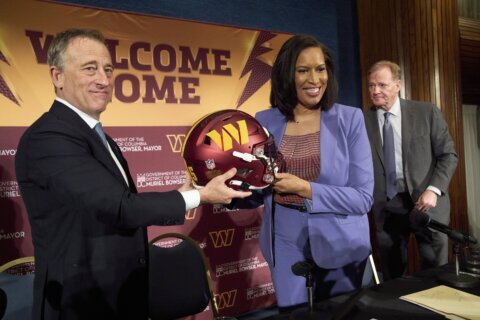
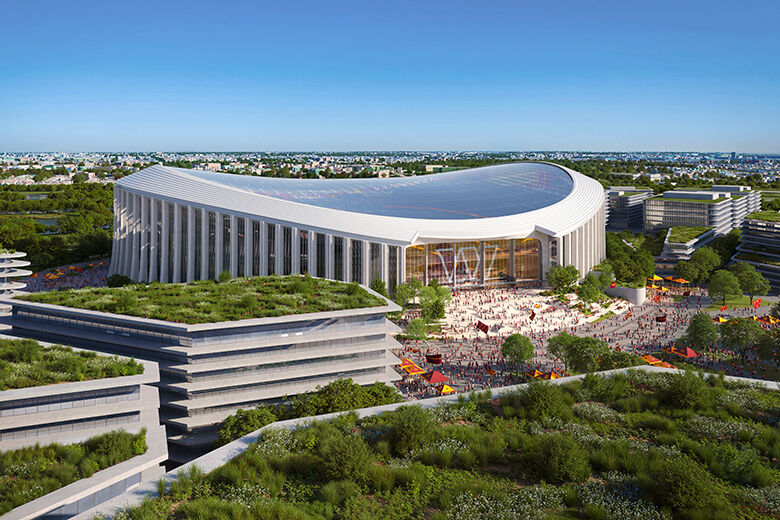
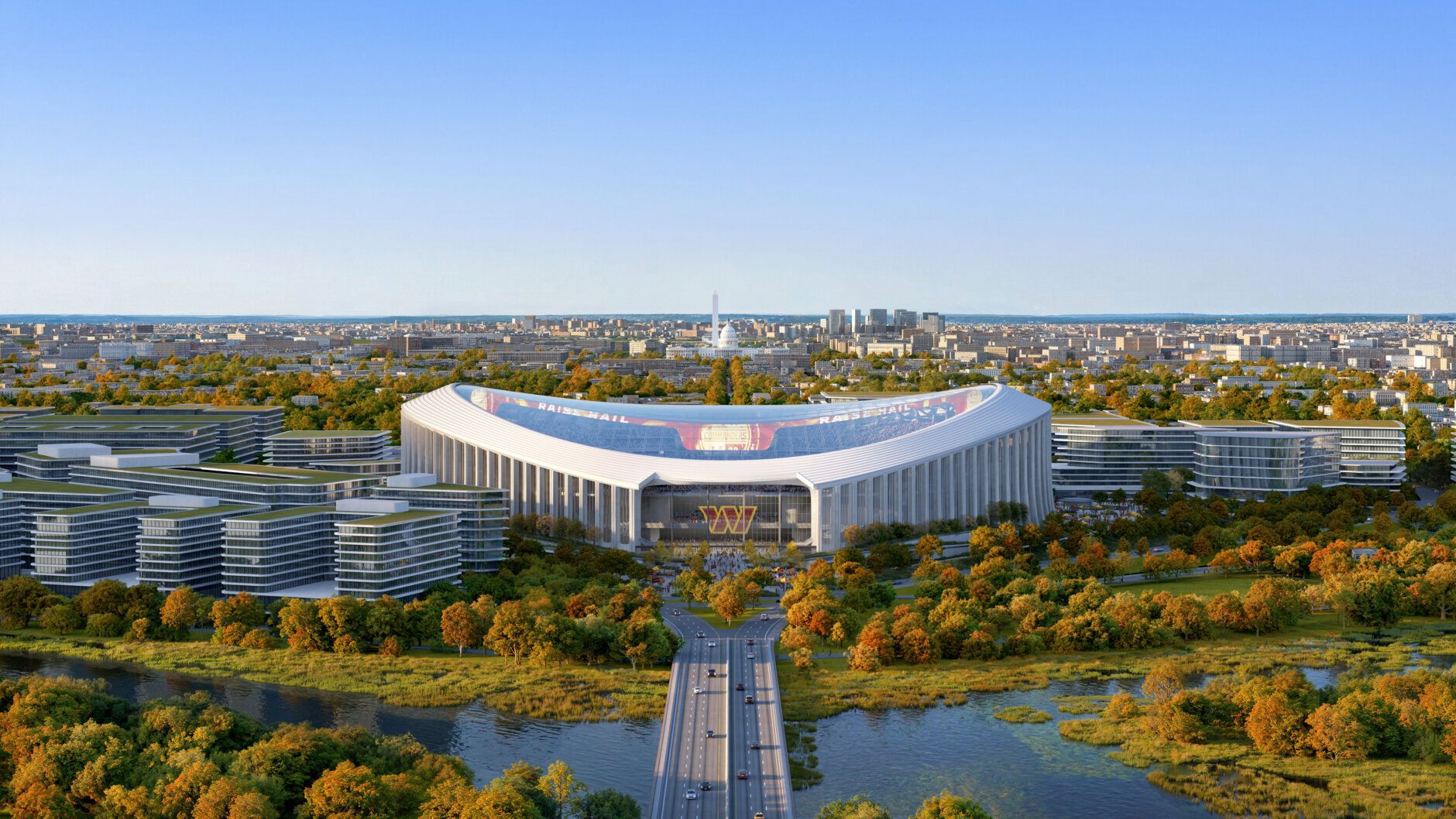
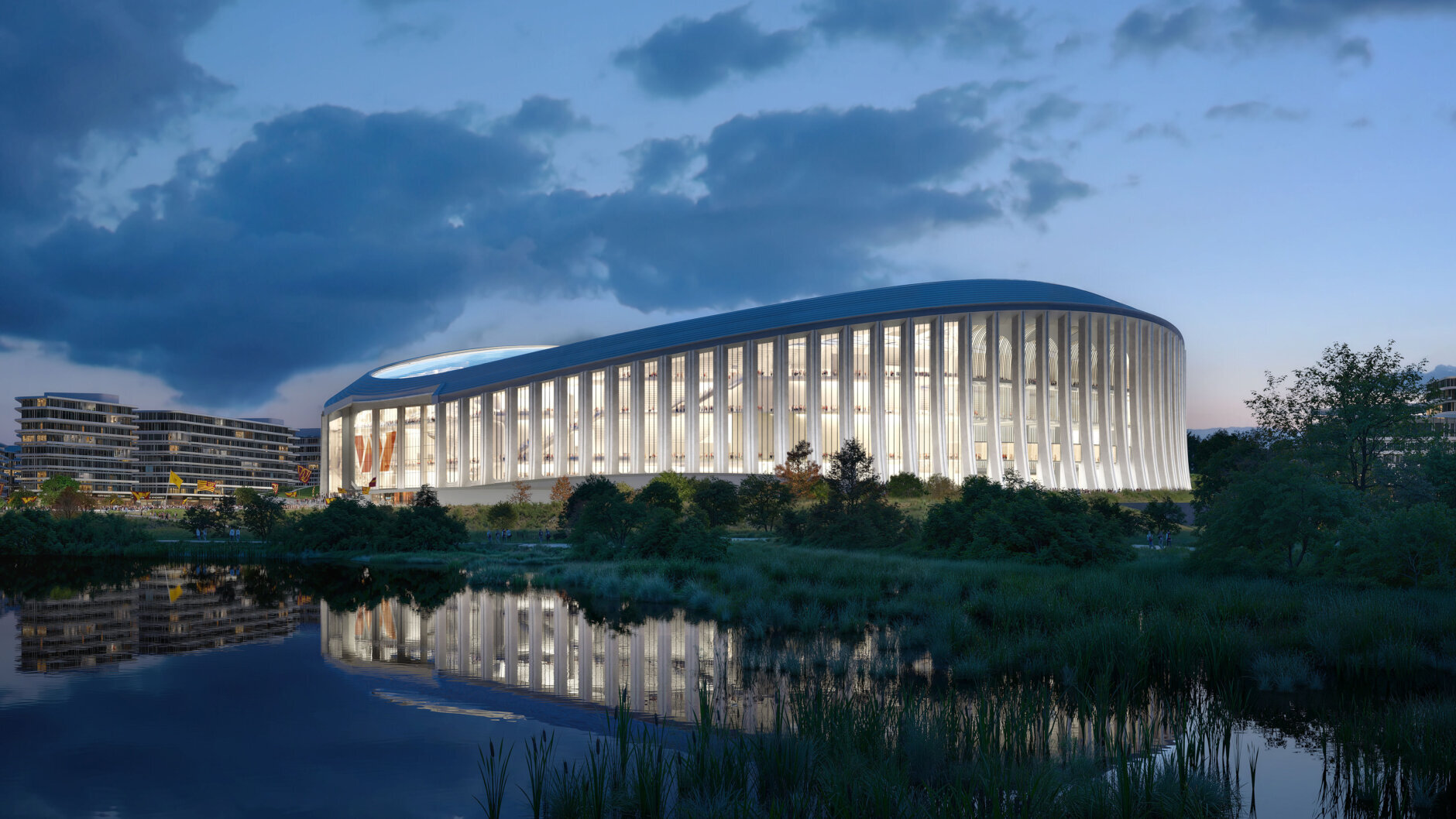
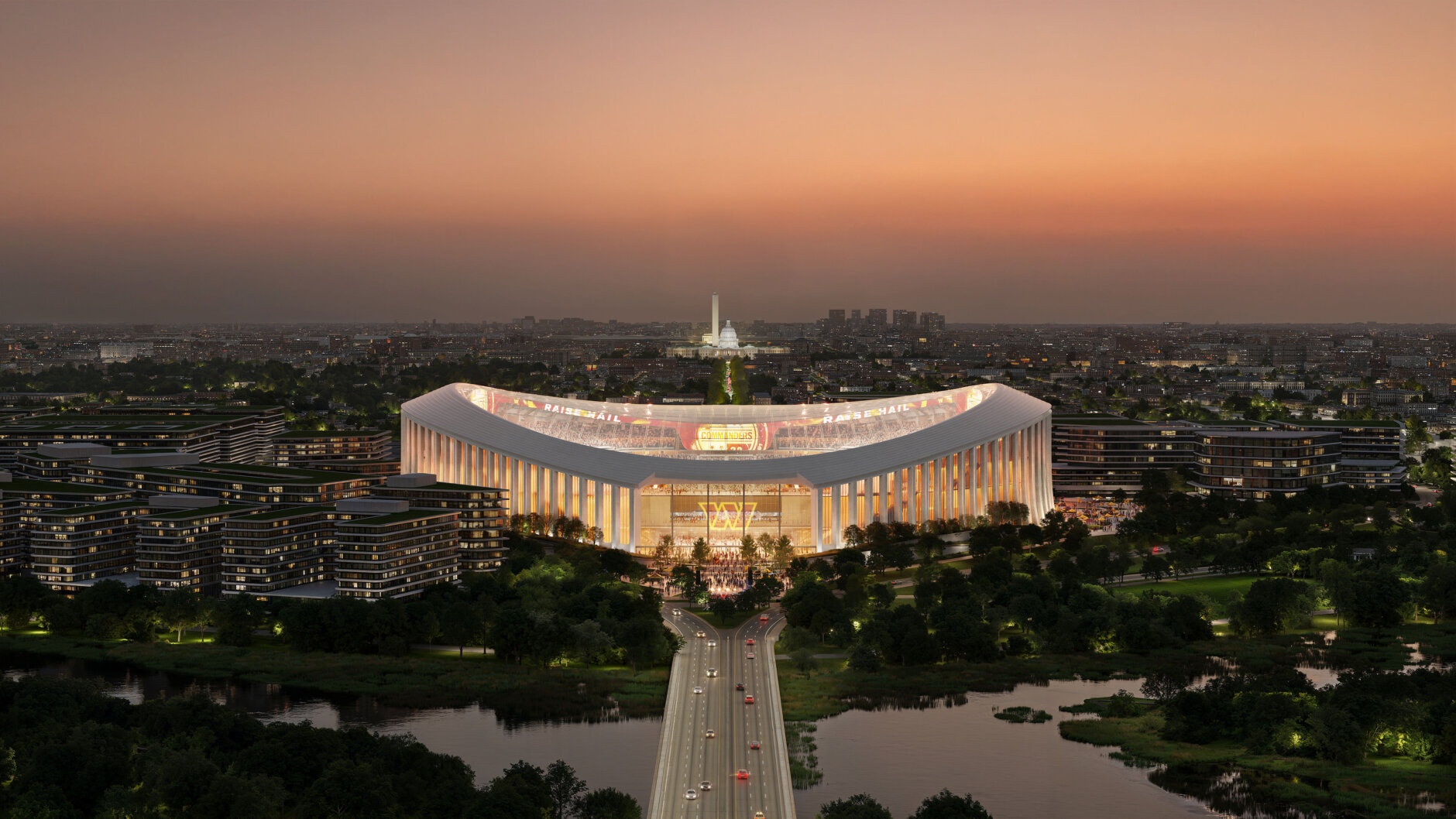
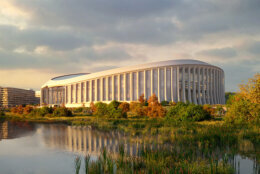
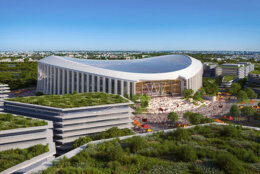
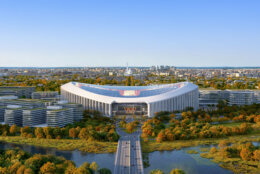
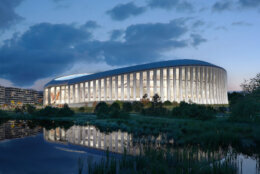
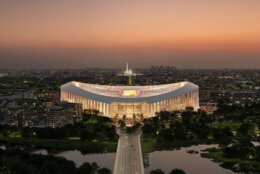
The National Capital Planning Commission gave the Commanders Stadium redevelopment plan the green light to move onto its next phase, voting unanimously to approve the project’s initial design concepts.
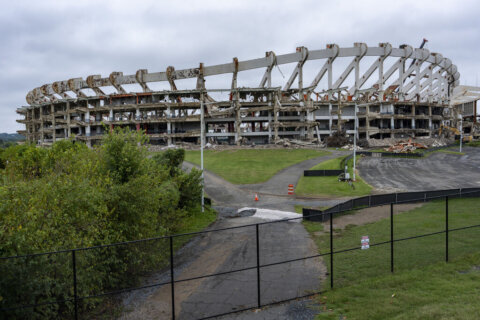
The 12-member National Capital Planning Commission praised the design for the proposed replacement for the old RFK Stadium at its meeting Thursday.
Commission Chair William Scharf said the design reminded him of another regional landmark.
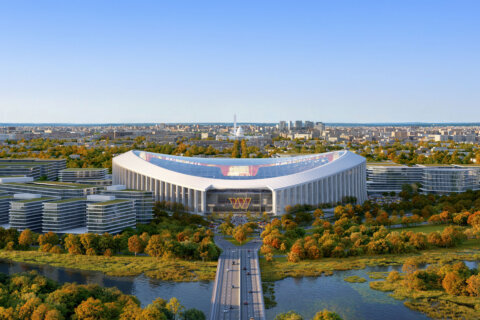
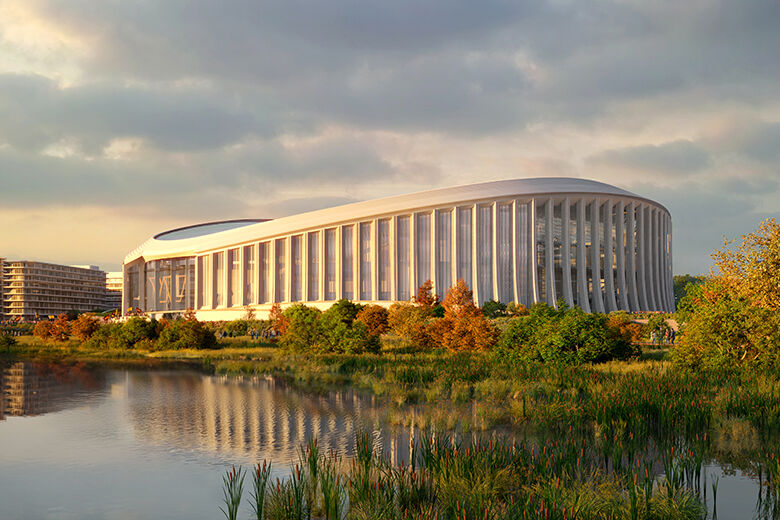
“To me, it’s evocative of Eero Saarinen’s Dulles Terminal” he said, referring to the Finnish architect’s innovative airport design, unveiled in 1962. “I’m not sure if anyone agrees with me on that point, but that’s what I see when I look at it, and I think that’s an interesting design choice in keeping with the history of the District.”
“I was really worried we were going to end up with some modernist garbage that would’ve destroyed the skyline of Washington, D.C.,” Scharf added.
Commission member Tammy Stidham also heaped praise, recalling fondly about how she spent a lot of time at the former stadium because her grandfather had season tickets, back when Washington once “called it home.”
“As a whole, I think it is starting off as a very beautiful structure that is going to be a lovely, new landmark,” she said.
The design plans for the new Commanders Stadium submitted to the members of the NCPC included conceptual images of the proposed stadium, striving to keep the distant views of the Washington Monument and U.S. Capitol dome visible from the east.
But Commission member Evan Cash asked about the views from all angles of the proposed stadium, inquiring about the potential “ugly side” of the building.
“Somewhere around here, that’s got to exist and I haven’t seen any of it yet,” he said. “Where is the ugly side going to be and when can we see it to see what you’ve done to mitigate it?”
Lance Evans, a principal at HKS Architects — the Texas-based architecture firm behind the stadium’s design — told Cash, “There is no ‘back door’ to the stadium.”
“The stadium infrastructure, access is located on the north side of the site, adjacent to the G2 garage … and then from there, we go underground, under the public realm, to the event level of the stadium,” Evans said.
The idea, Evans said, is that the movement of goods and services in and out of the stadium “is actually concealed from the public realm.”
Security was top of mind for Commission member Paul Schaefer, who said, “I just want to encourage you and the entire team to be thinking not just with your traditional security measures.”
He urged the design team to “start thinking about some of those exquisite issues that come with a mass gathering location such as this.”
The stadium is designed to hold crowds of up to 65,000 people. The $3.7 billion redevelopment plan also includes mixed retail, entertainment and housing.
During the meeting’s public comment segment, Kat Aristi with Oceana, an environmental group aimed at protecting the world’s oceans and reducing plastic pollution, asked the commission members to consider adopting reusable cups when the new stadium opens in 2030.
“Stadiums and arenas across the country are moving to reusable cups,” she said. “Levi’s Stadium, home to the 49ers, and Arrowhead, home to the Chiefs, both committed to implementing reusable cup programs this year, including at this weekend’s Super Bowl.”
In response, Scharf poured cold water on the idea.
“I was involved in the drafting of President Trump’s executive order on bringing back plastic straws. I think paper straws are terrible,” he said. “So to the extent that anything NCPC is doing or saying impacts choices on food service items in the stadium, I would encourage you to go with traditional plastic.”
The NCPC voted in favor of recommendations to get more information on multiple aspects of the design, including the materials being considered for the dome. The team and its architects will take the commission’s input into account, and at future meetings, discuss a range of issues, including parking access, transportation management, noise control and stormwater management.
The stadium will be the centerpiece of a massive redevelopment project and could be hosting events by 2030.
WTOP’s Ciara Wells contributed to this report.
Get breaking news and daily headlines delivered to your email inbox by signing up here.
© 2026 WTOP. All Rights Reserved. This website is not intended for users located within the European Economic Area.