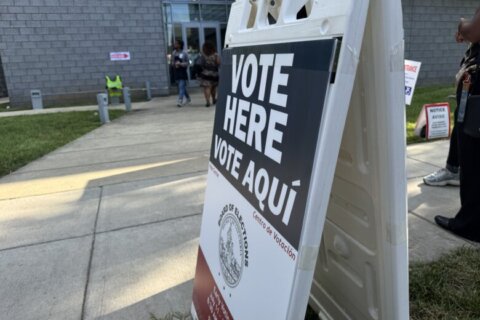
Follow WTOP’s team coverage of the D.C. primary and Election 2026 online, on air at 103.5 FM or on the WTOP News app.
Ahead of D.C.’s primary election in June, WTOP sent a questionnaire to all the candidates in each contested race, asking them to introduce themselves to voters, share their priorities and weigh in on some of the most pressing issues facing the District.
Candidates submitted their responses through an online form, and the answers published are verbatim.
The answers below are from Jackie Reyes Yanes, who’s running for the Ward 1 seat on the D.C. Council against Aparna Raj, Rashida Brown, Terry Lynch and Miguel Trindade Deramo.
- WTOP:
Please briefly describe your professional background. What is your current job, and what experience or skills best prepare you to serve in this role?
- Jackie Reyes Yanes:
I am a longtime public servant, community advocate, and former D.C. government executive with more than 25 years of experience serving residents across the District. I came to Washington, D.C. from El Salvador in 1990 and built my life in Ward 1, where I raised my family and became deeply involved in community service and neighborhood advocacy.
I began my career as an outreach worker with the Latin American Youth Center before serving as a constituent service representative for former Ward 1 Councilmember Jim Graham, who embodied what it meant to be hands-on and present in the community. I later served in multiple mayoral administrations, including as Director of the Mayor’s Office on Latino Affairs and Director of the Mayor’s Office on Community Affairs, where I oversaw engagement and constituent services across numerous offices citywide.
Throughout my career, I have focused on solving problems, connecting residents to resources, and making government more responsive and accountable. I am running to bring that same hands-on leadership and experience to the D.C. Council for Ward 1.
- WTOP:
What are your top three priorities if you are elected?
- Jackie Reyes Yanes:
My top priorities are revitalizing our neighborhood business corridors, expanding real affordable housing, and being a hands-on Councilmember who delivers results residents can see. I want to implement a block-by-block business revitalization plan that helps local businesses thrive so our working families and the missing middle class can thrive too. I will fight to preserve and expand truly affordable housing so longtime residents are not pushed out of the communities they helped build. I also believe residents deserve a Councilmember who shows up, strengthens accountability, improves city services, and fights for safer, cleaner neighborhoods — including a rat-free D.C.
- WTOP:
Crime remains one of the top issues residents talk about, especially violent crime and youth‑involved offenses. At the same time, there are concerns about civil rights and over‑policing. As a Council member, what would you push for legislatively to improve public safety and how would you know those changes are actually working?
- Jackie Reyes Yanes:
Public safety starts with prevention, accountability, coordination, and trust. Residents deserve to feel safe while also knowing their rights will be respected.
As Councilmember, I would focus on strengthening coordination between MPD, schools, behavioral health services, violence interruption programs, and community organizations so agencies are not working in silos. I support targeted investments in youth programming, mental health response, neighborhood-based violence prevention, and faster intervention for young people showing signs of crisis or chronic disengagement.
I also believe quality-of-life issues matter. Illegal dumping, abandoned properties, poor lighting, and broken infrastructure contribute to disorder and make residents feel unsafe. We must address those conditions block by block.
Legislatively, I would prioritize stronger oversight standards, improved response metrics, and clearer accountability for agency performance. Success should be measured through reductions in violent crime and repeat offenses, faster emergency response times, improved case closure rates, cleaner corridors, and stronger resident confidence in public safety systems.
Public safety cannot rely on enforcement alone. It requires visible government presence, strong community partnerships, and systems that respond before problems escalate.
- WTOP:
Some residents say youth‑involved crime cannot be solved by enforcement alone, while others worry there are not enough consequences when serious crimes occur. What role should the D.C. Council play in reducing youth‑involved crime, and how should prevention, intervention, and accountability work together? Please include where you stand on youth curfews and how, if at all, they should fit into a broader public safety approach.
- Jackie Reyes Yanes:
The Council should take a balanced approach that combines prevention, intervention, accountability, and opportunity. We cannot arrest our way out of youth violence, but we also cannot ignore serious offenses when they occur.
Prevention means investing in afterschool programs, workforce development, mentoring, behavioral health services, recreation, and schools that support the whole child. Intervention means identifying young people at risk earlier and coordinating support between families, schools, violence interruption programs, and social services before situations escalate.
At the same time, accountability matters. When serious crimes occur, there must be meaningful consequences paired with pathways toward rehabilitation and reengagement.
I support the limited and targeted use of youth curfews as one tool within a broader strategy, particularly in response to large-scale disturbances or repeated public safety concerns. However, curfews alone are not a long-term solution. They should be narrowly implemented, carefully monitored, and paired with outreach, transportation options, youth engagement, and community-based supports.
The goal should not simply be enforcement. The goal should be keeping young people safe, connected, supported, and on a path toward success.
- WTOP:
The D.C. Council does not run schools directly but controls funding and oversight. How would you use that authority to improve outcomes in DCPS and public charter schools?
- Jackie Reyes Yanes:
The Council plays an important role through funding, oversight, and accountability. As a former teacher’s aide, DCPS parent, and now DCPS grandparent, I understand how important it is to support students, educators, and families together.
One of my priorities would be improving educator retention and ensuring schools are adequately staffed with teachers, counselors, social workers, aides, and behavioral health professionals. Too many schools are struggling with turnover and burnout, which impacts student learning and school culture.
I support continued investment in community schools, mental health services, experiential learning opportunities, and programs that address absenteeism and student well-being. Students learn best when they feel supported both inside and outside the classroom.
The Council must also strengthen oversight to ensure resources are reaching classrooms equitably across DCPS and charter schools. I would push for stronger transparency around school conditions, staffing shortages, facility maintenance, and academic outcomes.
Education policy should focus not only on test scores, but on creating safe, stable, supportive environments where students, families, and educators can succeed together.
- WTOP:
Housing costs, including rents and home prices, have increased in many cities. What specific policies would you support regarding housing affordability, and how would you balance new development with protecting existing residents and neighborhoods?
- Jackie Reyes Yanes:
Ward 1 residents should not be pushed out of the communities they helped build. We need a housing strategy that expands affordability while protecting longtime residents, seniors, working families, and small businesses from displacement.
I support preserving and expanding affordable housing, strengthening tenant protections, increasing homeownership opportunities, and addressing vacant and blighted properties that negatively impact neighborhoods. I also support using public land strategically to create more deeply affordable housing and family-sized units.
Development must include meaningful community engagement from the beginning, not after decisions are already made. Growth should strengthen neighborhoods while respecting quality of life, infrastructure capacity, and neighborhood character.
I believe we can support responsible development while also protecting existing residents through stronger affordability requirements, anti-displacement strategies, and investments in neighborhood services. Housing policy should focus not only on units produced, but on whether residents can continue living safely and affordably in the communities they call home.
Ward 1 deserves growth that is inclusive, balanced, and responsive to the people already living here.
- WTOP:
Some residents have raised concerns about response times, service consistency, and follow‑through by District agencies. What role would you, as a Council member, play in using oversight and legislation to strengthen accountability and improve city services?
- Jackie Reyes Yanes:
Oversight is one of the Council’s most important responsibilities, and residents deserve a government that responds consistently and effectively.
As Councilmember, I would take a hands-on approach focused on tracking outcomes, identifying breakdowns in coordination, and ensuring agencies follow through on commitments made to residents. Too often, people feel stuck navigating disconnected systems without clear answers or accountability.
I would push for stronger performance metrics, faster response timelines, and greater transparency around agency operations, particularly in areas like sanitation, housing inspections, permitting, public safety coordination, and constituent services.
I also believe oversight should happen in the community, not only in hearing rooms. That means regular neighborhood engagement, agency walk-throughs, direct communication with residents, and real follow-up on recurring concerns.
The Council should not simply react to problems after they become crises. It should proactively identify service gaps, strengthen coordination between agencies, and modernize systems so residents receive reliable services the first time.
Government works best when residents can see results in their daily lives.
- WTOP:
The Council has a major say in how the city spends its money. When the budget is tight, what should come first, and how would you decide which programs get protected and which don’t?
- Jackie Reyes Yanes:
Throughout my career in D.C. government, I have managed large public budgets and understand the responsibility that comes with making tough financial decisions. I know how to identify inefficiencies, reduce duplication, and ensure taxpayer dollars are being used effectively and responsibly.
When budgets are tight, the city must prioritize core services that directly impact residents’ daily lives, including public safety, schools, housing, sanitation, behavioral health, transportation, and services for seniors and vulnerable residents. Programs that are producing measurable results and meeting urgent community needs should be protected.
I also believe prevention matters. Investments in youth programs, mental health services, housing stability, and violence prevention help reduce larger long-term costs for the city while strengthening communities.
The Council has a responsibility to conduct serious oversight and evaluate where systems are failing, where spending is inefficient, and where agencies are not delivering results. Budget decisions should be guided by accountability, transparency, and outcomes, not politics.
Residents deserve a government that spends responsibly while continuing to invest in safer, healthier, and more stable neighborhoods across the District.
- WTOP:
Because Congress has authority to review and overturn District laws, what do you see as the Council’s role in addressing congressional involvement in local governance? How assertive, if at all, should Council members be in advocating for home rule?
- Jackie Reyes Yanes:
D.C. residents deserve full autonomy over local affairs and should not face continued interference from Congress on matters that directly impact our communities. The Council should be assertive, organized, and unified in defending home rule and advocating for greater self-governance. That includes working closely with the mayor, federal partners, advocacy organizations, and residents to protect local decision-making authority and push back against federal overreach.
I also believe the District must continue preparing institutionally for greater autonomy by strengthening coordination across agencies, improving fiscal stability, and ensuring residents remain engaged in the fight for democratic representation. Home rule is not just a political issue — it affects the city’s ability to govern effectively, manage its budget, protect local priorities, and respond to residents’ needs without outside interference.
D.C. residents pay taxes, serve our country, and contribute to this nation every day. They deserve a government that is accountable first and foremost to the people who live here.
- WTOP:
From buses and Metro to traffic safety and street conditions, transportation complaints come up across the city. What changes or investments would you focus on to improve how people get around D.C.?
- Jackie Reyes Yanes:
Transportation should be safe, reliable, accessible, and responsive to how residents actually move through the city. I support continued investment in Metrobus and Metrorail reliability, safer pedestrian infrastructure, protected bike infrastructure where appropriate, improved traffic enforcement, and better coordination around construction and street maintenance.
Ward 1 residents regularly raise concerns about dangerous intersections, speeding, poor street conditions, inconsistent bus service, and pedestrian safety near schools, transit hubs, and commercial corridors. Those concerns deserve urgent attention.
I also believe transportation planning must include stronger community engagement and clearer communication about impacts on residents, businesses, parking, and accessibility.
Infrastructure changes should improve safety and mobility while also supporting neighborhood quality of life. In addition, we need better maintenance and responsiveness regarding sidewalks, alleyways, lighting, and ADA accessibility.
Transportation policy should focus on creating safer, more connected neighborhoods where residents can move efficiently whether they walk, bike, drive, or use public transit.
- WTOP:
Development can involve tradeoffs between growth, neighborhood input, and quality of life. How would you approach development decisions, so neighborhoods have a meaningful voice while the city continues to grow?
- Jackie Reyes Yanes:
Development decisions should be transparent, community-driven, and focused on long-term neighborhood stability. Residents deserve a meaningful seat at the table before major decisions are made, not after plans are already finalized.
I support growth that brings affordable housing, economic opportunity, improved infrastructure, and stronger neighborhood amenities. But development should also respect existing communities, small businesses, public space, traffic concerns, and quality of life.
As Councilmember, I would prioritize early engagement with residents, ANC commissioners, civic organizations, small businesses, and stakeholders throughout the planning process. I also believe developers should be held accountable for community commitments and public benefits agreements.
Growth should not be measured only by the number of buildings constructed. It should be measured by whether neighborhoods remain livable, inclusive, and accessible for longtime and new residents alike. Ward 1 is one of the most vibrant and diverse parts of the city. Development should strengthen that character, not erase it.
- WTOP:
How would you approach the relationship between the Council and the mayor, particularly with respect to collaboration and oversight?
- Jackie Reyes Yanes:
The relationship between the Council and the mayor should be professional, collaborative, and grounded in accountability. Residents are best served when agencies and elected leaders work together effectively, but collaboration should never come at the expense of oversight.
The Council has an independent responsibility to review agency performance, evaluate spending, and ensure policies are being implemented effectively. That oversight must be consistent, transparent, and focused on results rather than politics.
At the same time, many of the city’s biggest challenges — including public safety, housing, education, transportation, and behavioral health — require coordination across agencies and branches of government. I believe in building productive working relationships that help move solutions forward while still asking tough questions when necessary.
My approach would be practical and resident-focused. The priority should always be whether government is responding effectively to the people of Ward 1 and the District as a whole.
- WTOP:
Residents continue to raise concerns about D.C.’s 911 system, from long wait times to delayed emergency response. What should the Council’s role be in fixing these problems, and what specific changes would you push for to make the system more reliable?
- Jackie Reyes Yanes:
The Council has a responsibility to ensure the District’s emergency response systems are properly staffed, coordinated, and accountable to the public.
Residents should not experience excessive wait times or uncertainty during emergencies. I would support stronger oversight of staffing levels, training, technology modernization, dispatcher retention, and coordination between 911, fire and EMS, MPD, and behavioral health response teams.
The Council should require clear public reporting on response times, call handling performance, staffing vacancies, and system failures so residents understand where improvements are needed. I also believe we need stronger integration of behavioral health crisis response services to ensure people receive the appropriate response during mental health emergencies.
Reliable emergency response saves lives. The focus must be on building a system that is responsive, transparent, well-trained, and trusted by the community.
- WTOP:
Concerns about ethics and accountability at the D.C. Council have repeatedly surfaced in recent years. As a Council member, how would you help rebuild public trust and what should happen when members violate ethical standards?
- Jackie Reyes Yanes:
Public trust must be earned through transparency, accountability, and consistent ethical conduct.
As Councilmember, I would support strong ethics enforcement, transparent financial disclosures, clear procurement standards, and independent oversight processes that ensure elected officials are held accountable when standards are violated.
Residents deserve confidence that decisions are being made in the public interest, not for personal or political gain. That means being accessible, responsive, and transparent about how decisions are made and how public resources are used.
When ethical violations occur, there should be meaningful consequences based on the severity of the misconduct, including investigations, penalties, or removal from leadership positions where appropriate.
I also believe rebuilding trust requires changing the culture around government responsiveness. Residents should feel heard, respected, and informed. Ethical leadership is not only about avoiding misconduct — it is about showing integrity, consistency, and accountability in everyday public service.
- WTOP:
Every candidate in the Ward 1 council race has said housing is the top issue, from rising rents and displacement to vacant and blighted properties. As councilmember, what is the first housing policy you would push, and how would it make a real difference for current Ward 1 residents within one term?
- Jackie Reyes Yanes:
One of my first priorities would be advancing a stronger neighborhood-focused anti-displacement and housing stabilization strategy for Ward 1 residents.
That includes preserving existing affordable housing, strengthening tenant protections, addressing vacant and blighted properties more aggressively, and expanding pathways to homeownership for working families. I also want to improve enforcement against negligent property conditions that negatively impact residents’ quality of life.
Within one term, residents should see measurable progress through faster action on problem properties, stronger housing accountability, increased preservation of affordable units, and improved coordination between housing agencies and neighborhood stakeholders. I also believe housing policy must connect directly to broader quality-of-life concerns — including sanitation, public safety, transit access, and economic opportunity — because stable neighborhoods require more than housing production alone.
Ward 1 residents deserve policies that help people remain in the communities they helped build.
- WTOP:
What’s one place, tradition, or moment that makes D.C. feel like home to you?
- Jackie Reyes Yanes:
Mount Pleasant holds a special place in my heart because it was the first neighborhood I called home after arriving in D.C. from El Salvador in 1990. The people, culture, small businesses, and sense of community shaped my experience in this city. Moments like neighborhood festivals, community gatherings, and simply walking through Mount Pleasant and seeing neighbors connect across cultures remind me why D.C. will always feel like home to me.
- WTOP:
What’s something about you that voters would never learn from your résumé or campaign website?
- Jackie Reyes Yanes:
Faith and family are at the center of my life. I am a proud mother and grandmother, and some of my happiest moments are spending time with my family, cooking together, and supporting loved ones through life’s challenges. My faith has guided my commitment to public service and reminds me every day to lead with compassion, humility, and a heart for serving others.
Get breaking news and daily headlines delivered to your email inbox by signing up here.
© 2026 WTOP. All Rights Reserved. This website is not intended for users located within the European Economic Area.