With the D.C. mayoral primary election less than two months away, more than two dozen justice reform advocates are proposing a plan they believe could help the next mayor and council solve the city’s crime problems.
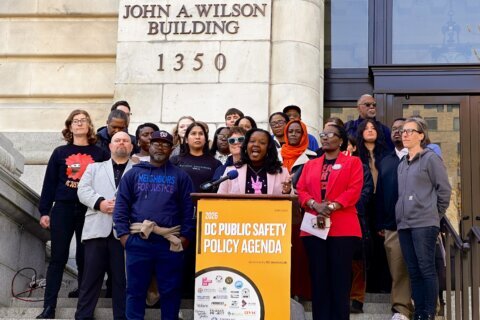
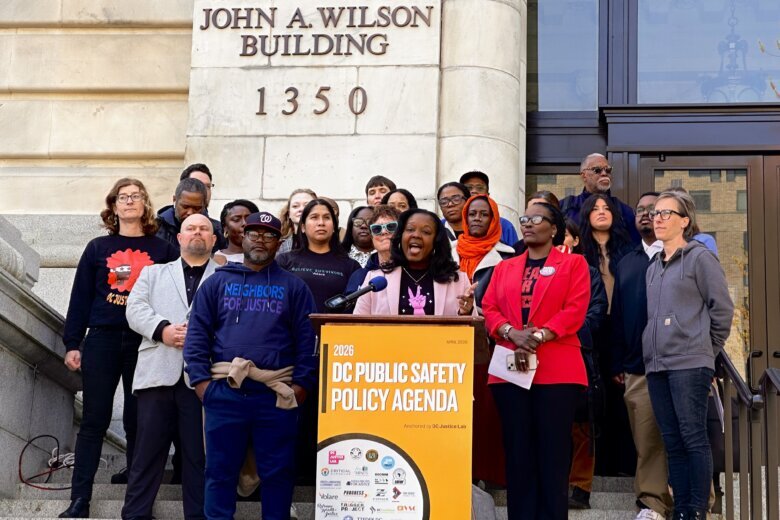
Policing experts, former law enforcement, crime survivors, youth advocates, violence interrupters, public health experts, legal practitioners and reentry providers met on the steps of the John A. Wilson Building on Thursday to share the 2026 DC Public Safety Policy Agenda.
“It really doesn’t matter who gets in office as it relates to the individual,” Clinique Chapman, CEO of DC Justice Lab, said. “We want whoever that person is to be a courageous leader.”
Chapman said four out of 10 D.C. residents are Black, but Black residents make up a disproportionate amount of those who are arrested, and “nine out of 10 who are actually being held at the D.C. jail.”
The advocates took aim at current mayor Muriel Bowser’s approach to criminal justice.
“It’s not working,” Chapman said.
Chapman believes President Donald Trump’s law enforcement surge last summer, which brought the National Guard to D.C. and tasked federal agents with patrolling the streets, damaged the trust Washingtonians had for police.
When asked about the law enforcement surge, Chapman said it caused a lot of harm.
“As a forensic social worker, I know firsthand what trauma can do, and I think we sometimes forget that systems harm people just as much as individuals can,” Chapman said. “D.C. is an over-policed city, yet there’s no accountability and no transparency, and that will do harm well beyond what we see today.”
Chandra Dawson, the executive director of Peace For DC, believes “the city has changed” over the last seven months.
“We will never be who we were prior to that federal surge,” Dawson said. “We are folks who experience what I call ‘systemic trauma’ most recently.”
Dawson told WTOP she hopes the next mayor is “willing to hear and listen to the community.”
“The residents know their communities … better than any data, better than any commander or police officer walking the beat,” Dawson said. “They can tell you who does what. They can tell you when it happens. They can tell you the triggers that lead to violence within their communities.”
Dawson called the residents of D.C. the “real experts on not just what is happening, but what is needed.”
Another group of experts Dawson points to are the researchers at Johns Hopkins University and the University of Maryland.
“They have done substantial work around gun violence and spent the time looking at D.C. Why aren’t they invited to the table around collaboration?” Dawson asked.
Another set of issues that the groups believe are being handled the wrong way are the juvenile curfew zones.
“I have lived in this city since 2002,” Penelope Spain, co-founder and CEO of Open City Advocates, said. “I have never seen our city go backwards so fast as we have.”
Spain said instead of making the city safer, curfews are a “failed use of resources.”
“I think curfews do nothing but criminalize young people, makes them feel like they are not welcome in their very own city,” Spain said. “It very much ostracizes our young people and forces them out of the conversation that they should be very centered in.”
Chapman told WTOP the 2026 DC Public Safety Policy Agenda has been sent to all mayoral candidates.
Get breaking news and daily headlines delivered to your email inbox by signing up here.
© 2026 WTOP. All Rights Reserved. This website is not intended for users located within the European Economic Area.