As the United States marks its 250th anniversary, WTOP presents “250 Years of America,” a multipart series examining the innovations, breakthroughs and pivotal moments that have shaped the nation since 1776.
HII is proud to partner with WTOP to bring you this series.
Precision-guided munitions changed warfare by transforming one of the oldest realities of combat: hitting the target.
For much of military history, bombing campaigns depended on mass. Large formations of aircraft dropped huge numbers of bombs in hopes that enough would strike close enough to destroy a target. Accuracy was limited, collateral damage was often extensive, and missions frequently required repeated attacks that exposed pilots and crews to danger.
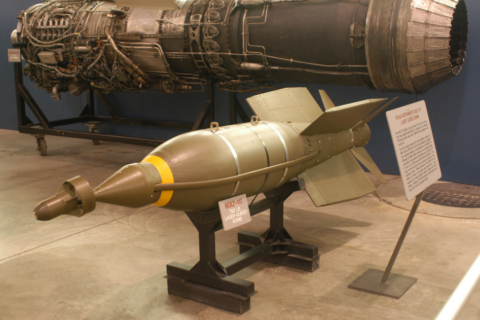
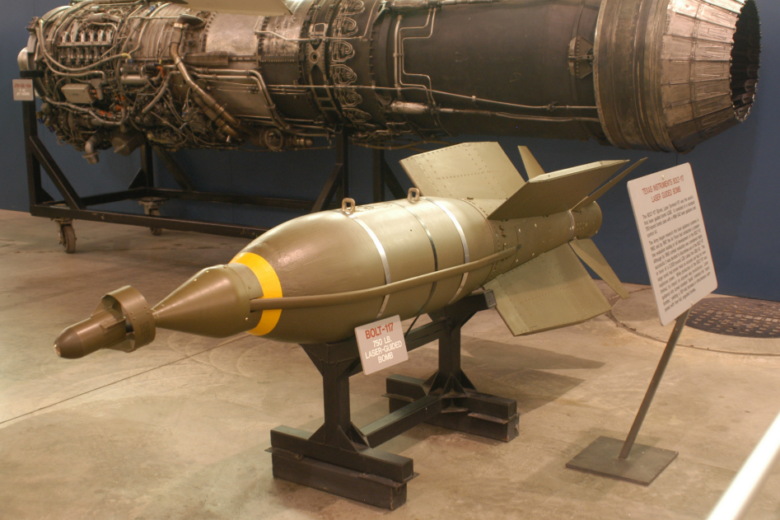
That began to change in the late 1960s and 1970s with the introduction of laser-guided bombs. Instead of relying only on gravity and estimation, these weapons could guide themselves toward a designated target with far greater accuracy.
But precision-guided munitions truly reshaped warfare decades later during the wars in Afghanistan and Iraq.
“Precision guided munitions transformed American military operations by allowing the U.S. military to destroy targets more accurately, more quickly, and so therefore it was with fewer aircraft, fewer bombs, and thus fewer casualties than earlier bombing campaigns had required,” said Mark Jacobson, Historian at the International Spy Museum.
Precision changes the battlefield
The impact became especially clear in Afghanistan in the early 2000s. Small teams of U.S. special operations forces working with local allies could suddenly bring enormous firepower onto enemy positions using aircraft overhead.
“Small numbers of U.S. special operations teams working with local allies could reinforce their own combat power by calling in precision strikes against Taliban positions,” said Jacobson.
That gave relatively small forces disproportionate combat power.
Instead of relying on massive troop formations or prolonged bombing campaigns, commanders could destroy enemy compounds, vehicles, and defensive positions with a single guided bomb or missile. Military planners could also strike targets deep inside hostile territory while using fewer aircraft and reducing operational risk.
From laser guidance to GPS systems
The technology rapidly evolved beyond laser guidance. GPS-based systems such as the Joint Direct Attack Munition turned conventional bombs into precision weapons capable of hitting targets in poor weather, through smoke or at night. Cruise missiles added another layer of capability by flying long distances at low altitude before striking targets with exceptional precision.
Today, precision-guided systems continue to evolve with improved seekers, real-time targeting networks, and autonomous features. Modern weapons can receive targeting updates during flight and coordinate with surveillance and intelligence systems across entire battle networks.
Precision reshapes expectations of war
Precision weapons have also changed expectations about war itself. Political and military leaders increasingly expect conflicts to be fought quickly and surgically with limited collateral damage. But warfare remains unpredictable, especially in urban areas where enemies often operate near civilian populations.
Even so, the rise of precision-guided munitions marked one of the most important military transformations of the modern era. From laser-guided bombs in Vietnam to networked smart weapons in Afghanistan and beyond, precision technology fundamentally changed how militaries strike targets and project power on the battlefield.
Get breaking news and daily headlines delivered to your email inbox by signing up here.
© 2026 WTOP. All Rights Reserved. This website is not intended for users located within the European Economic Area.