As the United States marks its 250th anniversary, WTOP presents “250 Years of America,” a multipart series examining the innovations, breakthroughs and pivotal moments that have shaped the nation since 1776.
HII is proud to partner with WTOP to bring you this series.
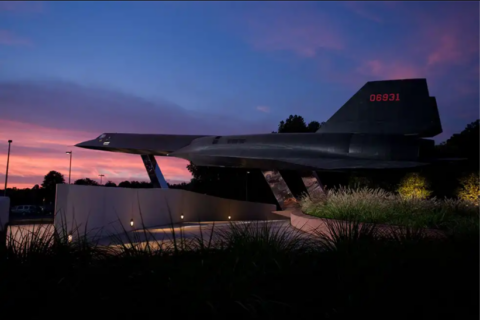
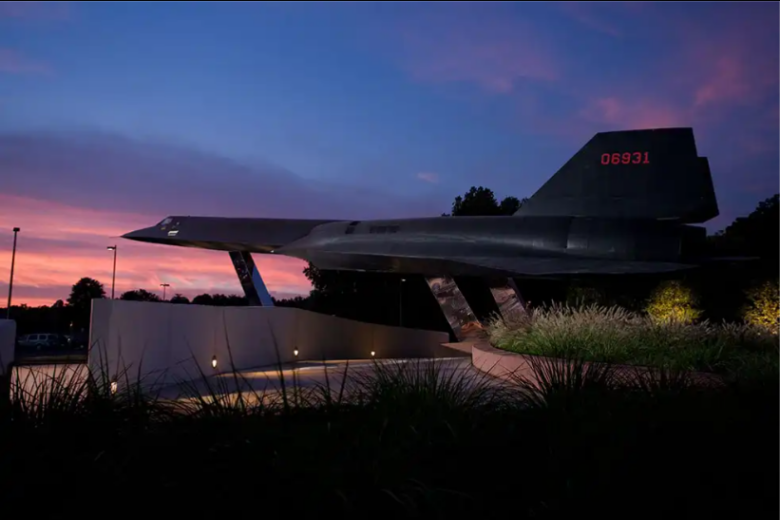
Stealth technology transformed modern warfare by changing a fundamental equation: What can be seen can be targeted, and what cannot be seen can survive.
By reducing an aircraft’s detectability to radar and other sensors, stealth enables missions that once required large formations, heavy electronic warfare support and high-risk suppression of enemy air defenses. Stealth is not invisibility. It is a deliberate engineering approach that minimizes observable signatures, particularly radar cross section, allowing forces to operate inside heavily defended airspace with greater survivability and precision.
“Stealth technology is critical if you’re going to go against high-end anti-air or anti-surface environments,” said Sam Cox, director of the Naval History and Heritage Command.
“The ability to make it much harder for enemy systems to locate your aircraft or your ship enhances survivability and the ability to get weapons on target,” Cox said.
Cold War origins
The modern U.S. stealth story began during the Cold War, when increasingly sophisticated Soviet air defense systems forced American planners to rethink how to penetrate defended territory.
In the 1970s, the Defense Advanced Research Projects Agency and the U.S. Air Force backed experimental work that produced the “Have Blue” demonstrator. Its first flight in 1977 proved that shaping an aircraft for radar evasion, rather than aerodynamic efficiency alone, could dramatically reduce detectability.
That breakthrough led to the development of the F-117 Nighthawk, the first operational stealth aircraft. First flown in 1981 and operational by 1983, the F-117 was designed for a single purpose: penetrating dense air defenses and striking high-value targets.
Its existence remained classified for years, underscoring its strategic importance. When it was eventually used in combat, including Operation Just Cause and the Gulf War, it demonstrated that a small number of stealth aircraft could accomplish missions that previously required dozens of conventional planes.
Expanding beyond aircraft
Stealth did not remain confined to one aircraft or one mission. It expanded into a broader military capability applied across multiple domains.
In airpower, stealth supports penetrating strike operations, allowing aircraft to hit critical targets deep inside defended territory. It underpins strategic bombing and nuclear deterrence by ensuring long-range bombers can reach their targets despite advanced defenses.
It also enables intelligence, surveillance and reconnaissance missions, allowing platforms to observe adversaries from within contested environments rather than from a distance.
Stealth principles extend beyond aircraft. Naval vessels incorporate reduced radar signatures to improve survivability, while submarines rely on acoustic stealth to remain undetected underwater. Missiles and unmanned systems increasingly use low-observable design features to evade detection and improve effectiveness.
Across these applications, the goal remains consistent: reduce exposure, increase survivability and preserve operational freedom.
An evolving competition
Stealth has also reshaped adversary behavior. Potential opponents invest heavily in counter-stealth technologies, including advanced radar systems, sensor fusion and passive detection methods.
The ongoing competition reflects stealth’s strategic impact. It complicates enemy planning, weakens confidence in defensive systems and expands the range of options available to U.S. decision-makers at the outset of a conflict.
The central lesson of stealth is that survivability can be engineered into a platform itself. By changing how systems are detected, tracked and targeted, stealth technology redefined the balance between offense and defense.
It remains a cornerstone of how the United States projects power and operates in the world’s most contested environments.
Get breaking news and daily headlines delivered to your email inbox by signing up here.
© 2026 WTOP. All Rights Reserved. This website is not intended for users located within the European Economic Area.