As the United States marks its 250th anniversary, WTOP presents “250 Years of America,” a multipart series examining the innovations, breakthroughs and pivotal moments that have shaped the nation since 1776.
HII is proud to partner with WTOP to bring you this series.
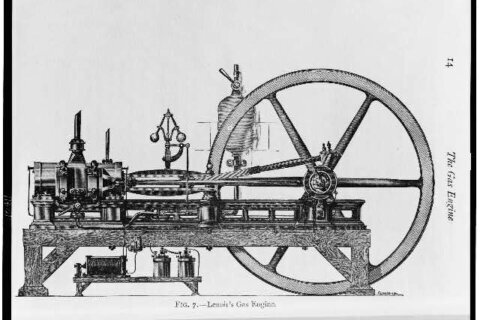
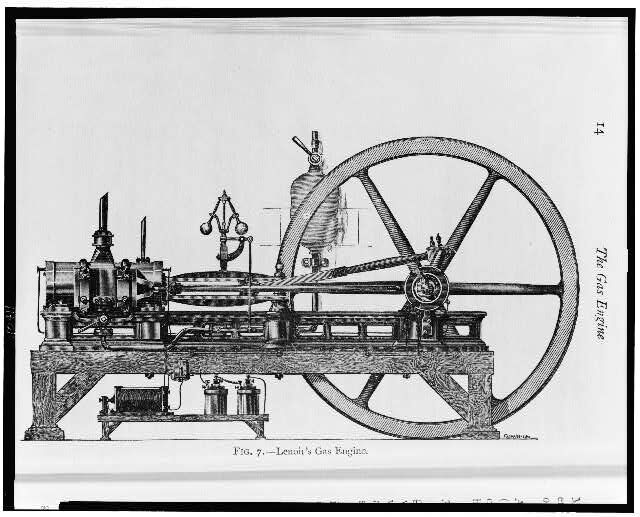
The internal combustion engine transformed warfare by reshaping how militaries moved, supplied and fought. Before its arrival in the late 19th and early 20th centuries, armies depended largely on horses, railroads and wind-powered ships. Those systems worked but limited speed, range and flexibility.
As Mark Jacobson, a military historian and senior fellow at the Pell Center, explains, “If an army was spread across miles of terrain, there was no way to instantly adjust these forces once the battle had begun, because orders could take hours or even days to reach their destination.”
That limitation extended beyond movement. It affected control. Commanders could not see the full battlefield in real time, and even when they understood what was happening, they often could not respond quickly enough to change the outcome.
“Senior leaders relied on couriers, written dispatches, signal flags and pre-arranged plans, systems constrained by what he describes as distance and time,” Jacobson said.
The internal combustion engine began to break those constraints. Gasoline and diesel engines ushered in a new era of military mobility. By the 1890s, engines powered early automobiles, trucks and experimental tractors, giving militaries new tools to move forces with speed and flexibility.
In World War I, engine-powered trucks replaced horse-drawn wagons, allowing rapid resupply across difficult terrain. The engine also made the tank possible. When Britain introduced tanks in 1916, they were slow and often unreliable, but they marked a fundamental shift in land warfare by combining armored protection, mobility and firepower.
At the same time, advances in communication, particularly the telegraph and later radio, began to close the gap between movement and command. Together, mobility and communication created a new kind of warfare, one in which forces could not only move faster but be directed and adjusted in near real time.
By World War II, that convergence was fully realized. Mechanized armies moved rapidly across continents, supported by trucks, tanks and engine-powered logistics. Aircraft, made possible by internal combustion engines, extended reach into the air, while radio allowed commanders to coordinate operations across vast distances. The United States leveraged its industrial capacity to produce thousands of aircraft powered by engines such as the Pratt & Whitney R-2800 and the Allison V-1710.
The result was a transformation not just in how wars were fought but in how they were controlled. The internal combustion engine did more than increase speed. It helped compress time and space on the battlefield, linking movement with decision-making in ways that reshaped modern warfare.
Internal combustion engines have largely been eclipsed by advanced propulsion systems such as jet turbines, electric drives and hybrid technologies. Yet their role in military history remains indispensable. They enabled mechanized warfare, global logistics and rapid force projection, fundamentally reshaping how armies moved, fought and sustained operations across vast distances. Without the internal combustion engine, modern warfare would not have reached the speed and reach now taken for granted.
Get breaking news and daily headlines delivered to your email inbox by signing up here.
© 2026 WTOP. All Rights Reserved. This website is not intended for users located within the European Economic Area.