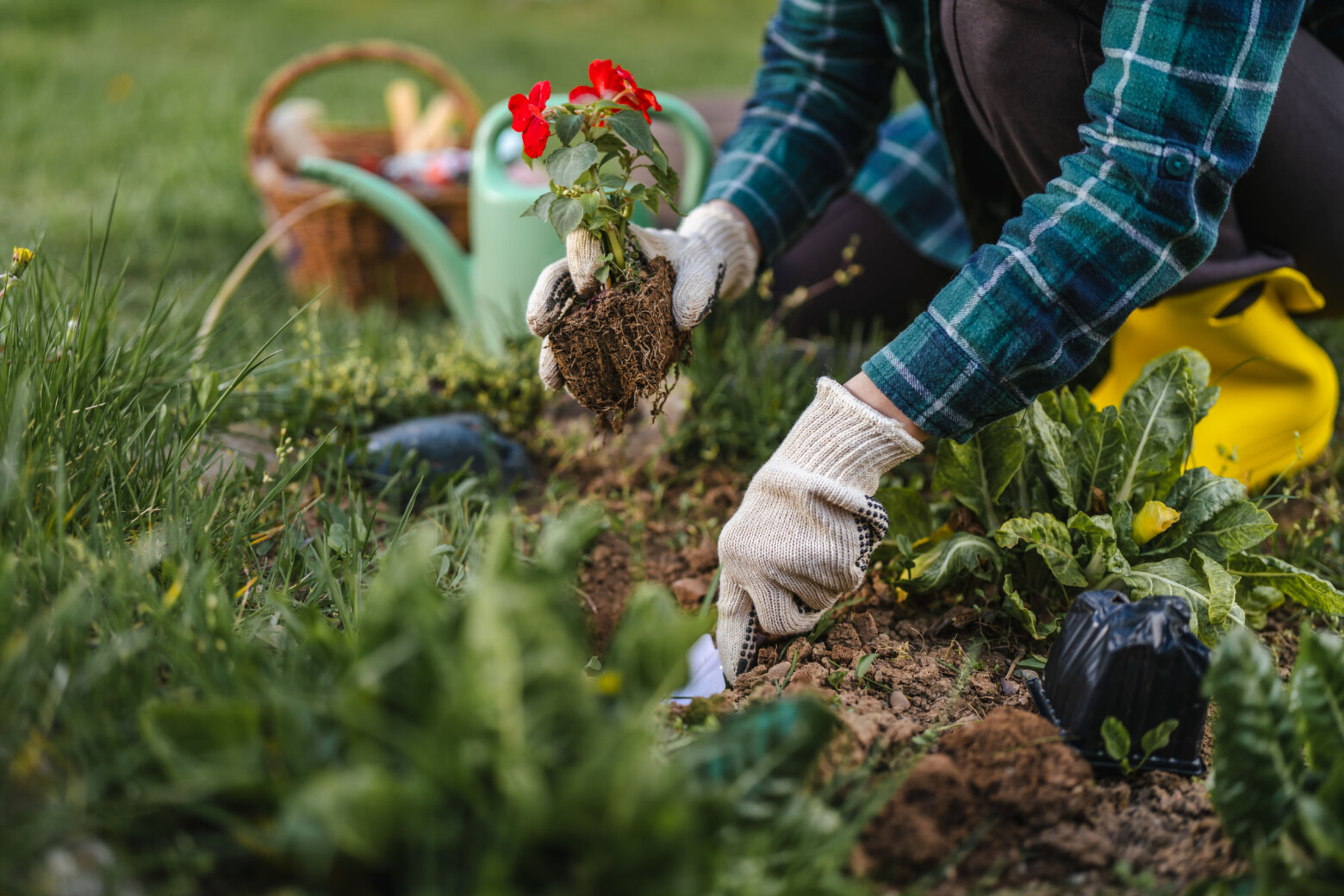
Your yard could require less water, help defend against erosion and support wildlife. All you have to do is plant native flora.
At the Swamp Rose Co-Op in Silver Spring, Maryland, staffers guide plant lovers who may want to start with one corner of the garden or convert their entire lawn to a meadowlike landscape dotted with wildflowers. The co-op provides retail sales, and also offers maintenance, design and installation of native gardens.
Will Colburn, the design and plant-sourcing lead for the cooperative, welcomes every visitor to the retail space and is quick to reassure them that no one’s judging their selections.
“We’re not purists,” he said. “If you love some things that aren’t native, it’s totally OK to have some of those; preferably if they’re not on invasive species watchlists.”
Birders may want to consider adding native species to their landscapes.
“A lot of people love birds in their gardens, and if you want to attract birds to your garden, native plants are a great way to do that,” he said.
Colburn said the look of a native landscape is decidedly different from the carefully cultivated green lawn that’s been the traditional favorite in many areas. Instead of a formal lawn, the yard converted to native plants will have “a little looser, wilder look that can also be really functional and require less maintenance,” he said.
That doesn’t mean a lack of color, Colburn said. The variety of native plants can provide colors from spring through fall.
“There’s a lot of showy natives that are also pretty easy,” Colburn said. “One that immediately comes to mind for sunny areas would be rudbeckia, or some of our coreopsis which are really lovely, fairly hardy plants but that have a more traditionally ornamental aesthetic.”
One familiar rudbeckia is the Maryland state flower, the Black-eyed Susan.
Among the candidates for a showy fall flower, Colburn recommends symphyotrichum oblongifolium.
“I know that is a mouthful with the botanical Latin,” Colburn said.
It’s a plant that’s more commonly known as the aromatic aster.
“It’s going to do great in full sun to partial shade,” he said. “It’s going to be covered with purple flowers. It’s very showy in that way, in the fall.”
While guiding customers through the selection of flowers and shrubs at Swamp Rose Co-op, Colburn points out that “no garden is maintenance free. That’s what makes it a garden — is human intervention.”
But he said there are a number of advantages to adding or switching to native landscapes.
Before making any big conversion, Colburn advises homeowners who live in areas with homeowners associations, or HOAs, to be “aware of kind of what the regulations are for your community is always a great to start.” And he said that can start with a conversation with the HOA board.
“If you’re concerned about needing to maintain a more traditional landscape aesthetic, that’s still possible to do with native plants,” Colburn added. “It doesn’t have to be all or nothing. It doesn’t have to be crazy wild.”
Lawns are intensive in terms of the need for water, fertilizer and pesticide use, Colburn said.
“If you can get rid of that and get something beautiful that is functional for wildlife and that has flowers, I think that is something that people really appreciate,” Colburn said.
Get breaking news and daily headlines delivered to your email inbox by signing up here.
© 2026 WTOP. All Rights Reserved. This website is not intended for users located within the European Economic Area.