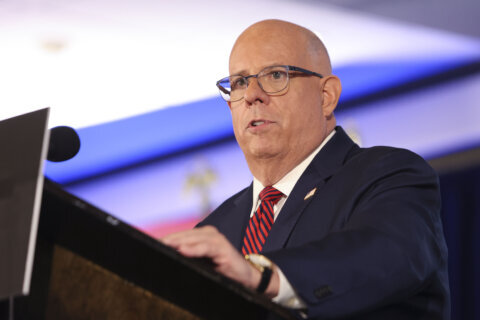
New legislation in Maryland that has the backing of Gov. Wes Moore is taking aim at affordability issues plaguing the state.
Standing in a bulk food grocer in Severna Park, Moore was flanked by Senate President Bill Ferguson and House Speaker Joseline Peña-Melnyk to announce the bill and why it would be good for Marylanders.
If passed, it would require stores maintain the same price for the same item for a full business day, rather than allowing for prices to change hour to hour or minute to minute.
“Technology should work for working families. It should not work against working families,” Moore said. “The same algorithms that can predict what we need can also be weaponized to exploit while we need it, and that’s what’s happening right now.”
In the governor’s words, stores are using data to manipulate prices.
“Price can change constantly, by the hour, by the minute and even by the second, based on where you are and where you shop,” Moore said.
“Digital price tags replace paper ones, that cameras will watch the aisles, that sensors will count the customers, that algorithms will crunch all that data and answer one question: How much can we charge this person to get as much out of this person that we can and maximize profit.”
Moore described a working mom rushing to the store after work, with apps and data trackers that have determined her pattern and know they can charge her more at dinner time because she won’t have time to shop around.
“It’s using it against her. This is not innovation. This is exploitation. This is not a fair market. This is a stacked deck,” Moore said.
Stories from consumers in Maryland and around the country are what prompted him to introduce the measure. If passed into law, it would empower the attorney general to hold stores accountable.
“What we’re seeing are some grocery chains and others that are collecting reams of personal data about us and using that to charge different prices for the same bag of groceries,” said Marceline White, executive director of the Economic Action Maryland Fund.
“That’s just not fair, and we can say that from our work, we know that this kind of predatory pricing model harms older adults who often don’t have adequate transportation and have to shop online.”
Get breaking news and daily headlines delivered to your email inbox by signing up here.
© 2026 WTOP. All Rights Reserved. This website is not intended for users located within the European Economic Area.