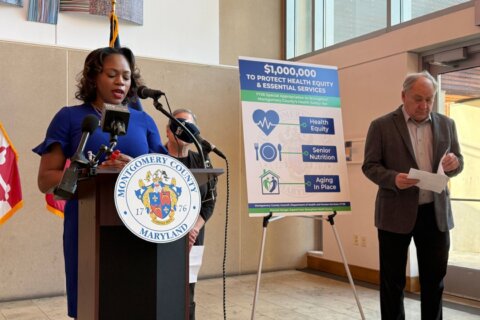
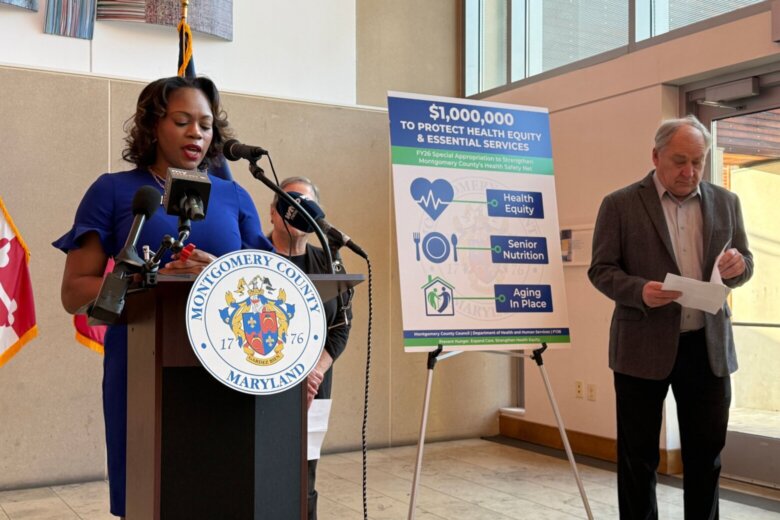
Citing cuts from the federal government, Montgomery County Council member Laurie-Anne Sayles said she’s proposing a $1 million special funding appropriation to offer an extra boost to programs helping local seniors.
Under the proposal being unveiled to the council on Tuesday, the first $450,000 will go to programs that help provide meals to seniors in Montgomery County. Another $300,000 aims to help reduce the waitlist for in-home care.
The final $250,000 will go to programs that provide respite care to those who care for a senior at home, allowing them to be able to leave someone they care for at home with a trained caregiver while they do other things.
“I know what it means for families to carry this responsibility with love, sacrifice and constant worry about what happens when support runs out,” Sayles said. “This emergency appropriation is our response, and it sends a clear message, aging in place with dignity is not a luxury in Montgomery County. It is a promise that we keep.”
The proposal already has the support of County Executive Marc Elrich.
“All of us, I think, recognize these are things we need to do,” Elrich said.
The money is coming from the county’s reserve funds, after Sayles said tax revenues were beating expectations.
“If we’re serious about being an age friendly community that’s recognized internationally, then this is the type of work that we need to continue to do,” said Dr. James Bridgers, director of Montgomery County’s Department of Health and Human Services.
Dr. Patrice McGhee, the chief of aging and disability services with the county, said the respite care program in particular is seeing a huge surge in demand, with about 600 families around the county currently enrolled. Last year it was at 515 families.
“Persons aged 60 and older are growing at a rate of 28% whereas in comparison those under 60 and older, are growing at a rate of 7.6%,” McGhee said. “And so we are going to continue that trajectory up until 2045.”
The special appropriation will be formally introduced at the county council meeting scheduled on Tuesday. A public hearing on the measure is slated for the end of the month.
“Nobody likes to see the consequences of not being able to serve people who need to be served,” Elrich said.
Get breaking news and daily headlines delivered to your email inbox by signing up here.
© 2026 WTOP. All Rights Reserved. This website is not intended for users located within the European Economic Area.