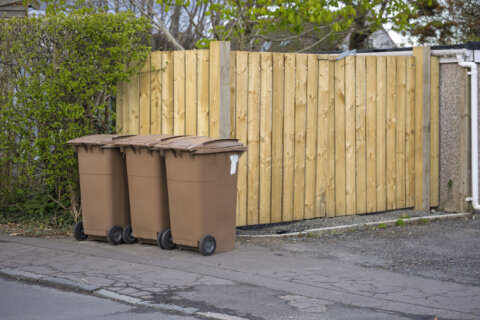
Many times, things that cannot be recycled are making their way into recycling bins. In the town of Leesburg, putting the wrong items in your bin may result in it not being emptied.
“I want people to know it’s not intended to be punitive. I know us not picking up your recycling seems like a punishment, but it’s really just an opportunity for teaching more than anything,” Deborah Moran, the sustainability manager for the Virginia town, said.
Moran said the goal is education through a targeted (and temporary) effort focused on cleaner recycling.
With it, crews will open lids and look in bins, looking for incorrect items in them.
“They’re not going to be diving through or picking anything out of the bins,” Moran said.
She said crews often find food, batteries and plastic bags in recycling bins, which are items that don’t belong there.
“They (plastic bags) go through a sorting machine and they get all caught up and gunky in the sorting machine,” she said. “So they can’t be accepted. Anything that’s combined inside of each other is also kind of a no go.”
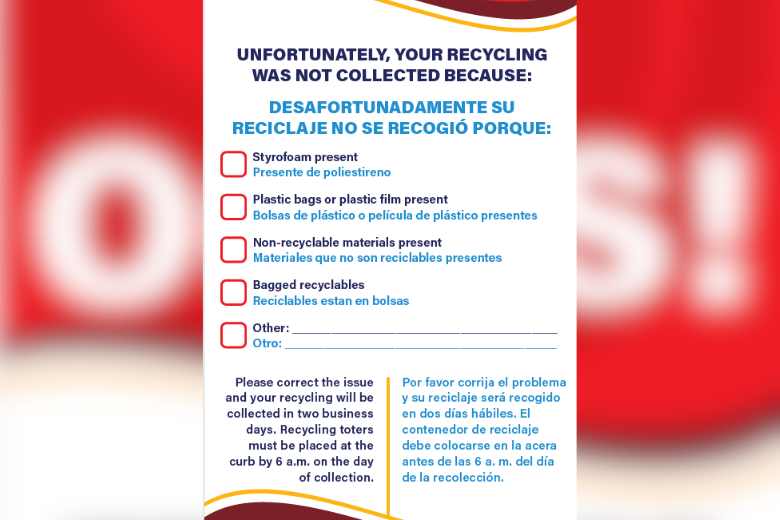
As part of the effort, during one upcoming collection day in Leesburg, crews will check recycling bins for contamination. The effort applies to residents who receive trash and recycling service through the town. If nonrecyclable items are found, the bin will be left behind and tagged with a notice explaining what needs to be corrected.
“If they see something that shouldn’t be in there, they’re going to put this giant red ‘oops’ tag on it that has little boxes on it where they’ll write what the issue is, so you know how to correct it,” Moran said.
Crews will return two business days later to collect the bin once the problem is fixed. Town officials stress the tagging effort is a limited campaign, not a permanent change to weekly collections.
“The biggest issue with that, primarily, is we’re paying for it to be recycled. And the rate that we pay for recycling versus trash is a little higher because it goes through all the sorting mechanics,” Moran said.
She said cleaner recycling means lower costs for taxpayers, safer working conditions and materials that can actually be reused.
“If we send them something cleaner, they get a cleaner material on the back end,” she said.
Get breaking news and daily headlines delivered to your email inbox by signing up here.
© 2026 WTOP. All Rights Reserved. This website is not intended for users located within the European Economic Area.