Everything appeared normal when Mary Hylton went for a routine mammogram in 2023. The life of the Baltimore County, Maryland, resident quickly changed when she heard the results.
“They found some lymph nodes that looked suspicious, and when they biopsied it, it actually came back as metastatic melanoma,” Hylton, 56, told WTOP.
The mother of two spent the next two years trying to get better, but instead, more melanoma was found in her right breast and abdomen last April. She was advised to visit MedStar Georgetown University Hospital in D.C. for a new treatment recently approved by the FDA.
One year after receiving the treatment, all of her tumors are gone.
The new treatment, called tumor-infiltrating lymphocyte therapy, or TIL therapy, uses a patient’s own immune cells found inside their tumors; it’s the latest therapy doctors are using to combat solid cancers such as melanoma. Doctors hope it can be an option to patients who feel they have run out of effective treatment options.
The immune system can recognize foreign substances in the body and clear them, such as infections and other illnesses, Dr. Geoffrey Gibney, head of the Melanoma Disease Group at MedStar Georgetown, told WTOP. Immune cells that wipe out foreign objects can do so against cancer, but they are unable to clear it quickly enough.
With TIL therapy, a melanoma tumor is removed from the body, then processed to extract T cells, which are a type of white blood cell that destroys cancerous cells. Once identified, they are cultured with a special protein, interleukin-2, which prepares them to target and destroy cancer cells.
“These are the patient’s own cells,” Gibney said. “They’re selected to be the ones that are recognized and can attack the patient’s tumor, and those are manufactured into the product and eventually put back into the patient.”
The T cells and other medications are infused back into the patient to fight the cancer. It is a two-to-three-week treatment, starting with chemotherapy to prepare the body, Gibney said.
“It does take a lot for the patient to go through, but when it works, we’ve seen very durable responses, so that’s what we’re hoping for patients when we offer it to them,” he said.
‘I can start planning for things with a future in mind’
The diagnosis hit close to home for Hylton. She lost her grandfather in the 1990s and a family friend’s father-in-law to melanoma.
After having a negative response to immunotherapy, Hylton was recommended TIL therapy.
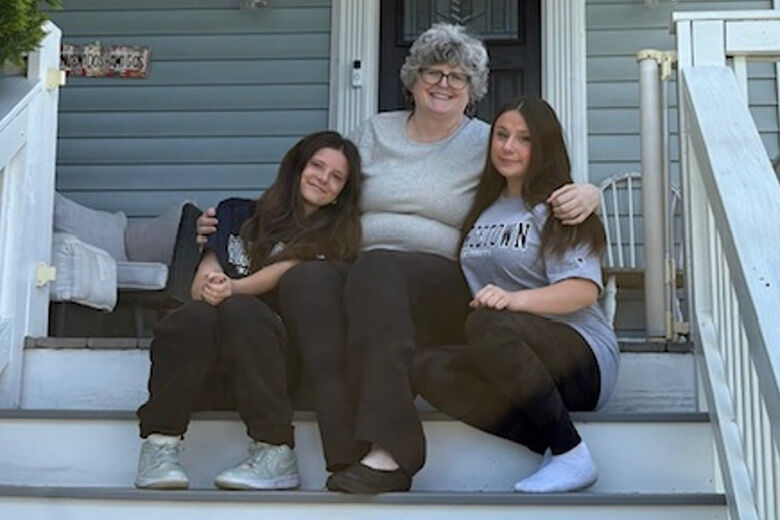
“I have two teenage daughters that I’m raising, and the idea of being present for them at a point where it was looking a little bleak for a while there with the cancer spreading and the lack of response to immunotherapy,” she said.
She started the TIL therapy in May 2025 and left the hospital in June. In her first set of scans in August, most of her tumors in her body had shrunk or were gone.
But Hylton did not get excited until the second set of scans revealed that almost all of them were gone.
“Honestly, it was a little bit of disbelief,” she told WTOP. “I thought, ‘Well, that’s good, that’s awesome,’ but I’m not going to really let myself believe it until I have another set of scans, so by the second set of scans … I was like, ‘OK, now I can stop always feeling like I have to do concurrent planning. I can start planning for things with a future in mind.'”
In total, Hylton has had four scans of her body, and no cancer tumors have been found. Gibney said she is doing great and will continue to receive scans every three months.
Gibney said the treatment has been studied since the 1980s, and research shows it can be effective in other tumor types. He added that clinical studies are currently showing positive responses in patients with lung cancer, head and neck cancer, and cervical cancer.
The focus now is to provide more outreach to offer TIL therapy to those who need it.
“That has really been our focus, is getting the word out about this treatment, not just to the oncologists in the community but also the patients who are coping with metastatic melanoma and other solid tumor types. Because we have clinical trials that we can offer patients to participate in and similar types of treatments,” he said.
For Hylton, TIL therapy was a “lifeline” to her, and she hopes others can do the same. With a clearer future ahead for herself and her family, Hylton said she can think of college graduations or retirement instead of cancer.
She and her teenage daughters, Claire and Makiah, plan to take their first trip to the West Coast to visit family, thanks to TIL therapy.
“I can’t be more thankful for TIL for giving me this chance,” Hylton said. “This lifeline really is what it was.”
Get breaking news and daily headlines delivered to your email inbox by signing up here.
© 2026 WTOP. All Rights Reserved. This website is not intended for users located within the European Economic Area.