They started in Leonardtown, Maryland, and finished in Baltimore, stopping at MedStar locations along the way. The 170-mile journey wasn’t made by car, bus or cycle.
Two MedStar employees and a professional ultramarathon runner completed the trek on foot over four days last week, aimed at promoting a healthy lifestyle through running and movement.
“The more you can move your body, the better you’re going to feel, the more you’re going to want to do it,” professional ultramarathoner Michael Wardian told WTOP. “It’s like a virtuous cycle.”
He was joined by Chris Wilde, lead physician assistant at MedStar Harbor Hospital’s emergency department and Chris Heydrick, a physical therapist and running program specialist for MedStar’s northern region.
The group set out for MedStar St. Mary’s Hospital last Monday, logging dozens of miles each day.
While all three have previous experience with long-distance running, the challenge still evoked comparisons to Pheidippides, the legendary messenger known for covering great distances in ancient Greece to deliver a message. Along the route, that message was simple: movement is medicine.
“My first question was, ‘Is this a stage race or 200 straight? Because I don’t want to do 200 straight,’” Wilde joked.
The runners made stops at 10 hospitals across the MedStar system, including MedStar Georgetown University Hospital and MedStar Washington Hospital Center in D.C. The four-day run ended Thursday at MedStar Franklin Square Medical Center.
Wilde said the effort mirrored the kind of problem-solving he does on the job.
“Running 200 miles isn’t that complicated. It’s about problem‑solving along the way,” he told WTOP.
For Heydrick, the challenge was a natural extension of his career working in running medicine and supporting races across the D.C. region.
“I really am grateful to have running as part of what I do for work every day, and when your company puts on an event like this, it’s really hard to say no to that,” Heydrick told WTOP. “And I love a route with a why.”
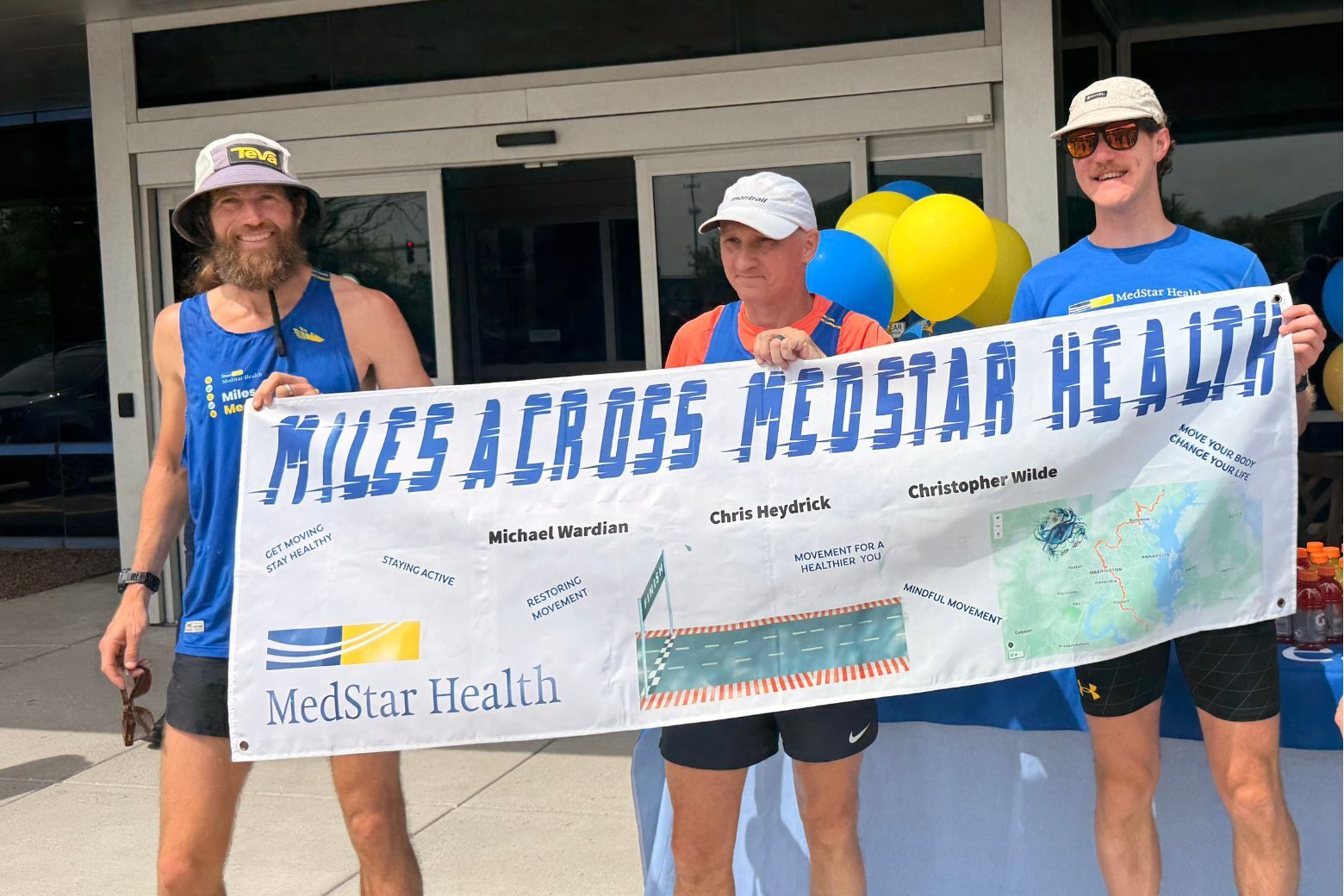
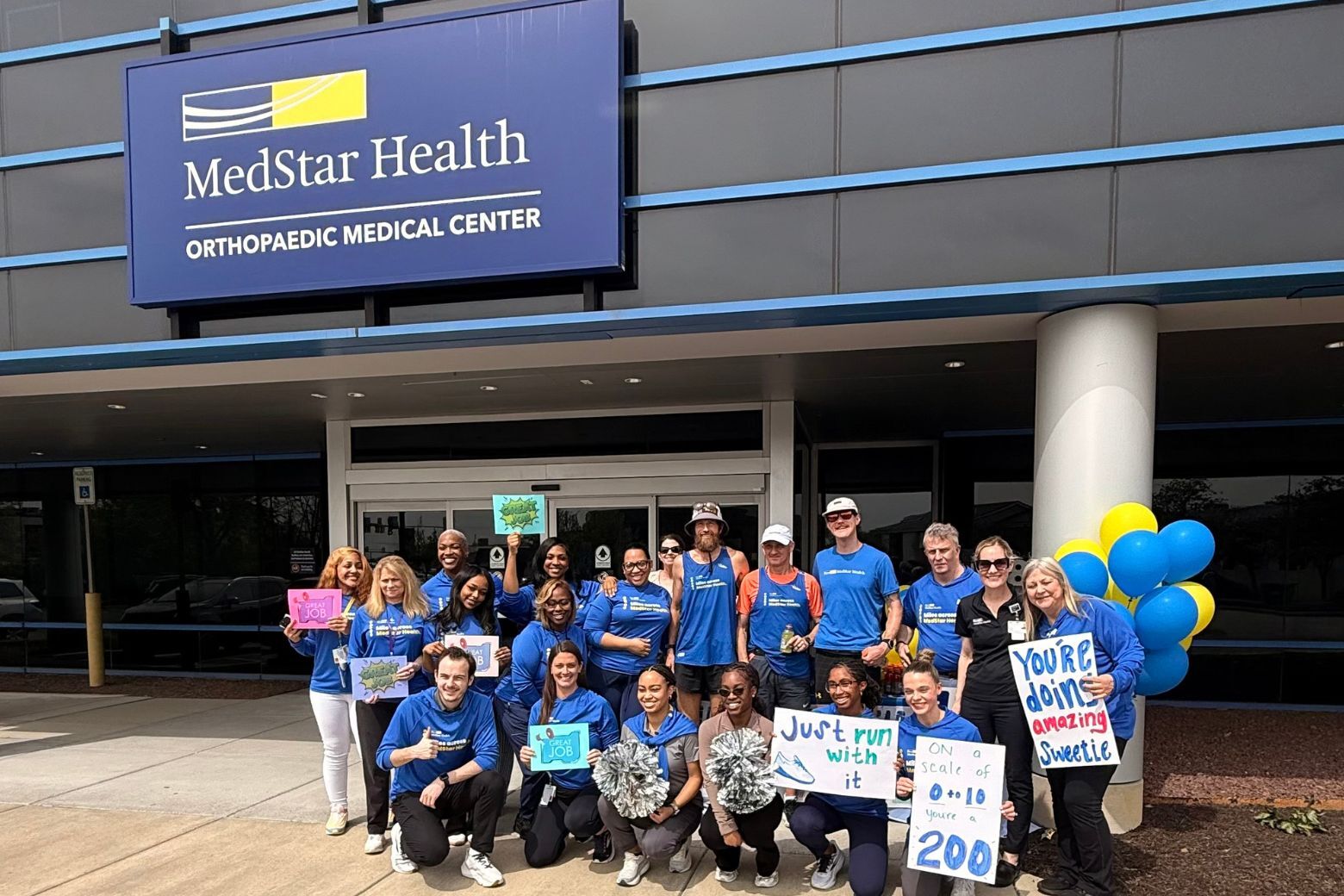
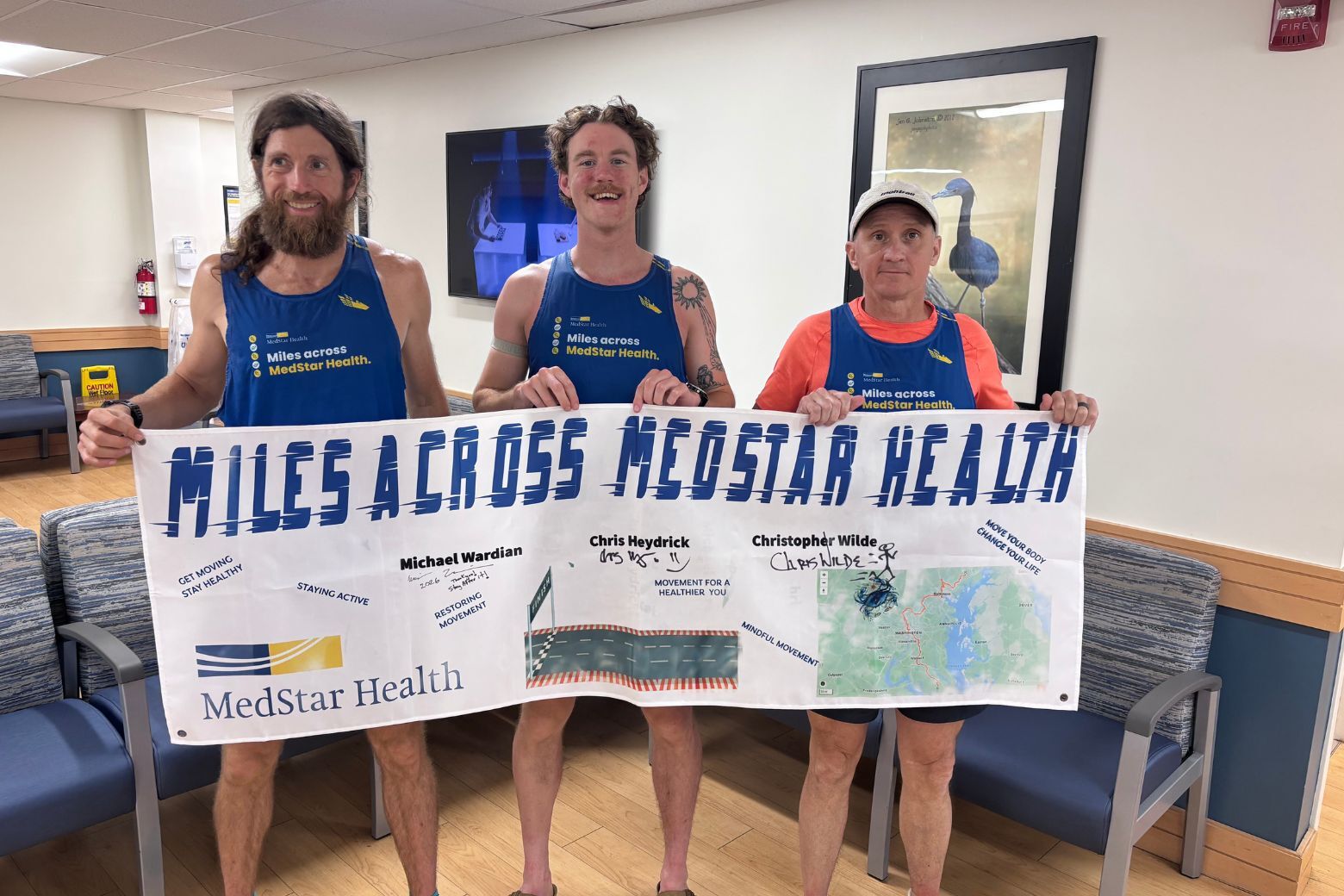
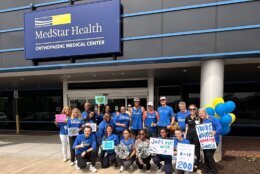
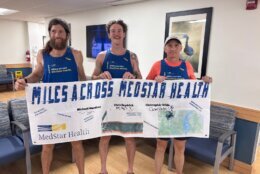
At each stop, the group encouraged patients and staff to move more, emphasizing that the effort does not need to be extreme.
“It doesn’t need to be 200 miles by any means,” Heydrick said.
He suggested simple options like walking around the neighborhood, yoga or even table tennis.
“Find something that jives and stick with it,” he said.
Wilde said regular movement can bring broader health benefits, “With movement comes weight loss. With weight loss comes decreased stresses on the body. And statistics show that when you do some behavior modifications … you start getting off high blood pressure medicine. Not in every case, but there’s a good chance.”
Heydrick added that prioritizing movement earlier in life can help preserve independence later on.
“It’s not very glamorous, but being able to get off the toilet is a huge virtue,” he said.
The runners said even a small impact would make the challenge worthwhile.
“If one or two people change their lives because of it, that’s a win,” Heydrick said. “Then they might show friends, and you start to see that butterfly effect.”
“If we can make it small and make it make it meaningful, that’s all we need,” he said.
Get breaking news and daily headlines delivered to your email inbox by signing up here.
© 2026 WTOP. All Rights Reserved. This website is not intended for users located within the European Economic Area.