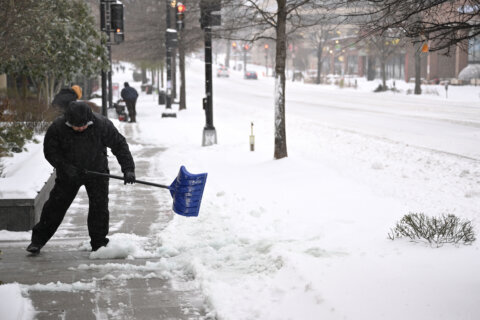
Even on frigid days, runners and cyclists may be out on area roads and bike paths, making sure they get in a workout. For some people, the thought of braving temperatures in the teens and twenties seems dangerous, but is it?
“There is not necessarily a cut-off that has been defined, where we say no, don’t go out and exercise, it is not safe,” said Matt Barberio, an assistant professor in the Department of Exercise and Nutrition Science at the Milken Institute School of Public Health at George Washington University.
However, there are some groups who need to take precautions.
“If you are someone who has asthma or other respiratory conditions, we have extremely dry air right now, and that typically tends to exacerbate or agitate any respiratory conditions,” he said. “Those individuals will just want to communicate with their physicians about what’s best for them.”
There are two things to watch out for in cold weather: hypothermia – when the body’s temperature drops below 95 degrees, and frostbite.
When it comes to hypothermia, Barberio said, “You don’t really have an issue while you’re exercising, but if you do sweat and your clothes get wet; and then you stay outside for prolonged periods of time, that wet clothing could become problematic.”
Barberio said anyone heading out into the bitter cold for a workout should pay attention to the air temperature, the wind and the “feels-like temperature,” and dress accordingly to prevent frostbite.
He advised layering with gloves to keep hands and fingers warm. While year-round athletes may want to tough it out to get in their long runs or workouts, he said it’s important to listen to “what their bodies are telling them. If your fingers are getting very numb to the point where you’re experiencing pain in your fingertips, it’s time to go inside.”
Wearing a hat during a run or under a bike helmet is helpful, he said. Like gloves, Barberio said, a hat is “another one of those things where it’s an easy on-off layer.”
Cycling can generate a lot of heat, but Barberio said riders should avoid overdressing.
“Use what your body’s telling you. If you’re getting too hot while you exercise, take the layer off until you need to put it back on,” he said.
When coming back inside from a workout, Barberio said it’s best to let your body reacclimate to indoor temperatures before jumping into a hot shower. He also suggests some cool-down exercises to let your body adjust after your outdoor exertion.
Severe cold, shoveling and heart attacks
Shoveling snow is a physical activity that Barberio and Dr. Brian Choi, professor of medicine at George Washington University, said can increase the risk of a heart attack.
“Every snowstorm, and this one was no exception, we see people that have gotten themselves into trouble shoveling snow,” Choi said, “It’s a situation that’s best avoided.”
Choi explained that “snow shoveling is a uniquely challenging activity compared to other kinds of physical exertion.”
Often, when people shovel snow, their bodies perform something called the Valsalva maneuver.
“That’s where you actually hold your breath and create sort of a thoracic pressure,” Barberio said.
In cases where people experience a cardiac infarction while shoveling, Barberio said, “typically, those people already have an underlying risk for having a heart attack anyway.”
“We like to say that the best kind of exercise for the heart is aerobic activity, when you’re getting a lot of oxygen and continuous movement,” Choi said.
But when lifting shovels filled with snow – especially heavy, wet snow – “that heavy lifting can really increase the resistance that your heart has to pump against, and that’s the worst kind of activity for your heart,” Choi said.
“There’s plenty of folks out there that probably wouldn’t mind making an extra buck to shovel out your driveway or your walkway for you,” he added. “If you are unused to physical activity, I’d certainly recommend going that route as opposed to trying it on your own if you haven’t exercised in a while.”
Get breaking news and daily headlines delivered to your email inbox by signing up here.
© 2026 WTOP. All Rights Reserved. This website is not intended for users located within the European Economic Area.