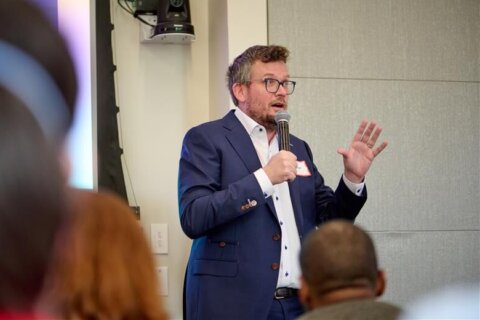
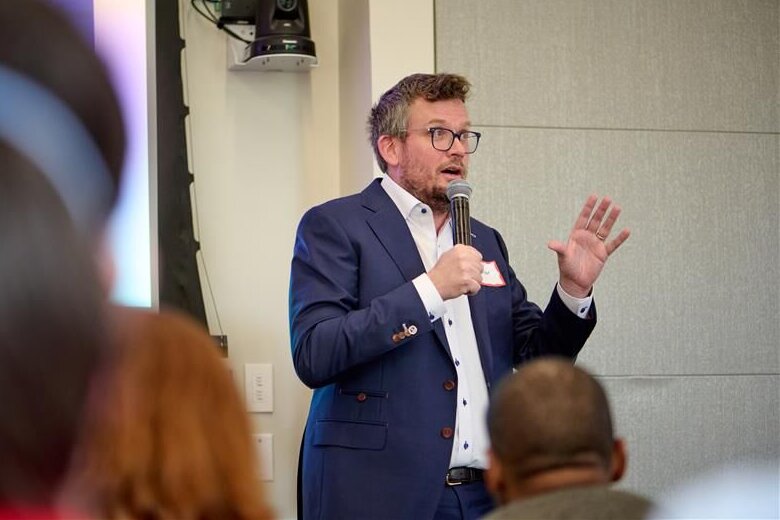
Outbreaks of measles in the D.C. region and across the U.S. have been making the news, but this April on Capitol Hill, activists called attention to the deadliest infectious disease in the world — tuberculosis.
Yes, tuberculosis is still around, and it’s killing more than 1.25 million people each year, according to the World Health Organization.
Author and tuberculosis activist John Green said that’s more than malaria, typhoid and war, combined.
Tuberculosis is both preventable and curable, and active cases in the U.S. are relatively uncommon — though infection rates are climbing quickly, and are expected to keep rising.
So why do many people believe we got rid of tuberculosis already?
‘We got our prayers answered’
Many of the tuberculosis activists who met with their legislators for “TB Hill Day” in early April also weren’t aware of how much havoc tuberculosis still wreaks around the world — including some of those who survived tuberculosis themselves.
Nicole Skaggs, a survivor and patient advocate, said that she has spent a lot of time explaining — and justifying — her illness to family, friends and co-workers.
“I remember having so many conversations, like, ‘Man, I wish somebody famous could get TB so that they could speak out, like we’ve seen other celebrities speak out for other diseases,’” Skaggs said.
John Green didn’t have a tuberculosis diagnosis. But he answered that call anyway.
“We got our prayers answered,” Skaggs said. “And then some.”
Green’s popularity surged in the 2010s with his hit young adult novels, such as “The Fault in our Stars.” He is also known for his educational “Crash Course” videos, which have become a mainstay in high schools and colleges across the country.
He’s been fundraising for Partners in Health for years — but his fascination with tuberculosis began in 2019 during a trip to Sierra Leone in Africa, when he was brought to a tuberculosis clinic and met Henry Reider.
“I was obsessed with tuberculosis,” Green told WTOP.
There, Green and Reider’s friendship took off. The more he learned about tuberculosis, the more Green saw the gap in treatment quality between Sierra Leone and the U.S.
Reider couldn’t afford accurate testing and struggled through trial-and-error treatment that dragged on for so long that his lymph nodes swelled large enough to puncture the skin in his neck.
Green processed everything he was learning about tuberculosis the best way he knew how — by writing what would eventually become “Everything is Tuberculosis,” which was released in March.
He also started talking about it in his YouTube videos and on his podcast as “an illness that walks the trails of injustice and inequity that we blazed for it,” as he would later describe it in his book.
Many of his most dedicated fans noticed.
‘TB Fighters’
In addition to his books, Green is known for the large online community he and his brother Hank gained from their YouTube channel. His followers call themselves “Nerdfighters.”
When Green started talking about tuberculosis in his YouTube videos and on his podcast, he said he had no idea that people would respond so generously. They soon became a part of the work to raise awareness about tuberculosis.
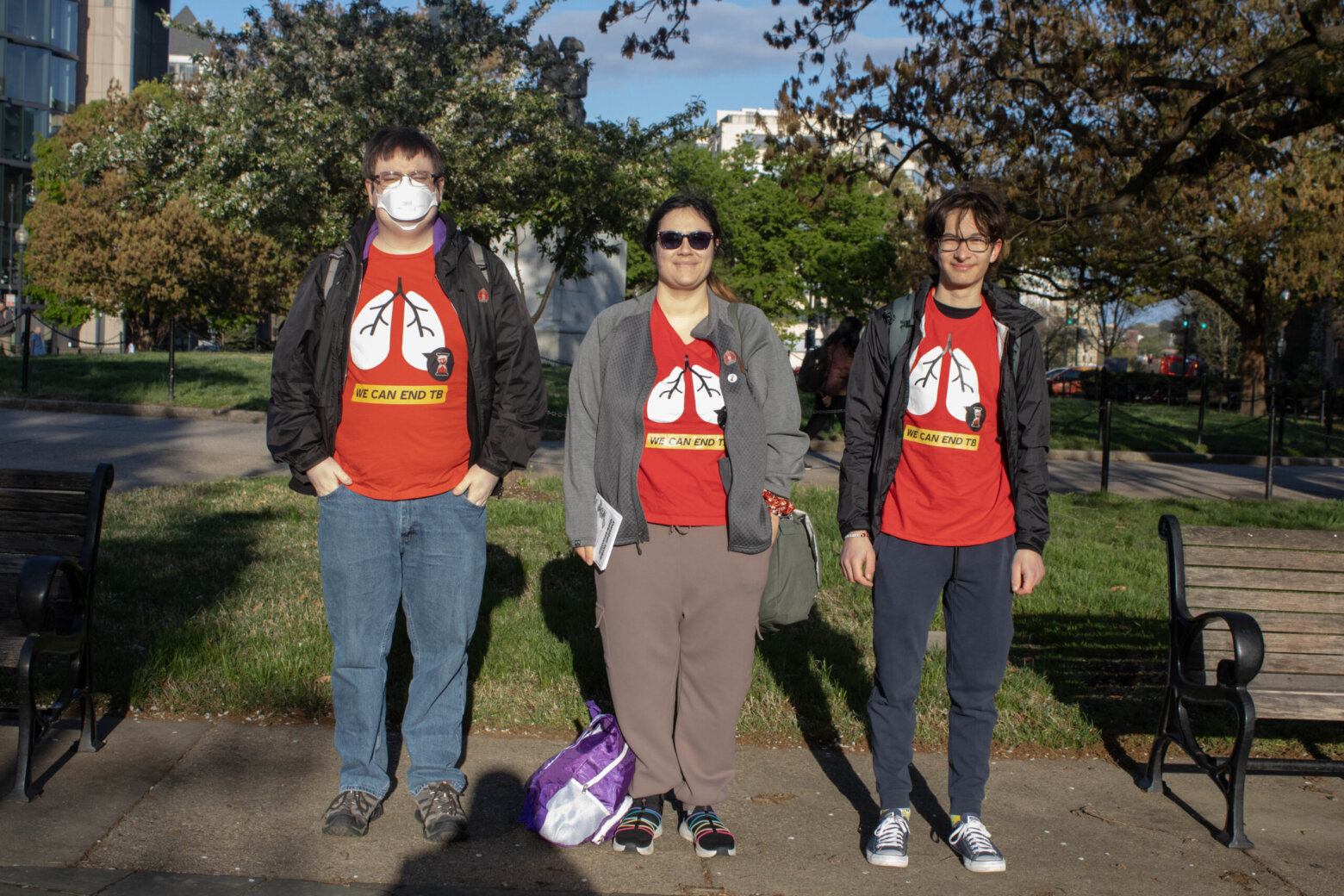
In 2023, some of the most dedicated activists started organizing themselves and formed “TB Fighters.”
Some of these “TB Fighters” had very little experience with activism.
Organizer Hannah Kenny described the early TB Fighters as “a lot of very confused but very excited people” and “a bunch of bees in a trench coat.”
Within a few months, hundreds of TB Fighters were attending regular phone banking sessions and writing to their representatives.
‘We know how to live in a world without tuberculosis’
Green took things public in 2023, with videos calling out companies Danaher and Johnson & Johnson for what he calls “price gouging” for tuberculosis testing and medication. Hundreds more Nerdfighters began calling and writing to their representatives.
Within days, Johnson & Johnson announced that it would not renew its patent on a key antibiotic — allowing more affordable generic versions into the market.
Danaher agreed to lower the prices of its cheapest tests, but fell far short of what Doctors Without Borders has campaigned for.
The companies did not cite what prompted their moves.
Danaher did not respond to WTOP’s request for comment.
Tests and medications themselves aren’t the only barriers to treatment. In his book, Green explores how historical forces, such as colonialism, racism, war and other diseases have ravaged communities and health care systems in poor countries.
He also delves into how tuberculosis has been imagined — at times, stigmatized, and at other times, romanticized — and how those imaginings have influenced how we have collectively understood the disease.
He explores how all these historical forces have come together to shape the current state of affairs, and the way the wealthy world addresses tuberculosis today — namely, that it is failing to do so.
But he said that all of this is avoidable.
“We know how to live in a world without tuberculosis,” Green writes. “But we choose not to live in that world.”
Tuberculosis is both preventable and curable — and it’s not nearly as difficult or expensive as one might think.
“If we were to spend $20 billion per year, by 2030 we could drive down mortality 90%,” said Vincent Lin, associate director of health and policy at Partners in Health.
That amounts to about $130 per year per taxpayer, Lin said.
“So we’re not talking about some moonshot, very difficult thing to achieve,” Lin said. “This is very much within our grasp if we’re able to mobilize the resources to do so.”
‘A threat to people everywhere’
President Donald Trump’s cuts to the U.S. Agency for International Development and the National Institutes of Health have slashed the global funding supply for tuberculosis research and treatment in half, according to analysis from the Center for Global Development.
“Hundreds of thousands of people have their treatment interrupted,” Green told WTOP, citing research from the World Health Organization. “Most of the people who’ve had their treatment interrupted will die of tuberculosis.”
In his book, Green encourages readers to empathize with the people whose lives and problems are physically far away from our own. But he also makes a domestic case for treating tuberculosis abroad.
“Diseases respect no borders. The world is so interconnected,” Lin said, pointing to COVID-19 as a recent example of how quickly a disease can spread. “So we have to be able to deal with these infectious diseases, wherever they might be.”
Tuberculosis cases are rising quickly in the U.S., and Lin said those numbers will only climb if action isn’t taken both at home and abroad.
While tuberculosis treatment in the U.S. is typically very effective, it’s a long and expensive process. Even after her four-month isolation period, Skaggs’ symptoms made her unable to work. She had to go back on medical leave and was fired soon after.
“I am literally the best-case scenario,” Skaggs told WTOP. “I had health insurance. I had disability insurance to make sure I could still pay my bills. I had a home I could isolate in. So many people have it so much worse than I do.”
Drug-resistant strains are even harder to treat. Lin said patients with drug-resistant tuberculosis could end up in treatment for years, sometimes taking dozens of pills a day and getting “toxic injectable drugs with a lot of side effects.”
An internal memo by U.S. Agency for International Development, obtained by the New York Times, estimated that cuts made to its programming could lead to a 28-30% increase in tuberculosis cases over one year globally.
“TB anywhere is a threat to people everywhere,” Green said.
Looking ahead
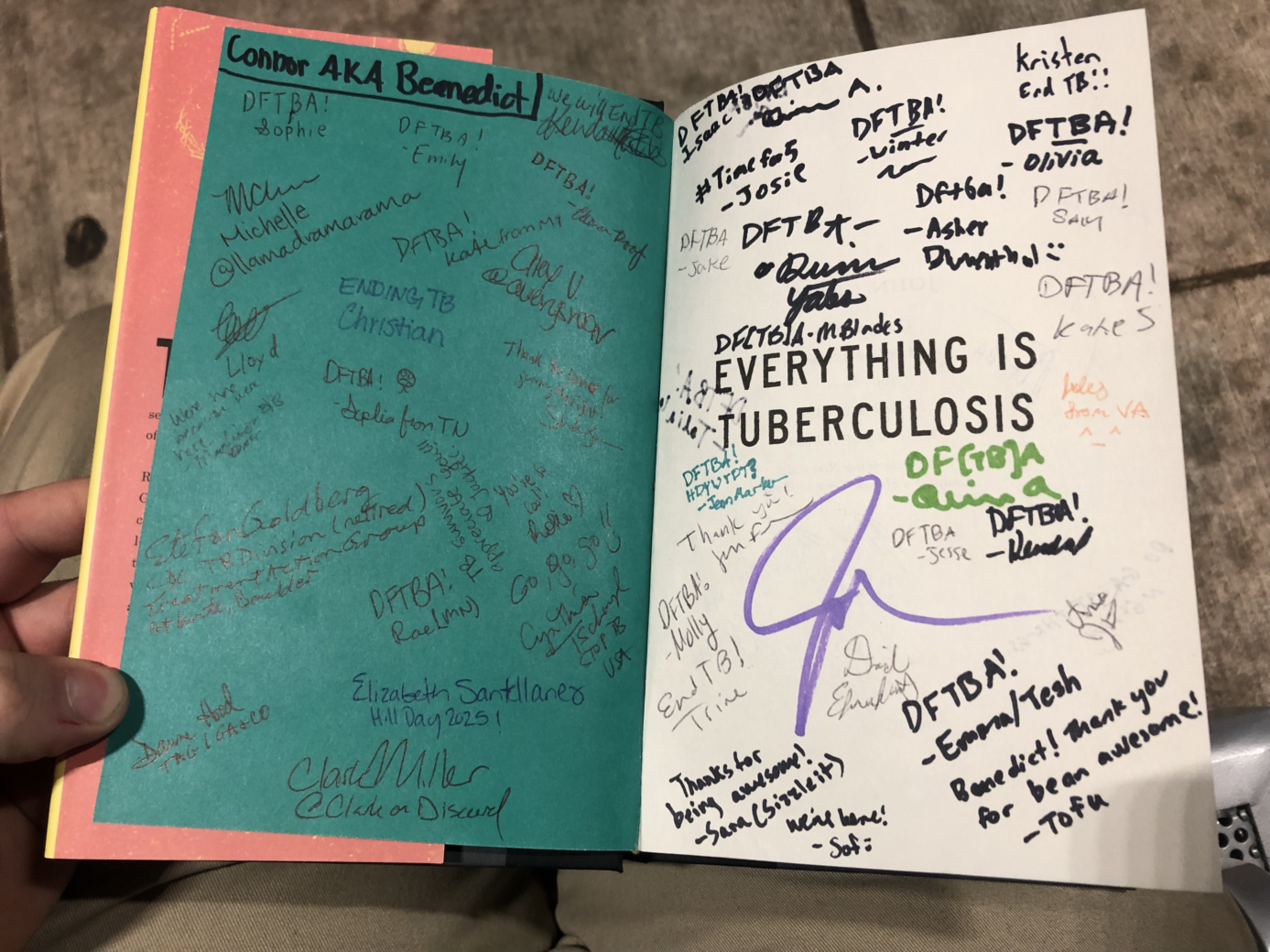
Over 200 more activists attended this year’s Hill Day than last year, meeting with their representatives from 49 states.
“One of the congressional staff that we met with told one of the volunteers, ‘You guys are as prepared for this meeting as folks who represent some of the biggest defense contractors in the nation,'” Lin said.
TB Fighters are already planning for the next Hill Day — working to push Congress to renew its pledge to the Global Fund to Fight AIDS, Tuberculosis and Malaria.
“That replenishment pledge is this fall, and it sets up the funding for the next three years,” Lin said. “That is a critical thing that we … have been talking to members of Congress about — to say that this funding is important, that Americans care about this, that we think this is a very worthwhile use of our taxpayer dollars.”
Green will be on tour for several more weeks, using his platform to continue raising awareness of this issue.
“How we spend our attention matters,” Green said. “So to see people using their attention to focus on tuberculosis has been very moving for me and very encouraging. It’s a reminder that together, we can accomplish things that we simply can’t accomplish alone.”
Get breaking news and daily headlines delivered to your email inbox by signing up here.
© 2025 WTOP. All Rights Reserved. This website is not intended for users located within the European Economic Area.