Spotlight PA and two other news organizations are suing leaders of the Penn State Board of Trustees in federal court, accusing them of violating the First Amendment by controlling what individual trustees can say to the public and the press.
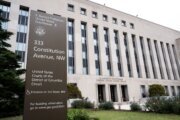
The lawsuit, filed Wednesday in the U.S. District Court for the Middle District of Pennsylvania, challenges what it refers to as a “gag policy” embedded in the trustees’ bylaws.
That policy, the filing argues, “unconstitutionally restrains” trustees, prohibiting them from making any negative or critical public statements about the board or the university. Instead, the bylaws state, trustees “shall support majority decisions of the Board.”
Trustees must also get permission from board leadership and accept guidance from public relations officials before talking to the press. Those who fail to do so can face disciplinary action — a process, the filing argues, that creates a “chilling effect” on a trustee’s ability to freely express their views.
The news organizations are asking a federal judge to declare the restrictions unconstitutional.
“The right to dissent is the lifeblood of democracy,” said Heather Murray, associate director of the Cornell Law School First Amendment Clinic, in an email. “Blanket bans on trustees making critical statements about Penn State stakeholders and requiring trustees to get preapproval to talk to journalists about any matters that have come before the board plainly runs afoul of the First Amendment.”
The lawsuit names board Chair David Kleppinger, Vice Chair Richard Sokolov, and governance committee Chair Daniel Onorato as defendants in their official capacities, identifying them as the leaders responsible for overseeing and enforcing the bylaws.
Wyatt DuBois, senior director of university public relations, told Spotlight PA in an email that the university “does not comment on pending litigation.”
Spotlight PA is joined in the lawsuit by the Centre Daily Times and StateCollege.com. The news organizations are represented by the Reporters Committee for Freedom of the Press and the Cornell Law School First Amendment Clinic.
Over the past two years, the Board of Trustees, which functions as the university’s governing body, has adopted amendments to its bylaws, regulating how trustees communicate with the public.
In July 2024, the board approved an amendment that said in part: “Negative or critical public statements about the Board, the University or its students, alumni, community, faculty, staff, and other stakeholders do not serve the University’s interests and are inconsistent with a Trustee’s fiduciary obligation to act always in the best interests of the University.”
The lawsuit describes that amendment as “unconstitutionally vague” in that it pertains to any trustee statement, “whether or not it is made in an official capacity.” The filing further contends that “‘stakeholders’ is not defined and is ambiguous.”
In November 2025, the board approved another amendment requiring trustees to coordinate in advance all press interactions with the “Board Office” — which, according to the complaint, includes Kleppinger and Sokolov. Trustees must also accept guidance from the Office of Strategic Communications, the university’s public relations and marketing division, before talking to reporters.
“In other words, every trustee must seek and obtain approval of their statements to media in advance, allowing Board leadership to pick and choose what information and opinions the media is allowed to receive from individual trustees,” according to the lawsuit.
Under the bylaws, board leadership can also disqualify for election any incumbent or prospective trustee whose social media and online presence is deemed “inconsistent with the Code of Conduct and/or Penn State Values.”
The consequences for bucking the board’s rules can be severe. The bylaws detail how trustees who violate the communication policy will be “counseled, admonished, sanctioned, or removed from their position.”
The lawsuit cites the treatment of Emerita Trustee Alice Pope, who between April and May 2025 spoke out repeatedly and without board approval about its decision to close seven of the university’s 20 commonwealth campuses. Pope, as an emerita trustee, holds an honorary, nonvoting title typically granted to former long-serving board members. Her public dissent included a virtual news conference on May 22, 2025, alongside other alumni-elected trustees.
After that conference, Pope received a letter from board leadership advising her she had violated the code of conduct. Pope said in a declaration, as part of the lawsuit, that she understood the letter “to be a formal reprimand and a warning” that further public speech could affect her ability to serve in leadership positions or on key committee assignments.
“Penn State’s gag policy not only controls what members of the Board of Trustees can say but also whether they can even speak publicly at all about the Commonwealth’s largest public university, which raises serious constitutional concerns,” said Paula Knudsen Burke, attorney for the Reporters Committee for Freedom of the Press, in an email. “Trustees who wish to share their independent insights on important issues are effectively barred from doing so, and the result is a Penn State community and broader public that’s less informed about what’s happening at an institution that reports almost $16 billion in economic impact on Pennsylvania.”
The federal lawsuit is the latest legal challenge aimed at increasing transparency by Penn State’s governing body.
Following a yearslong public records battle, Commonwealth Court in October ordered the university to release internal trustee documents sought by Spotlight PA. The court ruled that government agencies and “affected third parties like Penn State” could not use cloud-based file-sharing services to shield public records from disclosure. The state Supreme Court solidified that victory in April by denying the university’s request to overturn Commonwealth Court’s decision.
In June 2025, the Board of Trustees settled a separate lawsuit brought by Spotlight PA that accused the governing body of routinely violating the state’s Sunshine Act by conducting public business behind closed doors.
As part of that agreement, the university was mandated to provide open-meetings legal training for trustees and disclose more details about their private sessions.
___
This story was originally published by Spotlight PA and distributed through a partnership with The Associated Press.
Copyright © 2026 The Associated Press. All rights reserved. This material may not be published, broadcast, written or redistributed.