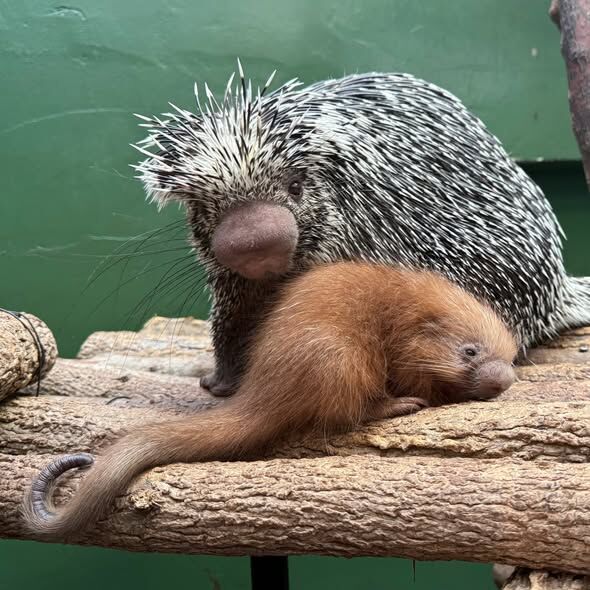

A baby porcupine born last week at the Smithsonian’s National Zoo in D.C. is already receiving visitors, the zoo said Wednesday.
Keepers at the park’s small mammal enclosure found its latest addition clinging to a tree on May 20, the National Zoo said in a Facebook post.
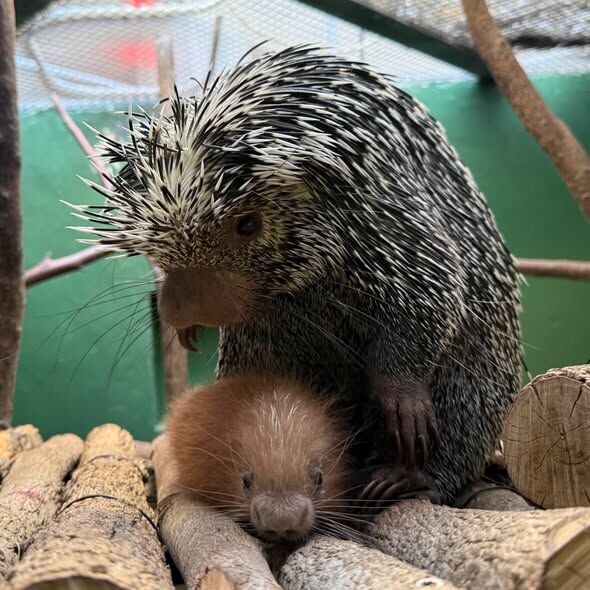
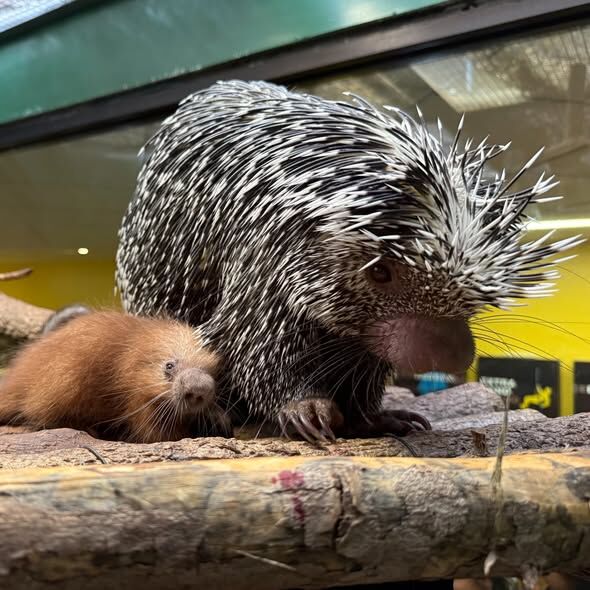
The zoo said that the baby — known as a porcupette — appears healthy and bonded successfully with its mother Beatrix, a prehensile-tailed porcupine.
It’s the fourth baby porcupine born to Beatrix and her mate, Quillbur. The newest porcupette’s siblings include Quillow, born in 2023, Fofo, born in 2022, and Quilliam, born 2019.
The zoo’s photos show the baby snuggled up to its mom, its skin covered in what looks at first glance like red fur.
“Don’t let its fuzzy appearance fool you,” the zoo said. “At birth, a porcupette’s hair and quills are very flexible — similar to how our fingernails soften after a long soak. But within minutes of being exposed to air, they dry and harden.”
So while the porcupette’s long, rust-colored hair looks soft, the tips are sharp and prickly, the zoo said.
“Beneath all that fluff are small, black-and-white quills whose hooked barbs provide the porcupine with a serious defense mechanism,” the zoo said.
Prehensile-tailed porcupines are native to South America. The adults’ bodies are typically up to two feet in length, and their tails can be nearly as long, according to the zoo.
The long and strong tails aid them in climbing trees, where they spend most of their lives.
The gender of the zoo’s baby is not yet known. Until six months of age, males and females of the prehensile-tailed porcupine species look alike anatomically.
Fortunately, it won’t take that long for the gender reveal. Keepers took the quills that stuck to their gloves when they were petting the baby and sent them for DNA analysis.
Results should be available in a few weeks, the zoo said.
Get breaking news and daily headlines delivered to your email inbox by signing up here.
© 2026 WTOP. All Rights Reserved. This website is not intended for users located within the European Economic Area.