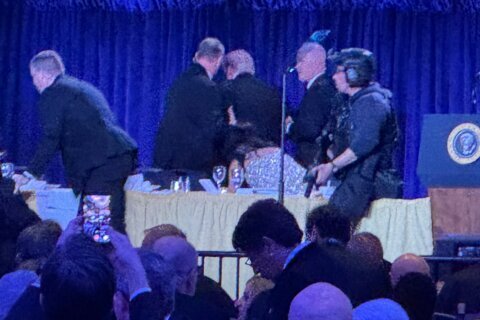
The shooting during the White House correspondents’ dinner on Saturday is another example of how acts of political violence, even when stopped before anyone is seriously hurt, are becoming a recurring part of the national landscape.
James Hawdon, a professor of sociology and the director of the Center for Peace Studies and Violence Prevention at Virginia Tech, said it is the frequency of these events, not their severity, that is reshaping how people react.
“I do think there has been somewhat of a normalization of violence,” Hawdon said. “Part of that is the rhetoric that is being used.”
Political violence in the U.S. is not new, but Hawdon said the country is in a period where these events are happening more often.
“This seems to ebb and flow, and we are entering a period where there is more political violence,” he said.
Hawdon said the risk is not limited to deadly attacks, pointing to recent near misses and thwarted attempts as well.
“It doesn’t necessarily even need to be a successful attack,” he said. “Those attempts that are successful, I think has a greater impact.”
Repeated instances like this can begin to blend into the background of everyday life, Hawdon said. When violence becomes familiar, he said, it can affect public trust in the political system.
“When politics are decided, in part through violence, rather than through the discussion of ideas, people start to, first of all, become more polarized, and secondly, withdraw their trust from the system,” Hawdon said.
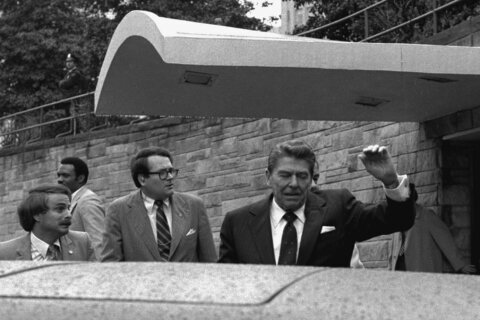
The gunman tried to storm the White House Correspondents’ Association dinner at the Washington Hilton, the same hotel where President Ronald Reagan was shot more than 40 years ago.
In 1981, Reagan was walking to a limousine outside the hotel when he was shot by John Hinckley, an event that shocked the country.
While the circumstances were very different, Hawdon said political violence today feels closer and more frequent.
He cautioned that this is not the most violent period in U.S. history, but said the frequency of events still matters.
Beyond the long‑term trend, Hawdon said researchers also look at how individuals come to see violence as an option in the first place.
Looking at past acts of terrorism, Hawdon said people generally resort to political violence when they don’t see a legitimate way for their grievance to be heard.
“If you can take your case to the courts and have the courts resolve it, you do that. But if the courts aren’t going to hear your case, the next strategy could be, ‘Well, let’s disrupt the system,’” he said.
Hawdon said the internet can intensify that thinking by reinforcing grievances and biases inside groups of like‑minded people.
“You air your grievance, and the people share that grievance, and that amplifies it and makes it — in your head — even worse than it might be,” he said.
Hawdon said that kind of reinforcement does not have to directly promote violence to have an impact.
“Not necessarily directly encouraging you to become violent, but at least applauding your notion that there’s something seriously wrong that I have to fix,” he said.
Get breaking news and daily headlines delivered to your email inbox by signing up here.
© 2026 WTOP. All Rights Reserved. This website is not intended for users located within the European Economic Area.