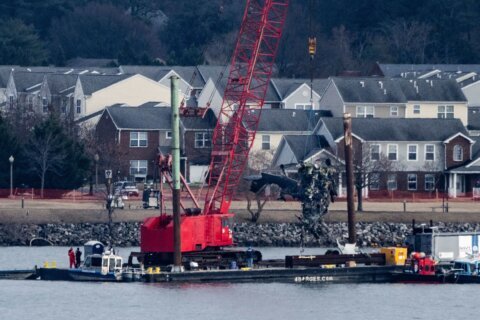
On the anniversary of the D.C. plane crash that claimed the lives of 67 people, WTOP takes a look back in our series “Disaster on the Potomac, 1 year later” — and the changes that followed in its aftermath. Find it this week on air and here on WTOP.com.
Even before Jan. 29, 2025, when an Army Black Hawk helicopter on a training mission near Reagan National Airport struck the side of an American Airlines regional jet, killing 67 people, aviation experts realized the nation’s aging air traffic control system desperately needed an upgrade.
“We haven’t kept pace with what’s available in other parts of the world,” said Stephen Creamer, president and CEO of the Air Traffic Control Association, which represents companies that built the existing system and maintain it.
“We have to have solutions in place that make the separations iron clad, if we’re going to do that.”
When it comes to air traffic control management, separating aircraft is the key to safety and efficiency. But as the number of aircraft in the sky at any one time is expected to double by 2050, aviation leaders are looking at ways to significantly improve the efficiency of the system.
Changes on the table include allowing airplanes, in some cases, to fly closer to each other, and utilizing increased automation, artificial intelligence and other tools that are now being used in other nations that have modernized their air traffic control systems.
Going back to former President Ronald Reagan’s administration, both Republican and Democratic administrations have put forth efforts to upgrade the air traffic control system, but instead numerous short-term fixes were implemented, rather than a comprehensive overhaul.
Experts say because of the professionalism of the air traffic controllers who direct the planes, the system kept functioning safely, even as the number of people flying has tripled worldwide from the late 1970s and early 1980s.
Creamer said the Federal Aviation Administration is preparing to spend more than $30 billion over the next three years to upgrade the system, and there is a tremendous opportunity to develop something that can last for years and make flying safer.
“There’s also a step change opportunity coming to be able to implement other new technologies that are cutting edge as part of this. That’s going to accommodate the new technology,” he said. “Drones, advanced automation, commercial space operations, as well as optimizing the traditional aviation that all of us enjoy when we get on an airplane, so that it’s less disrupted, more environmentally friendly and probably less expensive to operate.”
What’s being upgraded
The massive reform to the system will include more than 27,000 new radios used to communicate between airplanes and control centers. Much of the old, copper wire connections will also be replaced with fiber or by satellite or wireless communication systems for more reliable and high-speed network connections.
The FAA is adding 462 digital voice switches to the network too, which will replace outdated paper strips and streamline flight data in towers. More than 400 towers will be outfitted with Enterprise Information Display Systems, which will replace the 1980s-era floppy drive systems and provide controllers with real-time information across FAA facilities.
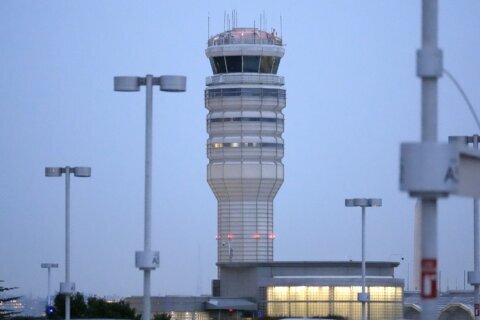
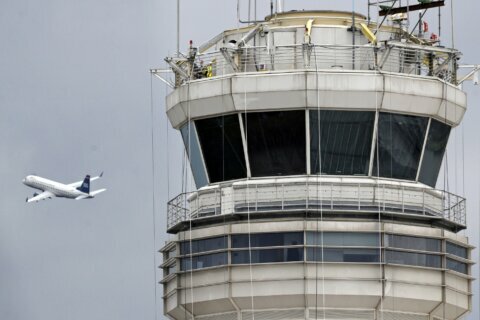
For the first time since the 1960s, the FAA is building a new consolidated Air Route Traffic Control Center, and the agency is replacing some of its aging centers. Those facilities manage high-altitude aircraft, and the FAA will also build and renovate its terminal radar approach controls. They handle aircraft approaching, departing from and transiting between airports.
By the end of 2028, the FAA also plans to have installed 612 state-of-the-art radars at airports and along routes to replace aging systems and better track airplanes and vehicles on runways, taxiways and ramps. New surface radar systems are coming to 44 airports and 200 airports will get Surface Awareness Initiative surveillance technology.
“Our radar network is outdated and long overdue for replacement. Many of the units have exceeded their intended service life, making them increasingly expensive to maintain and difficult to support,” FAA Administrator Bryan Bedford said.
“We are buying radar systems that will bring production back to the U.S. and provide a vital surveillance backbone to the National Airspace System.”
Addressing a shortage while making upgrades
The FAA is also taking steps to address its ongoing shortage of thousands of air traffic controllers. Many controllers who were trained and hired 20 and 30 years ago, in the aftermath of the PATCO strike, are retiring.
It took almost 20 years to completely rebuild the air traffic control system after President Ronald Reagan fired 11,345 controllers who went on strike in August 1981.
In 2024, the U.S. had roughly 11,700 certified professional controllers and certified controllers in training, according to the FAA.
The agency expects to hire at least 8,900 new air traffic controllers through 2028, while nearly 7,000 are projected to leave over the same period.
The FAA said it did reach its hiring target in 2025, bringing in 2,026 new air traffic controllers, according to the agency.
With a mandated age of starting no later than age 31, and a requirement they must retire at age 56, most controllers begin their careers in their mid to late 20s and work for 25 to 30 years before they must leave the control towers and approach and en route facilities.
In addition, the job is extremely challenging, and it is exceedingly difficult to become a fully certified controller.
The U.S. Government Accountability Office said while as many as 200,000 people have applied for the position over the last several years, the hiring and training process is designed to weed out unqualified candidates in the high-stakes career. Only about 2% qualify and complete the full training process.
For decades, the FAA’s main air traffic control training program in Oklahoma City has been the only way for prospective controllers to get training and get hired.
As it stands, the FAA is short more than 2,000 controllers to reach its mandated and funded goal of more than 14,000 certified controllers.
Now the FAA is working in a partnership with universities in a program called the Air Traffic Collegiate Training Initiative, which provides the same training recruits receive in Oklahoma City.
Creamer said as the FAA brings in new controllers and the new equipment, it will be essential that controllers and others who operate it are exceptionally well trained.
“You can’t go and transition to a new system that is not well understood by the people who use it. And the risk increases if you do not apply really careful attention to the training and to the transition steps,” he said.
“That’s one of the other things that I believe is really important, is that the field personnel and field management has to have the training and the resources to be able to manage their parts of the change. You can’t manage everything from headquarters to get it done in the field. The people in the field have to be part of that management. They have to understand the direction. They have to make sure that the staffs in those facilities all know where they fit and what their responsibilities are going to be during a transition. So, it’s a pretty big challenge in that regard.”
Get breaking news and daily headlines delivered to your email inbox by signing up here.
© 2026 WTOP. All Rights Reserved. This website is not intended for users located within the European Economic Area.