“Eyes to the Skies” is a recurring feature and publishes on the first of every month. You can find it on WTOP’s The Space Place. Email Greg your space questions and he might answer them in the next edition.
Each month WTOP’s “Eyes to the Skies” feature previews the best the sky has to offer stargazers regarding the moon, planets and stars. Space-related events that might interest you taking place in the D.C. region will be included as well.
Let’s get to the skies for June 2026!
Must-see sky sights for June
Venus and Jupiter dominate the west after sunset all month, as they move toward and then away from each other.
The moon will occult, or cover, Venus in the daytime.
Summer solstice
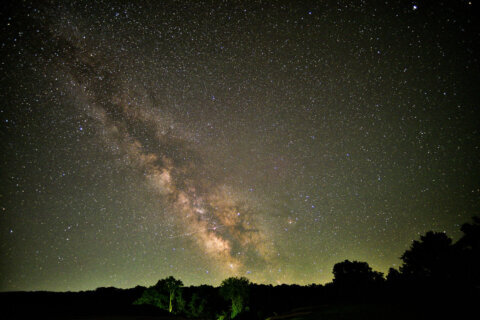
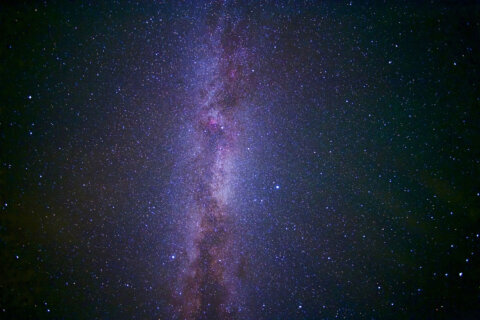
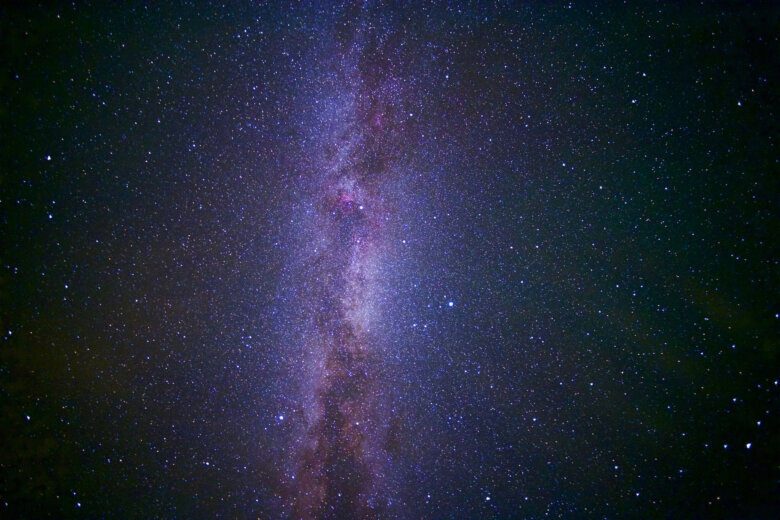
The Summer Constellations and the Milky Way galaxy are visible after dark, spanning the sky from the northeast to the southeast getting higher until morning twilight.
Star of the month
In June, be on the lookout for bright star Altair. It marks the corner of the “Summer Triangle” when it appears above the horizon about 10 p.m. EDT.
Highlights of the month
June 1: As June starts, turn your attention to the west at dusk. Brilliant Venus and dimmer — but still very bright — Jupiter dominate the sky scene. Keeping them company to the lower right and above the horizon is Mercury. Watch each night as they change their positions in the sky. The planets orbit the Sun, which causes their motion in the sky. It is fascinating to watch! Take astropics with your smartphone or digital camera to record these changing sky positions.
June 5: Remember our star of the month in October, Algol? It is worth looking at it going to minimum brightness for two hours centered at 3:37 a.m. EDT, and then getting brighter. See the other dates this month below. Try taking a smartphone/camera photo or maybe even a video.
June 7: At dusk in the west, Jupiter and Venus are very close to one another and the two bright stars to their right are Pollux and Castor. Worthy of taking an astropic with your smartphone and/or digital camera!
June 8: Algol again at 12:25 a.m. EDT.
June 9: At dusk in the west, Jupiter and Venus are at their closest to one another. Worthy of taking an astropic with your smartphone and/or digital camera.
June 10: Algol again at 11:14 p.m. EDT.
June 16: If you have a clear view of the western horizon at dusk, look for a very slim crescent moon between lower Mercury and higher Jupiter. Use Jupiter as a guide to find the moon. Look for earthshine on the moon. Worthy of taking an astropic with your smartphone and/or digital camera!
June 17: The moon will occult Venus during daylight hours. In-the-Sky.org states that, “The occultation will be visible from Washington. It will begin with the disappearance of Venus behind the Moon at (2:45 EDT), though in daylight. Its reappearance will be visible at (4 p.m. EDT), though in daylight. Extreme caution is necessary when pointing binoculars or telescopes at the sky when the Sun is above the horizon, as even a momentary glance at the Sun through such an instrument can cause permanent blindness.”
The sun will be to the west of the moon and Venus, meaning you must ensure you do not view that section of the sky.
This occultation is worthy of taking an astropic with your smartphone using zoom and/or a digital camera with a telephoto lens. A telescope would work best. Take pics of the disappearance and reappearance.
June 17: If you have a clear view of the western horizon at dusk, look for a slim crescent moon just to the upper left of Venus. Use Venus as a guide to find the moon. Look for Earthshine on the moon. Worthy of taking an astropic with your smartphone and/or digital camera.
June 20: If you have a clear view of the western horizon at dusk, Venus, Jupiter and Mercury will be visible. You will want an astropic with your smartphone and/or digital camera of this beautiful lineup.
June 21: The summer solstice occurs at 4:25 a.m. EDT and marks the longest daylight of the year and start of summer in the Northern Hemisphere.
June 25: If you have a clear view of the western horizon at dusk, lower Mercury and higher Jupiter are close together. You will want an astropic with your smartphone and/or digital camera of this lineup.
June 25: Algol again at 5:19 a.m. EDT.
June 27: Almost full moon and the star Antares are visible in the Southeast after dark.
June 28: Algol again at 12:08 a.m. EDT.
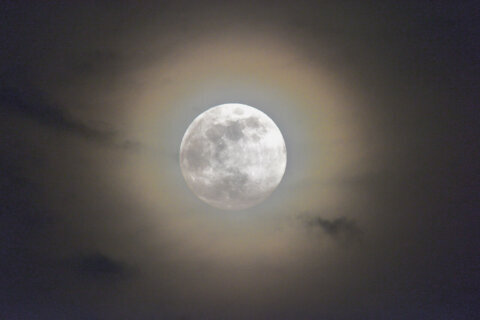
June 29: The full strawberry moon occurs at 7:57 p.m. EDT. Get the particulars for your location by using this website.
The moon
June 8: Last quarter
June 14: New moon
June 21: First quarter
June 29: Full strawberry moon
Planets
Mercury is in the west at dusk at the start of June.
Venus is very bright in the west.
Mars is in the east before dawn.
Jupiter is visible after dark and bright in the west.
Saturn rises in the east around 2 a.m.
Uranus is in the western sky after dark. You need a telescope to best observe the planet, although it is visible in binoculars.
Neptune is in the western sky after dark. You need a telescope to observe the planet.
Pluto is way out there in the solar system and requires taking images through a telescope, spaced days apart to hunt it down.
D.C.-area events
Join me at Shenandoah National Park for my “Let’s Talk About Space” presentations. Check this out for other sky events. Rangers also host night sky programs so check it out when you visit the Park.
- Virginia State Parks
- NOVAC online meeting, George Mason University on June 14 at 4 p.m. Check the calendar for astronomy events.
- National Capital Astronomers
- The Analemma Society has resumed observatory operations. Check the link regarding Friday night public viewing sessions at Turner Farm in Great Falls, Virginia. Check their calendar for other astronomy activities in June.
- Smithsonian Air and Space in D.C and Chantilly has loads of astronomy stuff in June.
- You can check here and here for astronomy clubs outside the D.C. region.
Bonus section!
Use this useful tool to create a custom star chart for your location to help you find your way around the stars. While you are at it, check out these other very useful astronomical tools.
And if you want to plan ahead for 2026 sky events, here’s a nifty guide to help.
You can also send in any space-related questions to my email address. Suggestions about this feature are also welcome.
Follow Greg Redfern’s daily blog to keep up with the latest news in astronomy and space exploration.
Get breaking news and daily headlines delivered to your email inbox by signing up here.
© 2026 WTOP. All Rights Reserved. This website is not intended for users located within the European Economic Area.