As the United States marks its 250th anniversary, WTOP presents “250 Years of America,” a multipart series examining the innovations, breakthroughs and pivotal moments that have shaped the nation since 1776.
HII is proud to partner with WTOP to bring you this series.
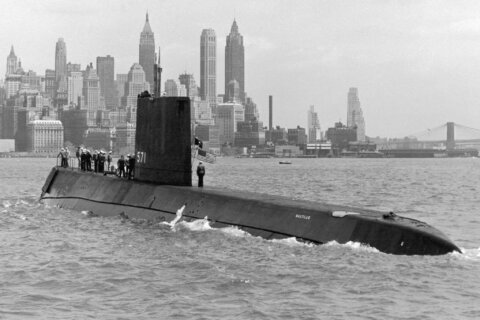
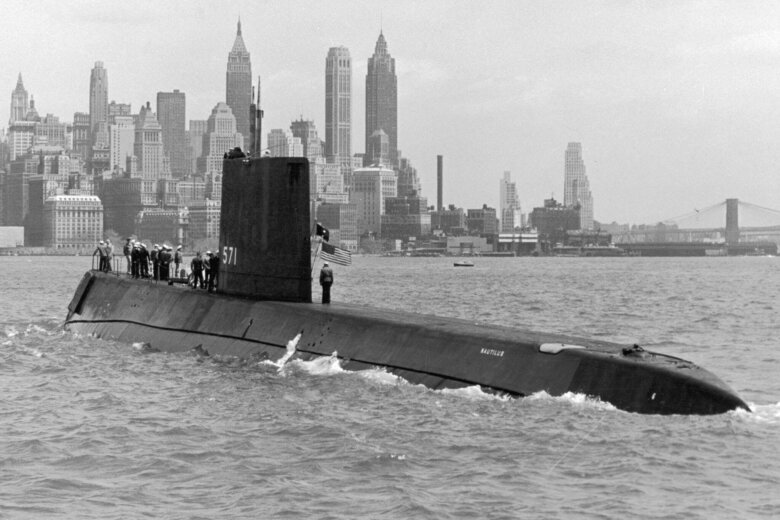
The introduction of nuclear propulsion changed the military landscape almost overnight.
Samuel Cox, Director of the Naval History and Heritage Command, told WTOP, “The development of nuclear power essentially revolutionized Navy warfare, particularly the undersea domain.”
Commissioned on Sept. 30, 1954, the USS Nautilus (SSN-571) was the world’s first nuclear-powered submarine and the first vessel to reach the geographic North Pole.
It gave the U.S. military an immediate and dramatic advantage over its Soviet counterparts by offering virtually unlimited underwater endurance and high speeds, a feat impossible for the diesel-electric submarines of its time.
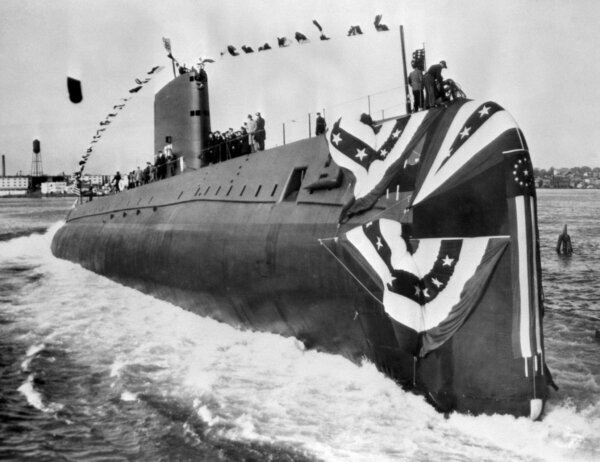
“With nuclear power,” Cox said, “a submarine could remain underwater undetected virtually indefinitely.”
The only thing that held them back, he said, was “food supply.”
Even though the Soviet Union partially closed the advantage gap four years later with the K-3 Leninsky Komsomol, which was launched in 1958, Cox said, “our submarines generally held the advantage throughout the entire Cold War.”
The U.S. has commissioned and operated more than 215 nuclear-powered submarines since the Nautilus first went underway. Additionally, there are 11 nuclear-powered surface ships in active service. All of them are aircraft carriers.
The Navy had nuclear-powered cruisers during the Cold War,” Cox said, “but they were retired in the 1990s.”
“They’re still viable,” he said, “but too expensive for most surface ships. Nuclear power is limited right now to aircraft carriers and submarines, because the advantages of both are worth the additional cost.”
The Gerald R. Ford class of nuclear-powered “supercarriers” is the latest class of aircraft carriers. It’s designed to replace the Nimitz-class. The USS Gerald R. Ford (CVN-78) is currently the only active ship of that class. The USS John F. Kennedy (CVN-79) and USS Enterprise (CVN-80) are under construction.
China’s navy represents the biggest challenge to the U.S. today. It is a significant and rapidly growing threat to U.S. naval superiority, primarily within the Indo-Pacific region. While the U.S. retains qualitative advantages in technology and experience, China’s fleet is numerically larger — approximately 400 ships to 295, as of early 2025 — and expanding faster, specifically in anti-ship missiles, submarines, and carriers.
As of early 2026, all of China’s nuclear-powered vessels are submarines. China does not yet have an active nuclear-powered aircraft carrier or surface ship, though its fourth aircraft carrier (the Type 004) is currently under construction and is widely expected to be its first nuclear-propelled surface vessel.
The reliability and safety of naval nuclear reactors are hallmarks of the U.S. program. Admiral Hyman George Rickover, known today as the “Father of the Nuclear Navy,” directed the original development of naval nuclear propulsion and controlled its operations for three decades as director of the U.S. Naval Reactors office.
Rickover’s insistence on engineering discipline created a track record with no reactor-related accidents leading to loss of life at sea. This innovation fundamentally altered naval warfare, and the developments of the 1950s remain central to American naval power today.
The United States continues to operate nuclear-powered carriers and submarines as core strategic assets.
Get breaking news and daily headlines delivered to your email inbox by signing up here.
© 2026 WTOP. All Rights Reserved. This website is not intended for users located within the European Economic Area.