As the United States marks its 250th anniversary, WTOP presents “250 Years of America,” a multipart series examining the innovations, breakthroughs and pivotal moments that have shaped the nation since 1776.
The American Petroleum Institute is proud to partner with WTOP to bring you this series.
For much of early American history, oil and natural gas were only valuable if they could be used close to where they were found.
Transporting energy resources over long distances was difficult and expensive.
“In the beginning, you often had to go to the source of the energy,” said Bernie Carlson, a historian of technology and professor emeritus of humanities at the University of Virginia. “A lot of industrial activities were very decentralized.”
Oil could be loaded into barrels and shipped by wagon, rail or boat.
Natural gas came with its own set of challenges.
It was difficult to store and even harder to transport without losing pressure, which meant it was typically burned or used near the well where it was produced.
Those limitations kept energy markets small and local.
The development of pipelines in the late 19th and early 20th centuries eventually changed that.
Pipeline development takes shape
The first significant oil pipelines began appearing in the 1860s and 1870s.
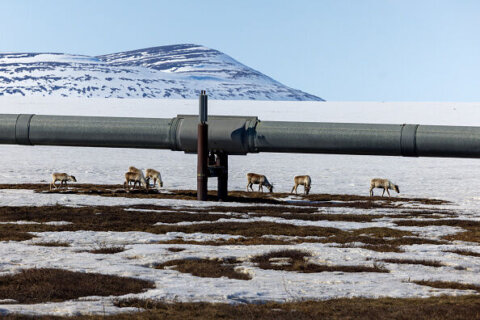
Instead of moving oil in containers, companies began building long metal pipes to carry petroleum directly from wells to refineries and shipping hubs.
Pumps pushed the oil through the lines.
“It became highly desirable to get the energy from remote locations,” Carlson said. “The question was, how are you going to get the oil from oil fields to where it was going to be refined, or to the big cities such as New York, Philadelphia or Boston.”
One of the most influential figures in the industry was John D. Rockefeller, whose company Standard Oil invested heavily in pipeline infrastructure. By the late 1800s, Standard Oil had built an extensive network that helped the company dominate the American oil industry.
“The Rockefellers basically said, ‘I don’t want to have to worry about the railroads, I want to move the oil all by myself and I want to control the movement of the oil,'” Carlson explained.
Natural gas followed a similar path.
By the early 20th century, engineers had developed stronger steel pipes and improved compressors, allowing gas to move long distances without losing pressure.
One of the earliest major gas pipelines was completed in the 1890s, carrying gas from fields in Indiana to industrial users in Chicago.
Hidden in plain sight
As the technology improved, pipeline networks expanded rapidly.
By the 1920s and 1930s, long-distance pipelines were linking oil fields in Texas and Oklahoma to refineries and cities across the Midwest and East Coast.
The expansion accelerated after World War II, when energy demand surged and the United States invested heavily in infrastructure.
Today, the United States operates one of the largest pipeline networks in the world, with hundreds of thousands of miles of lines moving oil, gasoline, diesel, and natural gas across the country each day.
By solving the challenge of transportation, pipelines helped turn oil and gas into the backbone of the modern U.S. energy system, allowing energy to flow across an entire continent.
“It wasn’t a revolution, it was an evolution and a much more incremental process,” said Carlson. “This is the hidden infrastructure of American energy.”
Get breaking news and daily headlines delivered to your email inbox by signing up here.
© 2026 WTOP. All Rights Reserved. This website is not intended for users located within the European Economic Area.