As the United States marks its 250th anniversary, WTOP presents “250 Years of America,” a multipart series examining the innovations, breakthroughs and pivotal moments that have shaped the nation since 1776.
AAR is proud to partner with WTOP to bring you this series.
As World War I was coming to an end in 1918, airplanes had proven their value in combat. The next question: Could they deliver the mail?
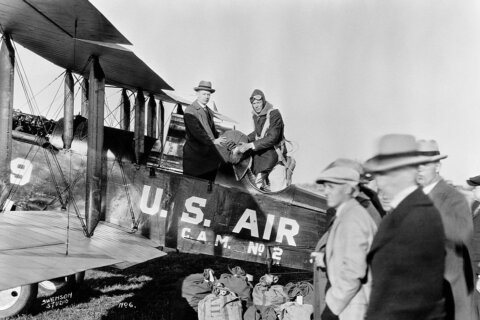
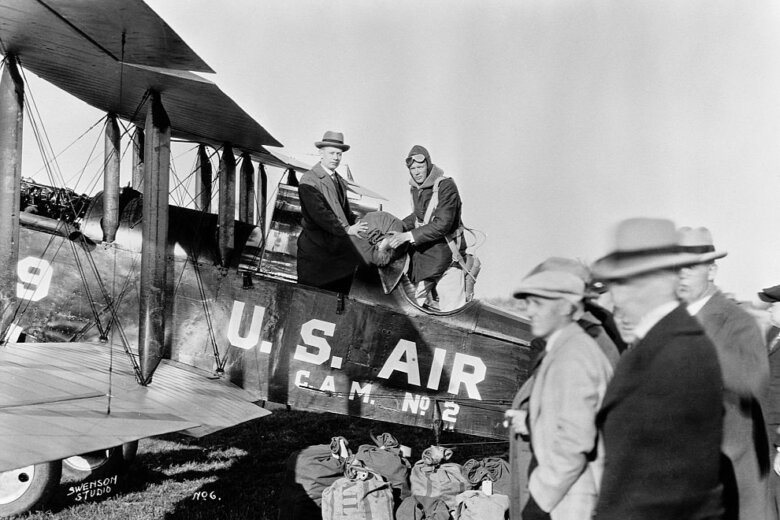
That idea helped launch one of the most important early uses of aviation in the United States.
The U.S. Postal Service, backed by Congress, began expanding experimental airmail routes. Many of the pilots flying those early missions had already been pushing the limits of flight in the 1910s — and would soon bring that experience into military service.
“And in the nation’s capital, U.S. mail heads for its first trip by air. President (Woodrow) Wilson is on hand and delivers a letter for the airplane,” a newsreel narrator said at the time.
Flying conditions were primitive. Pilots often navigated by following railroad tracks. There were no modern instruments, and in poor weather, they were essentially flying blind.
It was also dangerous work. Between 1919 and 1927, 34 pilots were killed.
College Park Airport in Maryland — the nation’s oldest, still operating today — became a key hub for East Coast airmail operations.
DePaul University transportation professor Joe Schwieterman said it quickly became clear improvements were needed.
“Any kind of urban use of airplanes required something better than a compass and a pilot with a good set of eyes or binoculars,” he said.
Progress came fast.
By 1924, the Postal Service had established regular coast-to-coast airmail service. Night flying soon followed. By the mid-1920s, relay teams of pilots could move mail from San Francisco to New York in just over 33 hours.
Safety improved as technology advanced. Lighted beacons were installed across the country to help guide pilots. A growing network of airports — some just 25 miles apart — gave crews more options in an emergency.
Eventually, the Postal Service turned to private airlines to carry the mail, helping fuel the growth of the commercial aviation industry.
For decades, it was common to see bags of mail loaded onto aircraft for delivery across the country.
At its peak, the system was massive.
“The U.S. Postal Service uses over 15,000 airplanes to handle your priority mail,” a narrator said in a mid-1980s television commercial.
Today, that era has largely passed.
More than 95% of U.S. mail now moves by truck, as the Postal Service has reduced air operations in an effort to cut costs amid ongoing financial challenges.
Get breaking news and daily headlines delivered to your email inbox by signing up here.
© 2026 WTOP. All Rights Reserved. This website is not intended for users located within the European Economic Area.