As the United States marks its 250th anniversary, WTOP presents “250 Years of America,” a multipart series examining the innovations, breakthroughs and pivotal moments that have shaped the nation since 1776.
AAR is proud to partner with WTOP to bring you this series.
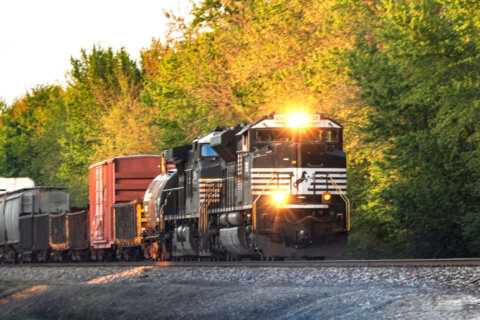
In the early 1820s, before electricity or telephones, railroads helped a growing nation expand. That was 200 years ago, and the steam engine whistle and sound of an approaching train changed America forever.
“A journalist in the 1830s described railroads, at the time, as a great chain, that he one day imagined would link the entire coast,” University of Buffalo professor, author and railroad expert David Alff said.
Railroads did more than connect the East Coast — in less than 40 years, they created a mode of transportation and commerce that went almost coast-to-coast.
From the 1830s through the 1860s, the growth was explosive. By 1850, 9,000 miles of railroad tracks had been built, and dozens of railroads were operating, linking hundreds of cities, creating marketplaces and giving a young country and its growing population mobility that seemed unthinkable half a century earlier.
“For passengers, a train trip in the 1850s was like riding on the Concorde in the 1990s,” he said.
Alff said railroads were today’s version of Amazon Prime, making the overnight delivery of freight possible.
Railroads were the first transportation network to operate on fixed schedules and not by weather or seasons. They also made it possible to ship heavy items such as coal, lumber, grain and manufactured goods on a reliable schedule, instead of when rivers could be navigated.
“Railroads were an extremely important part of freight and passengers’ infrastructure by the time the Civil War broke out,” he said.
The Union won the Civil War in part because of its huge advantage in railroading.
Four years after the end of the Civil War, on May 10, 1869, the East and West Coasts were linked when the “golden spike” was put into the ground at Promontory Summit, in what was then known as the Utah Territory, when crews from the Central Pacific Railroad and Union Pacific Railroad came together creating the first transcontinental railroad.
Two locomotives, one from the East and one from the West, approached and their cowcatchers touched each other in the historic photo linking the nation.
Alff said railroads were the first infrastructure that forced national coordination — timekeeping, safety rules and dispatching all emerged because trains shared tracks.
By mid-century, railroads were already moving more freight inland than canals and wagons combined. Rail freight helped turn the U.S. from a collection of regional economies and businesses into one national market.
“The growth of these companies (railroad operations) would define rail travel through the early part of the 20th century,” Alff said.
Railroads not only increased the speed of transportation; they also significantly cut costs. Instead of taking weeks or months to travel long distances, a trip could be made in a matter of days.
Alff said the railroads could move both people and freight at one tenth of the cost of a stagecoach or wagon transport. Plus, the volume of items moved would significantly increase. With lower costs, it opened up the West, with thousands of people moving to the rugged environment to start new lives and farming, ranching and mining could be done at a profit.
Today, rail moves 28% of all freight in the U.S, according to Amtrak. The National Railroad Passenger Corporation (better known as Amtrak) was founded by Congress in 1971 to increase passenger railroad traffic after the rise of travel by air and car.
Now, on the passenger side, Amtrak is setting ridership records, and commuter and regional passenger rail systems are in an expansion mode. Rail’s role in society has changed, but it’s never looked brighter.
Get breaking news and daily headlines delivered to your email inbox by signing up here.
© 2026 WTOP. All Rights Reserved. This website is not intended for users located within the European Economic Area.