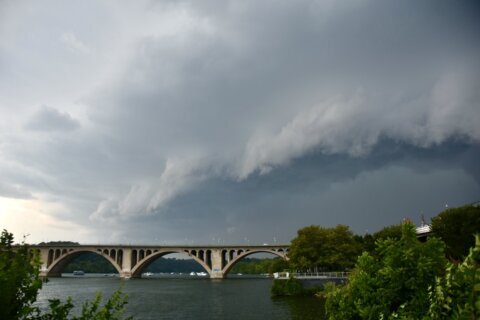
A new map highlights what many people living in the D.C. region already experience: There’s more flash flooding in areas where it wasn’t common in the past.
From Silver Spring in Maryland to the Bloomingdale neighborhood in the District and areas around the Pentagon, flash floods are creating more headaches — and more risk to transportation networks in the region.
Katherine Rainone, a transportation resilience planner with the National Capital Regional Transportation Planning Board at the Metropolitan Washington Council of Governments, explained that the new map includes data from Federal Emergency Management Agency and Fathom U.S., a company that provides modeling of flood hazards.
Data from FEMA is the industry standard for planners, she said, but FEMA data “does not account for urban flooding due to rainfall, nor does it account for changing flood plains in the future.”
The new map identifies risks to transportation corridors and ranks them as high, medium and low or “not exposed.”

According to the analysis compiled by COG, 39% of road and highway miles in the region have been identified as being at risk to temporary flooding — that compares to 14% identified using FEMA data alone. The report goes on to say that “the number of at-risk miles could increase by an additional 3% throughout the century.”
Rainone said the information in the report confirms what many people see in their neighborhoods, but that’s not reflected in historical data.
“That says, ‘Yup, this area is actually at risk,’ when we didn’t really know that was the case in other data,” she said.
Urban flooding is difficult to predict, Rainone noted. She pointed to the recent flooding over the weekend and the localized nature of the most severe impacts.
“I was outside, downtown at Audi Field, and it didn’t rain a single drop. But just a couple of miles north in Silver Spring, there were five inches of rain that were picked up on some of the rain gauges,” she said.
Roads and highways aren’t the only transportation networks facing exposure to flooding. The report indicates bus and rail stops are also subject to flood dangers, with WMATA projected to have 22 stops at risk of flash floods.
Get breaking news and daily headlines delivered to your email inbox by signing up here.
© 2025 WTOP. All Rights Reserved. This website is not intended for users located within the European Economic Area.