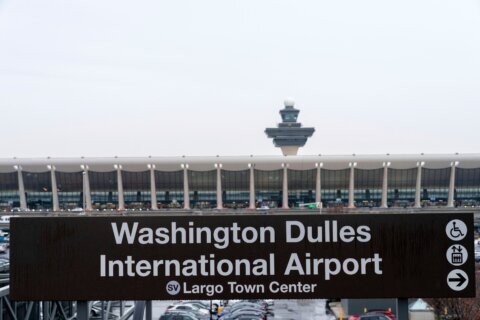
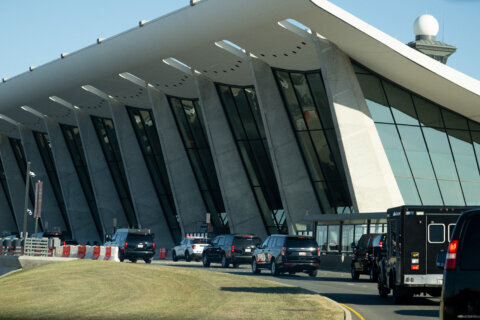
A United Airlines plane conducted an emergency fuel dump and landing at Dulles Airport after an engine failed during takeoff, on Saturday.
Questions have been raised in response to the United Airlines 777-200-Extended Range jet, flight 803’s fuel dump and why the pilots were forced to do it.
An expert said the weight of the fuel would’ve made the emergency landing more dangerous.
“Airplanes are designed to take off with lots of fuel in the wings. But then, it couldn’t immediately land with that same amount of fuel,” said aviation safety expert Jeff Guzzetti.
To get to Japan, the Dulles to Tokyo bound Triple Seven plane would have been airborne for more than 14 hours and it would have burned upwards of 250,000 pounds of jet fuel on the flight.
“That’s why this plane was delayed for an hour. It needed to fly for a bit, and it needed to dump that fuel,” Guzzetti said.
That’s what the United crew did. They flew for about an hour releasing the fuel at a higher altitude as a mist, so it can be absorbed into the atmosphere.
“The airplane has a system where it can jettison fuel into like a spray,” he said. “That allows the fuel to leave the airplane, preferably at a high altitude to lighten it, so when it comes back to land there is no structural damage from an overweight airplane.”
Studies by both the FAA and Environmental Protection Agency state that since fuel dumping is a rare occurrence, it doesn’t have a serious environmental impact.
United Flight 803 landed safely at Dulles Airport where it had taken off an hour earlier.
The Department of Transportation and Dulles Airport said the engine malfunction sparked a brush fire that was put out by firefighters.
Get breaking news and daily headlines delivered to your email inbox by signing up here.
© 2025 WTOP. All Rights Reserved. This website is not intended for users located within the European Economic Area.