This article was reprinted with permission from Virginia Mercury.
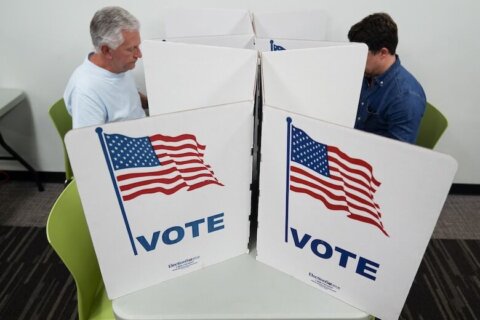
Virginia House Speaker Don Scott, D-Portsmouth, on Thursday called lawmakers back to Richmond for a special session Monday afternoon, setting off speculation that Democrats are preparing to act on redistricting plans just days before voters elect a new governor, lieutenant governor, attorney general and all 100 members of the House of Delegates.
In a letter to House members, Scott cited constitutional provisions and joint resolutions authorizing the General Assembly to reconvene the 2024 Special Session I “to consider matters properly before the ongoing session and any related business laid before the body.”
The House will meet at 4 p.m. Monday in the Capitol chamber, he wrote, adding that the clerk’s office will soon provide logistical details.
“My office has spoken with Senate leadership and has been assured that a similar communication … will be made by the Senate Clerk’s Office to Senate members,” Scott wrote.
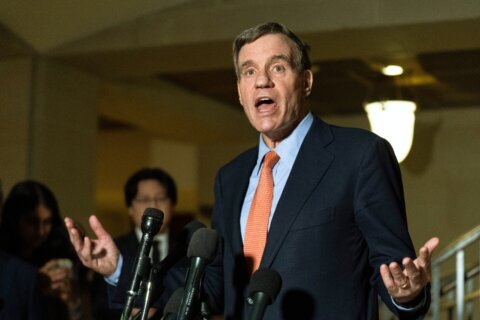
He did not explain why the legislature is being recalled, and neither he nor Senate Majority Leader Scott Surovell, D-Fairfax, responded to inquiries from The Mercury on Thursday.
Redistricting speculation
Several Democrats and legislative staffers told Virginia Scope that part of the session’s focus will be redistricting — a move that could reopen debate over how Virginia’s 11 congressional boundaries are drawn. Six of these are currently held by Democrats, and sources told the outlet that Democrats in Washington believe a new map could yield at least two additional Democratic-leaning seats in the U.S. House of Representatives.
Virginia voters in 2020 approved a constitutional amendment creating an independent redistricting commission of lawmakers and citizens, but the panel deadlocked in late 2021, leaving the Virginia Supreme Court to draw the current maps.
With Democrats now holding narrow control of both legislative chambers, some strategists have discussed using their majorities to revisit that framework.
Options under discussion include breaking up heavily Democratic districts to make them more competitive while reshaping Republican-leaning areas to favor Democratic candidates.
Timing is key — under Virginia’s amendment process, a constitutional change must be approved twice by the General Assembly with a House election in between before being placed on the ballot for voter approval or rejection.
According to Virginia Scope, Democratic leaders are considering an initial vote before the Nov. 4 election, followed by a second vote during the 2026 session, potentially allowing a referendum next spring and new maps as early as April — two months before congressional primaries.
Still, many Democratic lawmakers remain uneasy about the plan. Senate Democrats held a caucus meeting Wednesday night, and several members told the outlet they had been “kept out of the loop” about the special-session agenda.
National backdrop
Across the country, redistricting battles are intensifying as both parties look to lock in advantages ahead of the 2026 midterms.
Earlier on Thursday, the New York Times reported that Virginia’s Democratic leaders are considering “joining a growing number of states” seeking to counter what they call partisan gerrymandering efforts encouraged by the administration of President Donald Trump.
“We are coming back to address actions by the Trump administration,” Surovell told the Times, suggesting Democrats view their move as a corrective to Republican-led redistricting maneuvers in states such as Texas, Florida, and North Carolina.
Those states have recently pushed new maps designed to cement GOP control after a series of federal court rulings loosened constraints on mid-decade remapping. The Supreme Court is currently weighing a major redistricting case from Louisiana, another sign of how important the issue is to legislators and voters nationwide.
In August, Sen. Louise Lucas, D-Portsmouth, hinted publicly that Virginia could soon act.
Sharing a post by former President Barack Obama on X, formerly Twitter, praising California Gov. Gavin Newsom’s approach to mid-decade redistricting, Lucas wrote: “Every state in the nation should follow suit. Stay tuned for Virginia …”
Political fallout
Republicans swiftly accused Democrats of scheming to rewrite the rules ahead of a pivotal statewide election.
Republican Party of Virginia Chair Mark Peake, a state senator from Lynchburg, in a video on X characterized Scott’s move a sign of Democratic desperation.
“Desperate Democrats are pulling a pathetic, political stunt,” Peake said, accusing the majority of “doing anything they can to take attention away from their horrible candidates.”
He added that “the General Assembly hopes they can do something with this ruse about redistricting,” but urged voters not to “fall for it.”
The campaign of Lt. Gov. Winsome Earle-Sears, the GOP nominee for governor, blamed Democratic contender Abigail Spanberger for supporting the idea of dissolving the independent commission.
“In a stunning display of arrogance, Abigail Spanberger wants to overrule the will of Virginia voters in favor of a cynical power grab,” campaign spokesperson Peyton Vogel said in a statement Thursday.
“She came out in favor of abolishing Virginia’s Independent Redistricting Commission and wants to hand control back to the politicians in Richmond so they can guarantee their own reelection. … It’s never been about the voters or what’s best for Virginia. It’s always been about what’s best for Abigail Spanberger.”
However, in an interview with WJLA in late August, Spanberger said she opposed mid-decade redistricting and warned against “politicians trying to tilt the playing field in their favor,” aligning herself with Maryland Gov. Wes Moore’s call for fair-maps legislation.
What comes next
With the state legislature reconvening Monday afternoon, both chambers are expected to gavel in briefly before potentially taking up redistricting-related measures later in the week.
Procedural resolutions adopted earlier this year would allow lawmakers to address “matters properly before the ongoing special session,” giving Scott wide latitude to add topics to the agenda.
Any move to alter Virginia’s redistricting process would likely trigger intense legal scrutiny and political backlash — especially given the proximity to Election Day. But Democratic strategists across the country argue that Republican-led states have already rewritten maps to their advantage.