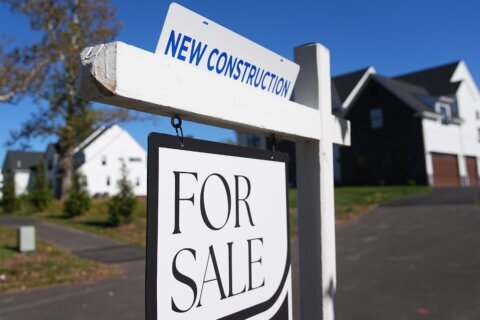
Massachusetts is facing a housing crisis, and the clock is ticking. The state needs to build 222,000 new homes by 2035 to meet demand, according to Gov. Maura Healey’s office.
“And those homes have to be affordable to households at all income levels. It’s not enough to build 222,000 McMansions,” said Matt Noyes, the director of state and federal advocacy at Citizens’ Housing and Planning Association, or CHAPA. “We need homes that are affordable to low- and moderate-income households, and homes that are affordable to extremely low-income households.”
The housing shortage and the economy are linked. Migration out of Massachusetts is on the rise, and employers are struggling to fill open roles, multiple advocates and South Coast lawmakers told The Light.
Recognizing this, the House and Senate included several housing-related measures in their respective economic development bills, passed in July. A House-Senate conference committee is now negotiating over which measures will be included in the final bill.
But even if the two chambers agree to adopt each others’ ideas, advocates and lawmakers agree there’s more work to do to promote housing growth next year.
Yes in God’s Backyard
The so-called Yes in God’s Backyard, or YIGBY, section of the House bill would allow faith-based organizations to build multifamily housing on up to four acres of land they already own without local approval.
Developments could be up to 30 units per acre — 20% of which must be income-restricted — or even denser if more units are set aside at affordable rates. The buildings could be up to 45 feet in height, or even taller if local zoning laws allow.
The YIGBY provision stems from multiple bills that were before the Legislature this session but did not pass as standalone legislation. Several other states have passed YIGBY laws.
An analysis by the Lincoln Institute of Land Policy and The Lynch Foundation identified nearly 5,000 developable parcels in Massachusetts owned by religious institutions, totaling over 20,000 acres. That land could support over 60,000 new homes, the study found.
If half of these parcels are developed, they will generate an additional $60 million in annual tax revenue, Lynch Foundation’s executive director Katie Everett said in a hearing on the standalone bill in September 2025. Religiously owned land is exempt from property taxes, but housing developed on that land would be taxable.
In a written statement, New Bedford’s public information officer Jonathan Darling told The Light that city officials in the planning and housing departments “don’t see anything coming” of the YIGBY provision in New Bedford. He did not address a question about how much land in New Bedford is owned by religious institutions.
A developer is seeking to convert the Holy Family Holy Name School at 91 Summer St. into 44 condos. According to New Bedford’s property database, the land is owned by the Roman Catholic Diocese of Fall River. But since the provision excludes land zoned for or used by schools, it would not be considered a YIGBY project.
Rep. Steven Ouellette, D-Westport, said it would not be “unheard of” to develop housing on religious property in the South Coast, including land owned by three Westport parishes that merged in June 2025.
“The churches had some circumstances that they had to pay out money, and people don’t go to church like they used to,” Ouellette said. “So, yes, there are facilities.”
Despite this possibility, Ouellette has concerns. Three of the communities he represents — Westport, Freetown and Acushnet — are wary of overpopulation or buildout, no matter who owns the land, he said. Even New Bedford is cautious about overdevelopment, Ouellette said.
Housing advocates who have lobbied for YIGBY bills this session are more optimistic.
“There are a number of religious institutions that really could benefit from building housing on their property from a financial standpoint, and it’s also an opportunity for them to live out their faith mission by developing housing that’s affordable to members of the community,” Noyes from CHAPA said. “It’s a win-win for everyone concerned.”
Duplexes by right
The Senate bill would allow duplexes on any residentially zoned land where single-family homes are allowed, regardless of local zoning laws.
The bill would allow cities and towns to establish “reasonable” regulations. But the regulations can’t prohibit duplexes that are less than three stories and can’t make the development “physically or financially infeasible.”
Legalizing duplexes was among housing advocates’ top priorities for this Legislative session. It was included in a sweeping Yes in My Backyard bill that never made it to a full chamber vote.
According to Abundant Housing Massachusetts’ Executive Director Jesse Kanson-Benanav, duplexes are already permitted by right or with a special permit in about 70% of the state.
“Duplexes and three-deckers have really been the backbone of working-class housing opportunities,” Kanson-Benanav said. “This is just saying that a type of home that has been the core of the fabric of meeting housing needs in Massachusetts for so long can be built a little bit quicker in a few more places without driving up the ultimate rental or ownership price.”
Though the House version of the bill did not address duplexes, Rep. Christopher Hendricks, D-New Bedford, said the provision is a “big step” that could have a significant impact in New Bedford.
Site plan review
Housing advocates say it’s a major victory that both chambers’ bills would establish a statewide site plan review system — through which cities and towns decide whether a proposed development complies with local regulations.
Currently, each city and town has its own review system. According to Abundant Housing’s Kanson-Benanav, some of these “arbitrary (and) discretionary” processes create barriers to building housing, rather than ensuring the developments fit into the community. Long review timeframes make development more expensive, a cost which is often passed on through higher rent or ownership prices, he said.
Some local review processes “might discourage people from building new homes altogether that we desperately need in this time of an extreme housing shortage,” Kanson-Benanav said.
Both versions of the economic development bill would establish a 90-day decision deadline for site plan reviews, with limited exceptions. Generally, if there is no decision within that timeframe, the development would automatically be approved.
Both bills prohibit local zoning laws from dictating the “aesthetic” of a development. Each version also allows developers at least three years to complete “substantial” construction, at which point the municipality can require reapproval.
Other provisions
The House and Senate are attempting to address the housing crisis in several other ways in their respective economic development bills.
According to Rep. Christopher Markey, D-Dartmouth, the bills aim to “give everyone a chance,” including renters, first-time homebuyers and those looking for their family home.
“I think the idea is trying to do as many different things as we can, not a big one-size-fits-all thing, although there is some element of that,” Markey said. “But the idea that we’re not taking all our money and putting it in one place is really important.”
Both versions of the bill would allow cities and towns to approve the conversion of underused commercial properties into multifamily housing and mixed-use developments. Each bill permits communities to provide incentives for these projects, including tax relief.
The House version includes $50 million in “grants and technical assistance” for communities that choose to participate.
Rep. Mark Sylvia, D-Fairhaven, identified commercial conversion as one of the most important housing measures in the House bill, noting that there are many old commercial properties with potential in New Bedford.
“We’re looking at it here on the South Coast, but across the Commonwealth there are a lot of old commercial buildings that could potentially be converted,” Sylvia said. “That has happened organically in the past, but to provide incentive to do it, I think, is really a good step in the right direction.”
Rep. Antonio F.D. Cabral, D-New Bedford, filed a successful amendment to the House bill that would increase the annual Housing Development Incentive Program cap from $30 to $40 million and raise the per-project limit to $5 million.
The program is “designed to create more market-rate and mixed-use housing developments in Gateway Cities,” Cabral told The Light in a written statement. It provides tax relief to developers in two ways: cities can exempt the real estate tax on all or part of the increased property value resulting from improvements on the site, and the state may give the developer a tax credit for qualifying project expenses.
Hendricks, Sylvia and Ouellette co-sponsored the amendment, which was adopted during debate.
According to Hendricks, developing market-rate housing tends to lower rents in surrounding areas. He noted that New Bedford is already doing a “great” job of putting shovels in the ground. In December 2025, a housing project on Acushnet Avenue was awarded $2.5 million through the Incentive Program.
Other housing-related measures in the House version include strengthening fair housing enforcement in real estate and allowing cities and towns to establish a framework in which tenants can purchase their home if it is on the market.
The Senate version aims to increase the number of home inspectors and aligns grant programs to incentivize housing production.
“Housing grant and tax credit program requirements for developers should be geared to the developers who actually create affordable housing for hard-working citizens who can’t afford the out-of-control cost of living in the state,” Sen. Mark Montigny said in a written statement to The Light. “Developers must be incentivized to create the housing needed and not the status quo. When state money is involved, those receiving it need to be held accountable.”
What comes next?
Housing advocates and lawmakers say the Legislature has made significant progress in addressing Massachusetts’ housing crisis. They point to the MBTA Communities Act of 2021 and the Affordable Homes Act of 2024. Even the environmental bond bill currently in conference committee attempts to increase the housing supply.
“We didn’t get into the current housing challenges overnight. We’re not going to get out of them overnight,” Noyes said. “But the Legislature is really continuing to push forward, which is really to their credit. They recognize the scope of the challenge and recognize that they can’t rest on their laurels, and they have to continue to pass more and more policies that will allow for the homes we need to be created.”
Still, many of them said there is still a long road ahead.
Kanson-Benanav told The Light that Abundant Housing lobbied for two other housing measures that were not addressed this session: reforming minimum lot size and parking requirements.
Massachusetts has some of the country’s highest average minimum lot sizes for single-family homes, averaging 20,000 square feet, according to Abundant Housing. That makes housing more expensive. And local zoning laws often dictate how many parking spaces are required for a new housing development — mandates that are “old, outdated and expensive,” Kanson-Benanav said. The spaces are often underused, and the cost is passed on in higher rent or ownership prices.
There were twoamendments filed to the Senate bill to address these issues, but neither was adopted.
The House and Senate have the rest of the year to negotiate on a final version of the bill.
“We know that even when we see a final compromise version of this session’s economic development bill that we can’t rest,” Kanson-Benanav said. “There will be more to be done next legislative session.”
Markey said he’d like the Legislature to spend more money on down payment assistance for first-time homebuyers. Sylvia and Ouellette raised concerns about federal tariffs driving up homebuilding costs, though that is largely driven by federal policy.
“It’s not just that it’s expensive to live in Massachusetts. It’s expensive, period, right now,” Ouellette said. “We can have all the policies in the world, but we’ve got an underlying problem with the cost of materials.”
Sylvia predicted that the Legislature will continue to help communities address the high cost of infrastructure upgrades next session, which “goes hand-in-hand with supporting housing.” Ouellette added that he’d also like to see more old mills converted into housing.
___
This story was originally published by The New Bedford Light and distributed through a partnership with The Associated Press.
Copyright © 2026 The Associated Press. All rights reserved. This material may not be published, broadcast, written or redistributed.