A report from a Baltimore policy consulting firm argues data centers would be worth it for a cash-strapped Prince George’s County government.
Two big issues facing elected leaders in Prince George’s County, Maryland, next year will be the county’s budget and the future of data centers.
With the county facing a more than $90 million budget gap, and the state’s own budget woes likely to mean more burdens shifting onto counties, a study issued by Baltimore-based Sage Policy Group said the construction of data centers could help alleviate some of that financial stress.
The report was issued last month by the Maryland Tech Council, which has previously advocated in favor of data center development to support economic growth. The group describes itself as a technology and life sciences trade association.
It stemmed from a study the Maryland Tech Council conducted along with three labor unions that work in the construction industry, which would all stand to benefit from data center construction.
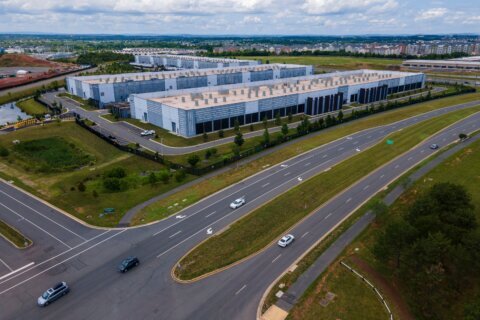
The report argued the impact of one mid-sized data center, which it characterized as 800,000 square feet, would have an economic impact of more than a billion dollars on the county.
“It looks to be about a $20 million in annual county revenue,” Kelly Schulz, CEO of the Maryland Tech Council, said.
The study claimed the construction of the data center would create 4,800 jobs, and that the day-to-day operations would support about 300 jobs total and 100 within that facility. The report came out around the same time a task force studying the issue was putting the final touches on a report that aims to guide data center development in the future.
Questions about data centers amid budgetary pressures
The report issued in late November had 14 recommendations, many of which focused on community involvement, zoning and environmental concerns.
The data center described in the study wasn’t based in any particular area — “location neutral” as Schulz described it.
However, it comes at a time when activists around the county have begun raising questions about data centers and their impacts on communities and power grids. Concerns have been amplified by the possibility of a data center being constructed at the old Landover Mall, which has sat vacant for decades.
The realization that site was much further along in the process than first believed led to a countywide pause on data center development. While there are some possible impediments that could lead to the project at Landover falling through, there’s concern that county leaders and the community around it would be powerless to stop the development from moving ahead if those impediments can be resolved.
The task force report recommended future data centers be built in industrial areas and with setbacks from residential areas. Ultimately, it’ll be the county council that comes up with legislation to guide future development, though with the first half of the year also focused on crafting a budget, the glaring financial needs will be a factor in how data center development moves forward.
Earlier this year, the state shifted more of the burden on education funding from Annapolis onto the counties, and the state’s budget picture isn’t any better this year.
“Counties, as we know in Maryland, have been getting less money from the state because of the budget issues that are happening at the state level,” Schulz said. “So counties are naturally looking for ways to be able to supplement the revenues that are coming in to provide all of those infrastructure and those really important community resources that are guaranteed by the county.”
The Maryland Tech Council argued the data center revenue is enough to pay about 175 teachers and police officers, as well as 158 firefighters — all jobs the county has struggled to fill in recent years.
“There has to be another revenue stream, and for us to invite different industry sectors into the state and our local jurisdictions, to be able to kind of make up that loss,” Schulz said.
The report was put together by the tech council in conjunction with IBEW Local 26, Steamfitters Local 602 and Plumbers Local 5, labor unions that would all have a vested interest in the construction of new data centers.
“I appreciate that the local jurisdictions are taking the amount of time that they have in order to be able to really understand what the community concerns are,” Schulz said. “We have to understand the economic reality of the state that we live in.”
“Nobody, of course, wants to be Loudoun County,” she added. “They don’t want to duplicate what’s there. There are better, more innovative ways of doing this business, and I think that the people that are involved in these developments understand that and they want to be a part of the community.”
Get breaking news and daily headlines delivered to your email inbox by signing up here.
© 2025 WTOP. All Rights Reserved. This website is not intended for users located within the European Economic Area.