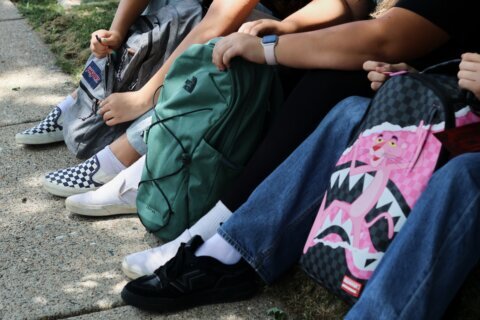
The first day of school is getting closer to being a reality for families in the D.C. area. For some kids, getting back to waking up after staying up for summer fun could be a challenge.
“If they don’t get enough sleep, it can impact their ability to pay attention in school,” said Tyish Hall Brown, director of behavioral sleep medicine at Children’s National Hospital.
She said the amount of sleep needed varies by age.
“Right around elementary school and middle school, anywhere from like 10 to 12 hours of sleep can be helpful,” Brown said. “As we get to the high school time period, it gets a little bit less and we’re still looking at around nine to 10 hours of sleep.”
She said that getting those hours in should start soon.
“If we start trying to optimize our sleep schedule now, it gives us about a week or two before school starts to have that settle in,” she said.
Brown said creating a routine is important.
“I’ve been thinking about it as more of like a sleep tool kit or a sleep supply list, just like we have a school supply list,” she said.
What should be on it?
“That they have a comfortable temperature in the child’s room, somewhere between like 65 to 70 degrees. The noise level is minimal or kind of none at all. And that there is optimal light in the room,” Brown said.
She also said to have your kids and teens put away that cellphone or iPad about 30 to 60 minutes before bed.
This is all done to create an environment that fosters a solid night of sleep.
“Just a 30-minute segment of time where the first 15 minutes may be used for hygiene and kind of getting ready for the next day, and then the other 15 minutes is used to implement a relaxing activity and you want this to be something that they’re interested in or something that they enjoy, but something that’s not necessarily activating,” Brown said.
For those kids who don’t get enough sleep before school, she said that it manifests in more than simply being fatigued and tired.
“Younger kids will often act out and have more behavioral manifestations if they’re not getting enough sleep,” Brown said. “As they get older, we see a lot of difficulty with attention, so difficulty paying attention in class, maybe falling asleep in class, irritability at times, forgetfulness. So there are a lot of different signs that perhaps your child’s not getting enough sleep.”
She said turning to a sleep specialist is important if the issues persist.
“They can also seek out sleep specialists to help them figure out what other difficulties might be occurring, as opposed to just trying to push through sleep difficulties that may be related to something like sleep apnea or restless leg syndrome,” Brown said. “So we definitely encourage people to seek out sleep specialists when they are able to.”
Get breaking news and daily headlines delivered to your email inbox by signing up here.
© 2026 WTOP. All Rights Reserved. This website is not intended for users located within the European Economic Area.