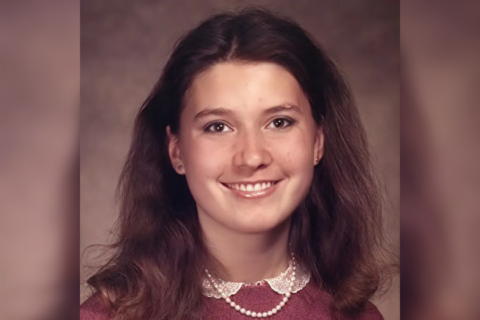
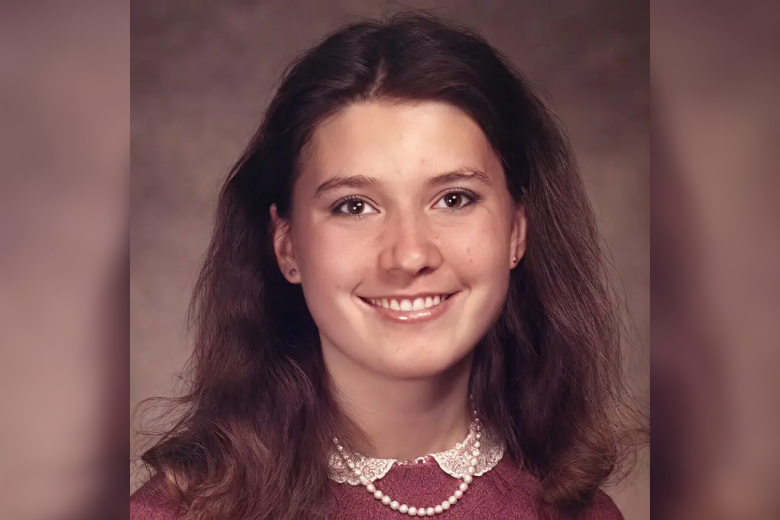
Jerry Beatty was 17 when he and 26-year-old Jack Jones kidnapped, raped and murdered 22-year-old Stephanie Roper on a remote stretch of road in Prince George’s County, Maryland, in April of 1982.
Beatty and Jones were sentenced to life in prison later that year.
Citing what she called a “pattern of avoiding accountability and minimizing his actions,” a Maryland judge rejected Beatty’s petition to have his multiple life sentences reduced on Thursday.
“It was not what I expected, I truly thought the court would grant release,” Roberta Roper, Stephanie’s mother and a victim’s rights advocate, told WTOP on Friday. “I was very surprised.”
Beatty asked for the change to his sentence under the state’s Juvenile Restoration Act, a law that bars courts from sentencing defendants to life in prison without the possibility of parole for crimes committed when they were under the age of 18. The law was passed in Maryland’s General Assembly in 2021.
In 2024, Beatty’s case was heard in Anne Arundel County Circuit Court.
Judge Elizabeth Morris noted in her decision to deny a reduced sentence that while Beatty had a “long and notable record of completing various programs” while in prison, she “was not persuaded that Mr. Beatty has demonstrated current fitness to reenter society.”
WTOP reached out to Brian Saccenti, Beatty’s attorney for comment.
Roberta Roper testified in Beatty’s case and explained that when her daughter was murdered, there were no victim impact statements allowed. She was not even permitted to be inside the courtroom at Beatty or Jones’ trials.
Roper said she had no words to describe how it felt to be in the same courtroom with Beatty in his 2024 case, where he asked for a change to his sentence: “I have no words … they’re inadequate.”
“The most rewarding part for me, personally, was the ability after almost 43 years then, to present a victim impact statement to the court. To confront one of Stephanie’s killers, to look into his eyes, and let the voice of Stephanie’s family to be heard,” Roper added.
The case history, and movement toward victims’ rights
The brutality of Stephanie Roper’s 1982 murder attracted widespread news coverage.
Roper was in college, had been out with a friend, and while driving to her family’s home in Croom had an accident that left her car disabled.
Jones and Beatty offered Roper a ride, but instead of taking her to a friend’s house, they drove to one location and raped her. They then drove to a second location, an abandoned house in St. Mary’s County, and both men again sexually assaulted her.
At one point, the men decided to kill Roper.
Jones left Beatty alone with Roper, and she managed to escape until Beatty caught up with her and brought her back to the house, where she was eventually shot to death.
After being killed, the men set her body on fire and left her in a wooded area.
“If you look at the findings, the record, it was Jerry Beatty who could have saved Stephanie’s life,” Roberta Roper said. “He chose not to do that.”
In 1982, Roper founded the Stephanie Roper Committee and Foundation, and with her husband, Vince, worked to provide support for victims’ families. That led to the incorporation of the Maryland Crime Victim’s Resource Center, which provides a range of services for survivors and victims’ families.
Roper said Beatty’s request to have his sentence reduced opened old wounds from the time of the killers’ trials, when victims’ families had very few opportunities to make their voices heard.
During the course of the trial of her daughter’s killers, Roper said, “Our family had no right to information, no rights within the trial, no right to be heard after conviction and before sentencing. … It became abundantly clear to my husband and I that we had to do everything within our power to try to change that.”
Making those substantial changes, and working to make sure victims could have the right to supply courts with a victim impact statement, for example, became a focus of Roper’s life.
She said the impact of her daughter’s murder affected their entire family, not just herself and her husband, but their four other children as well.
Roper said her heart was broken when one of her sons came home from school, saying he just couldn’t recite the Pledge of Allegiance, because he told her, “the words liberty and justice for all didn’t apply to our family.”
“That was crushing,” Roper said.
Roper said the impact on her family continued to inspire her work to improve the treatment of crime victims in the judicial system.
“We almost lost our whole family,” she said. “All our children were so profoundly affected by this crime, and we came to the realization that we couldn’t give them hope if we didn’t have any hope.”
Roper said she and her husband have long forgiven the men who murdered their daughter.
“That did not mean we were forgetting, or excusing their behavior or not holding them accountable,” Roper said. “What it meant for us is that they would not control our lives. They would not take anything else from our family. Steal our joy.”
Stephanie Roper was the eldest of Roberta Roper’s five children. She was an artist and kept a journal.
Roper said one of those journal entries — which reads “One person can make a difference, and every person should try” — became a cornerstone of the work done by the foundation that carried her name, and eventually became the Maryland Crime Victim’s Resource Center.
Get breaking news and daily headlines delivered to your email inbox by signing up here.
© 2026 WTOP. All Rights Reserved. This website is not intended for users located within the European Economic Area.