It’s been almost a decade since Christian Maboko fled his home country of Burundi and spent time at the Kakuma refugee camp in Kenya.
At the time, he frequently watched as people from a nearby community came to the camp for water. Sometimes, he told his mother to give them a can of water so they could go home with something that was clean.
In 2022, Maboko earned an opportunity to study in Armenia, then coming across a YouTube video of a young child who donated clean water in honor of their birthday.
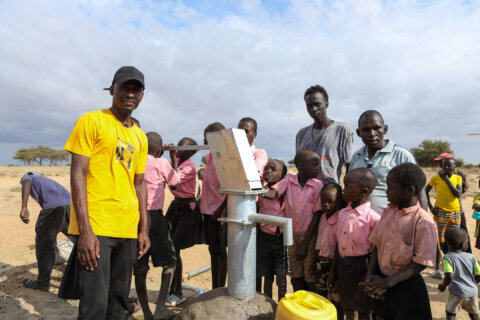
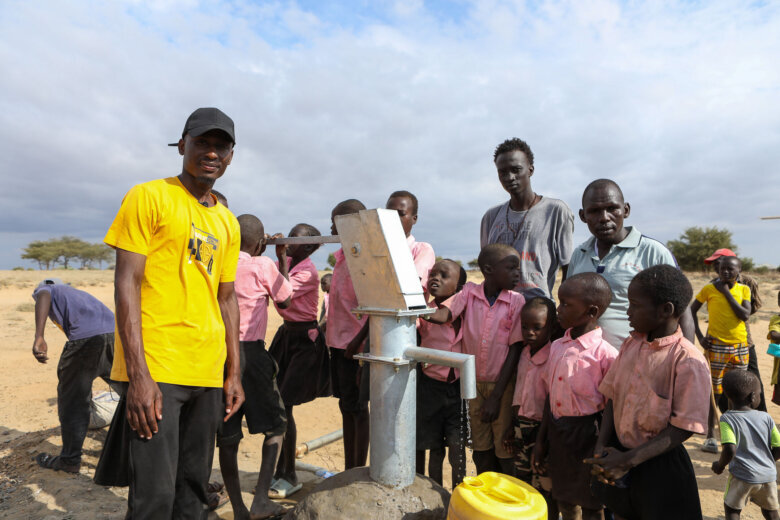
It was at that moment he knew he wanted to do something similar. Maboko applied for a grant, which he later received, to help install the first water pump in the camp he lived at during his summer break.
He saw how appreciative people were, prompting him to launch the nonprofit AridVitality. The organization aims to offer free water and empower farming in refugee camps.
“My mission was not just about clean water,” Maboko told WTOP. “It was restoring humanity and try to empower education in a different way. Empowering young people through education is not just about giving them books and pens, but it’s trying to enhance their livelihood, how they live, and that was the motivation.”
Maboko’s work earned him a spot as a Top 50 finalist for the Chegg.org Global Student Prize. The recognition awards a student visionary a $100,000 prize.
After starting the nonprofit, Maboko began seeking grant funding.
In one case, he secured $20,000, which helped him return to Kakuma in 2024 and install 12 manual water pumps across northern Kenya, all with a focus on the most vulnerable schools and communities.
“What’s happened to people like me who have been spending 15 years in a refugee camp, people have been forgotten,” Maboko said. “You feel like we’re on the sideline, depending on aid and the current situation, the shortage of funding is making the situation worse.”
His work is inspired by his younger siblings, who are unsure if they’re going to get food next month. He’s majoring in international affairs at George Washington University in D.C.
Maboko said he’s considering ways to help make refugees self-reliant. The focus on food is intentional, he said, because it’s hard to learn while hungry.
“I used to go to school, come back home, no food, and had to wait to eat in the evening, eating once a day,” Maboko said. “It was one of the worst and hardest experiences in my life.”
“The only thing that I would like the world to know is that refugees are people like you and me, and they’re not asking for much,” he said.
Get breaking news and daily headlines delivered to your email inbox by signing up here.
© 2025 WTOP. All Rights Reserved. This website is not intended for users located within the European Economic Area.