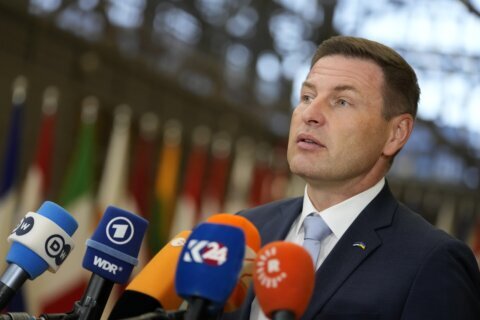
NATO foreign ministers are meeting in Sweden this week amid growing concern across Europe that the United States is preparing to reduce its long-term commitment to European security and NATO’s defense structure. While alliance officials are publicly emphasizing unity and coordination, the reality behind the meetings is far more serious.
European governments are now openly confronting a possibility that many once considered unthinkable: the United States may no longer serve as the unquestioned military backbone of European defense.
That is not a symbolic shift. It is a potential strategic earthquake.
For nearly 80 years, Europe’s security architecture rested on a simple assumption: If Russia threatened NATO territory, the United States would arrive with overwhelming military force, massive logistics, intelligence capabilities, air power, naval support and nuclear deterrence. That assumption shaped everything from troop deployments to defense budgets to political confidence.
Now that assumption is beginning to weaken.
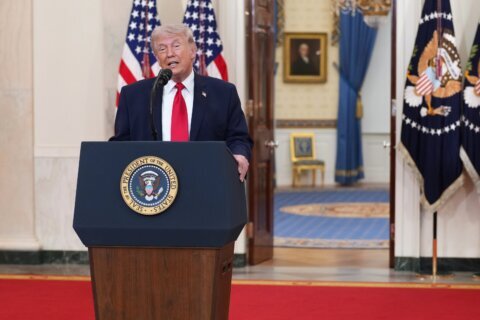
The Trump administration’s apparent move toward reducing America’s long-term commitment to European defense comes at the worst possible moment. Russia’s war in Ukraine continues to destabilize the continent. Baltic airspace incidents are increasing. Hybrid warfare operations are intensifying. Electronic warfare, cyberattacks, GPS jamming, disinformation campaigns, sabotage investigations and military probing activity have become routine across NATO’s eastern flank.
Europe is no longer discussing hypothetical threats. It is living beside an active war.
That is why the mood in European security circles has shifted so dramatically over the last year. The concern is no longer simply whether Europe spends enough on defense. The concern is whether Europe can realistically replace the military infrastructure that the United States provides.
Because America does not just contribute troops.
The United States supplies the connective tissue of NATO itself. Strategic airlift. Missile defense. Satellite intelligence. Surveillance networks. Logistics chains. Nuclear deterrence. Rapid force projection. Integrated command systems. Those are not capabilities Europe can recreate overnight simply by increasing defense spending. And European officials know it.
This explains the growing urgency around “strategic autonomy” across the continent. Countries that once viewed independent European defense planning as politically controversial are now openly discussing it as a necessity. Germany is rearming at a pace unimaginable a decade ago. Poland is building one of the largest land armies in Europe. The Nordic states are integrating more deeply into NATO planning as Russia militarizes the Arctic and Baltic regions.
The problem is timing.
Europe is trying to rebuild military readiness while the continent is already under pressure. That creates strategic vulnerability during the transition itself. Adversaries often test alliances when they sense uncertainty, hesitation or internal political strain.
Moscow almost certainly sees the opportunity in this moment. The Kremlin has long believed that Western unity is fragile and temporary. Russian strategy frequently centers on exhausting democratic societies politically, economically and psychologically rather than defeating them outright on the battlefield.
Any perception that the United States is pulling back from Europe strengthens that narrative.
The danger is not necessarily that NATO collapses. It will not. The greater danger is slower and more subtle. Deterrence becomes less certain. Response timelines become less predictable. Political trust inside the alliance weakens. Countries begin privately questioning what would happen during a real crisis. And once uncertainty enters deterrence calculations, the strategic environment becomes far more dangerous.
This transition is also unfolding while the United States is simultaneously managing multiple global crises. The wars involving Ukraine and Iran are consuming political attention, military resources, and industrial capacity. China is watching closely to see whether prolonged international instability stretches American endurance and alliance cohesion.
That is what makes this moment so historically important.
The post-Cold War era was built on overwhelming American dominance and relatively stable alliance structures. That era may now be ending. What comes next is a far more fragmented security environment where allies are expected to carry greater burdens, adversaries test boundaries more aggressively and military power becomes increasingly distributed across regional coalitions rather than concentrated in Washington.
Europe understands this now.
The question is whether the transition happens fast enough to preserve deterrence before Russia or another adversary decides to challenge the alliance during the period of uncertainty itself.
Get breaking news and daily headlines delivered to your email inbox by signing up here.
© 2026 WTOP. All Rights Reserved. This website is not intended for users located within the European Economic Area.