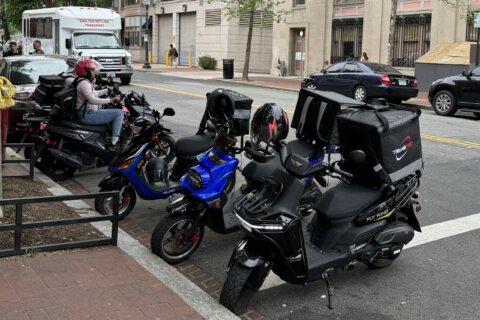
For over a year, Ty Cockrum has been using an e-bike to make food deliveries using DoorDash and UberEats.
It’s much easier than using a car, he found, because parking isn’t required, and there isn’t a fear of “getting your car stolen.” The e-bike is generally faster, too, and as a result, Cockrum said he has been able to do more deliveries.
Because of a pilot program run through D.C.’s Department of Transportation, Cockrum doesn’t have to wait for a battery to charge either. Instead, he can swap it for a full battery either near the Wharf or in Adams Morgan.
The yearlong initiative is being funded through the Los Angeles Cleantech Incubator’s City Climate Innovation Challenge Program. It aims to make food deliveries more sustainable and encourage alternatives to scooters or cars.
Since the program started last summer, cyclists have made about 15,000 deliveries and swapped out several thousand batteries, officials said at a news conference Tuesday.
“Every pilot we launch is another proof point that DDOT’s moveDC goals are not aspirational language on a page,” said Sharon Kershbaum, DDOT’s director. “They are actionable commitments that we are delivering on right now in neighborhoods across the city.”
Two groups of 35 drivers each received the opportunity to participate in the program after applying through the Whizz app.
Workers could choose between a new or refurbished Whizz e-bike, and the second round of applicants are required to do at least 25 deliveries each month on DoorDash.
Participants paid $129 per month for a new e-bike or $69 per month for a refurbished e-bike, with the chance to make a $120 final payment after six months to own their bike.
“The goal of the pilot is to get folks off of gas vehicles and gas mopeds and onto e-bikes, because it’s a more sustainable option, and this is also a safer and reliable way to charge your e-bikes,” said Tasin Malik, a transportation planner with DDOT.
The company PopWheels installed battery lockers near the Festival Center in Adams Morgan and next to Westminster Presbyterian Church in Southwest D.C. The cabinets are able to charge 16 batteries at a time.
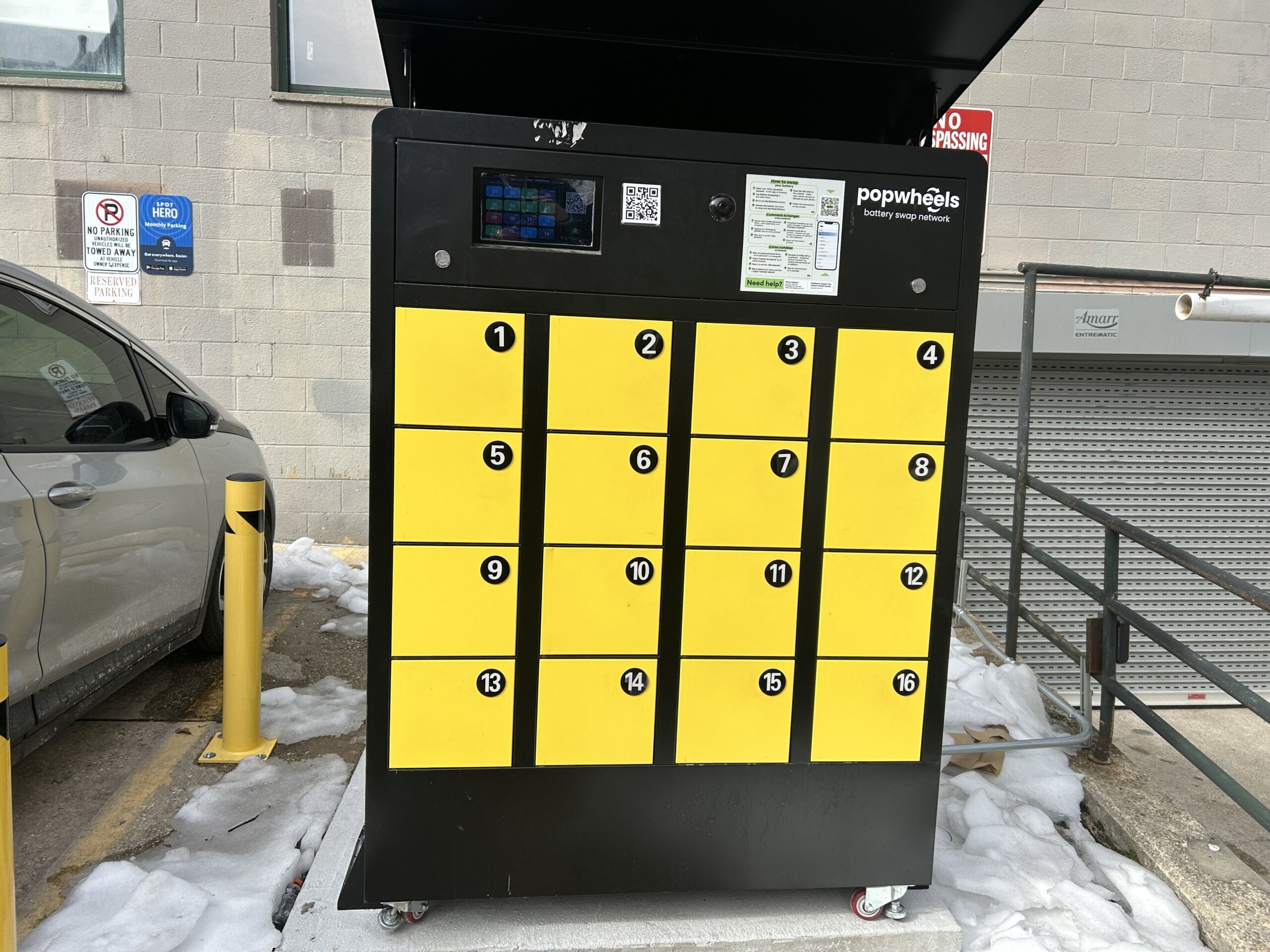
Cockrum said the process is “great, because I don’t have to stop and wait for my battery to be charged. I can just pull over, do the swap, which takes literally less than three minutes, and off I am running again.”
More of the battery cabinets will be popping up across D.C. neighborhoods for broader use, David Hammer, PopWheels’ co-founder, said.
Zachary Baldwin, director of mobility, data and research for the Southwest Business Improvement District, said the project is “forward thinking in a way that we appreciate, because it applies a sharing economy mindset to a real problem: How do you deliver efficiently on an e-bike when your battery runs out? It’s a sustainable project, because it helps move people and importantly, things, without cars.”
The pilot program is scheduled to end this summer.
Get breaking news and daily headlines delivered to your email inbox by signing up here.
© 2026 WTOP. All Rights Reserved. This website is not intended for users located within the European Economic Area.