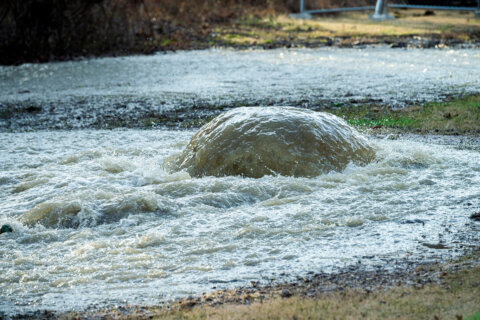
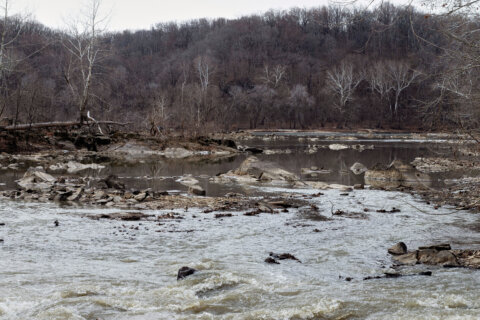
A group of land and vessel owners have sued D.C. Water for damages following the failure of the Potomac Interceptor, which sent more than 200 million gallons of untreated wastewater flowing into the Potomac River.
The class-action lawsuit claims D.C. Water failed to put adequate safeguards in place or monitoring protocols to prevent the failure of the pipeline. The group said they suffered mounting costs, business interruptions, property contamination and damage from the spill.
“We seek losses for infrastructure failure, physical contamination and other economic damages for a failure of immense proportions,” said Steve W. Berman, managing partner and co-founder of Hagens Berman, the law firm representing the class action lawsuit. “D.C. Water had 10 years to act to prevent this, and paid dearly for that oversight.”
The lawsuit said that costs included out-of-pocket costs for inspections, cleanings and decontamination.
On Jan. 19, a 72-inch section of the pipeline collapsed along the Clara Barton Parkway near the Capital Beltway, causing about 243 million gallons of sewage to overflow into the Potomac River. D.C. Water estimated that about 194 million gallons of wastewater overflowed from the site of the collapse within the first five days.
D.C. Water said after reviewing the data about the collapsed section of pipe, there was no indication that the Potomac Interceptor was in danger of imminent failure when it collapsed.
They said they saw no reason to elevate that section for repair ahead of schedule, as it was planned to be repaired in June of this year.
In a statement to WTOP, a spokesman with D.C. Water said the pipeline collapse was “serious and unexpected,” and that their teams are continuing to work on environmental protection and restoration efforts. They added they can’t comment on the lawsuit “because this matter is currently subject to ongoing litigation.”
The lawsuit includes claims of negligence, private nuisance and trespass, and is asking for a court-ordered injunctive relief at an amount to be determined at a trial.
“The collapse caused massive volumes of raw, untreated sewage to overflow directly into the Potomac River,” the lawsuit states. “(The group of property owners) have suffered and continue to suffer concrete, measurable injury as a direct and proximate result of Defendant’s tortious conduct.”
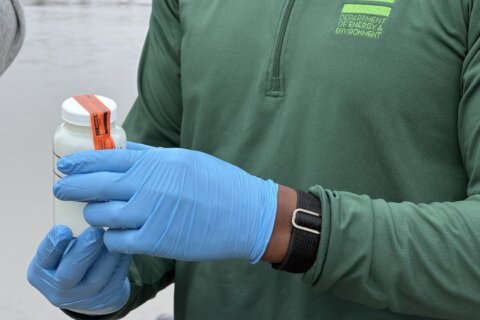
The lawsuit also states that the E. coli levels of the water near the collapse site were “well above” the “primary-contact threshold” used by agencies in Virginia, Maryland and D.C., and consistent with EPA-referenced recreational water quality criteria.
Get breaking news and daily headlines delivered to your email inbox by signing up here.
© 2026 WTOP. All Rights Reserved. This website is not intended for users located within the European Economic Area.