From saving on school supplies to the impact of federal cuts, the WTOP team is studying up on hot-button topics in education across the D.C. region. Follow on air and online in our series, “WTOP Goes Back to School” this August and September.
This video is no longer available.
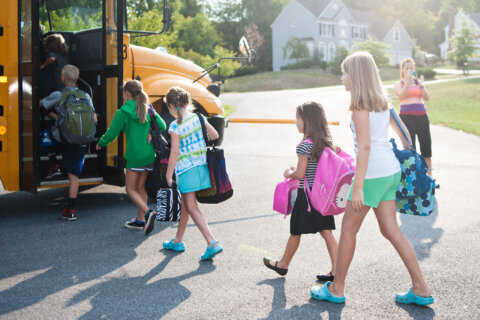
Thousands of students went back to school Monday in D.C., some carrying first-day jitters.
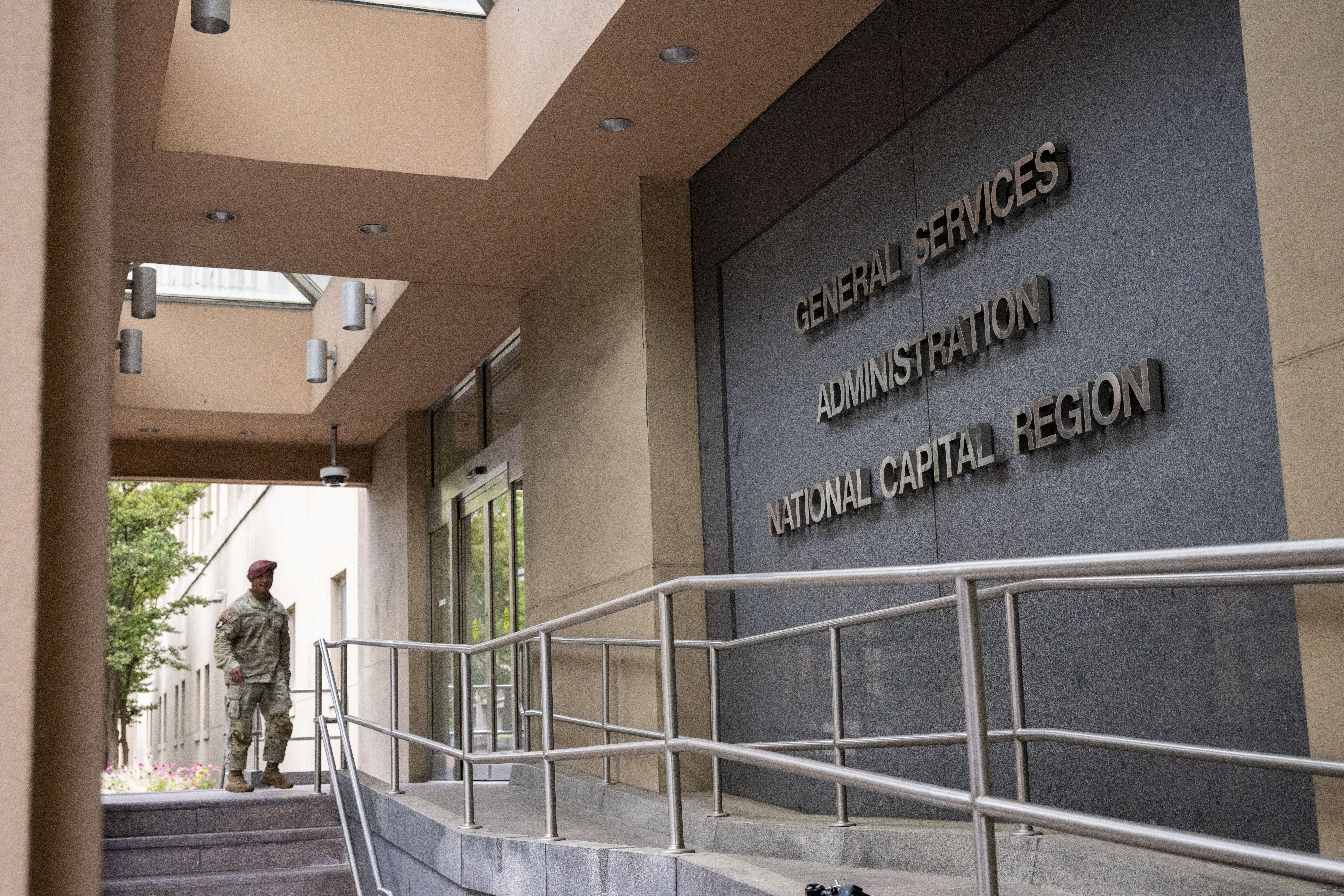
The school year began amid a surge in federal law enforcement that brought thousands of federal law enforcement and National Guard members to the streets of D.C.
“What I want to be clear to all of them, is our children deserve and will get a joyful start to their school year,” said Mayor Muriel Bowser, while addressing dozens of teachers.
The surge came after President Donald Trump declared a public emergency two weeks ago.
About a half dozen National Guard troops walked by the District’s main convention center early Monday with pistols on their hips, according to The Associated Press.
D.C. Public Schools Chancellor Lewis Ferebee said during a news conference about the influx of police: “It’s business as usual; we have prepared for this moment. We’re ready to receive students, our teachers, our educators, staff, school leaders.”
“We want our students to know that the schoolhouse continues to be the safest place for our young people,” he continued.
Ferebee and the mayor encouraged the tradition of clapping the students back into school.
“Tell them that we’re with them. We want them to have a great school year, and we’re all going to be standing shoulder to shoulder with them,” Bowser said.
$71 million project at Oyster-Adams Bilingual School
One school in the District saw a major $71 million dollar modernization project completed over the summer. Staff welcomed students and parents to the newly refurbished Oyster-Adams Bilingual School in Adams Morgan early Monday.
“I had to go to an old swing school. And this one’s better,” said Leah Johnson, a student.
“My daughter was saying that it’s very nice inside,” Mariana Panuncio-Feldman said. “They have wonderful new features, like an expanded library. They have a larger art room. The classes look nice. They were really looking forward to the playground in the back.”
Principal Carolina Brito said kids are excited about the common spaces.
“There’s these beautiful lounge spaces for them to do small group work we are incredibly excited to unveil when we get all the equipment in our maker space,” Brito said.
The school also received a renovated library a new gym, including a climbing wall, an AstroTurf soccer field and upgraded playground. There is also a new cafetorium with state-of-the-art theater equipment and a massive industrial kitchen.
A new fourth floor brought with it five new classrooms.
“Oyster-Adams Bilingual School is a shining example of what happens when we invest deeply in our school communities,” said Paul Kihn, deputy mayor for education. “This modernization preserves the rich history of this campus while giving students and educators the tools and spaces they need to excel. As we begin a new school year, we are not only celebrating where we’ve been but looking ahead to even greater progress.”
As for possible violent incidents on school grounds, Ferebee said “our staff is trained to intervene if there are any altercations.”
“If you look at violent acts among students in schools and DCPS, specifically, we’ve seen a decline in those events that are happening on our campuses,” Ferebee said.
New cellphone ban
Ferebee also noted that DCPS hopes the new bell-to-bell ban on cellphone usage will lead to fewer incidents of bullying.
That ban on cellphones during the entire school day that was piloted by D.C. middle schools will now spread to every school across DCPS.
“Last two years we’ve had a phone-free environment for our middle schools, we’ve seen great results from that,” Ferebee said.
Katie Pierce’s daughter is a ninth grader at Jackson-Reed High School.
“She’s fine with whatever they need to do with her cellphone,” Pierce said. “They always keep them tucked away when they’re not supposed to have it. But I understand if there’s kids that aren’t that good, that maybe something like that has to happen.”
Some parents don’t have to deal with it whatsoever.
“My son doesn’t have a cellphone, so we are kind of like avoiding that whole situation,” Megan Deitchler said.
Meanwhile, Principal Carolina Brito told WTOP the cellphone ban they’ve had here for years has been extremely helpful for students.
“I think it’s like an exercise in giving kids freedom from their technology,” she said.
Ferebee said DCPS had conducted surveys and focus groups surrounding that ban.
“Students who said they were resistant at first, but found themselves to be better connected with their peers, and less distracted in the classroom,” Ferebee said. “We believe this is going to be a strong approach to ensure that students continue to thrive.”
While each school may have a different policy on how those phones are stored during the school day, they must be out of sight during class and in the hallways.
Some have raised concerns that if there is a school emergency, should students have access to their phone?
“If there’s an emergency, the last thing we want students to do is to be on their cellphone, right? We want them to be focused on the guidance and directions that they’re receiving from adults in emergency situations,” Ferebee said.
Get breaking news and daily headlines delivered to your email inbox by signing up here.
© 2025 WTOP. All Rights Reserved. This website is not intended for users located within the European Economic Area.