
This video is no longer available.
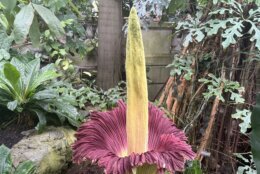
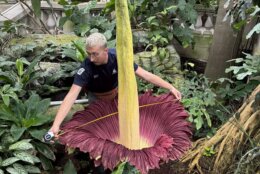
It’s big, it’s beautiful and it’s stinky. It’s also in bloom in D.C., though not for long.
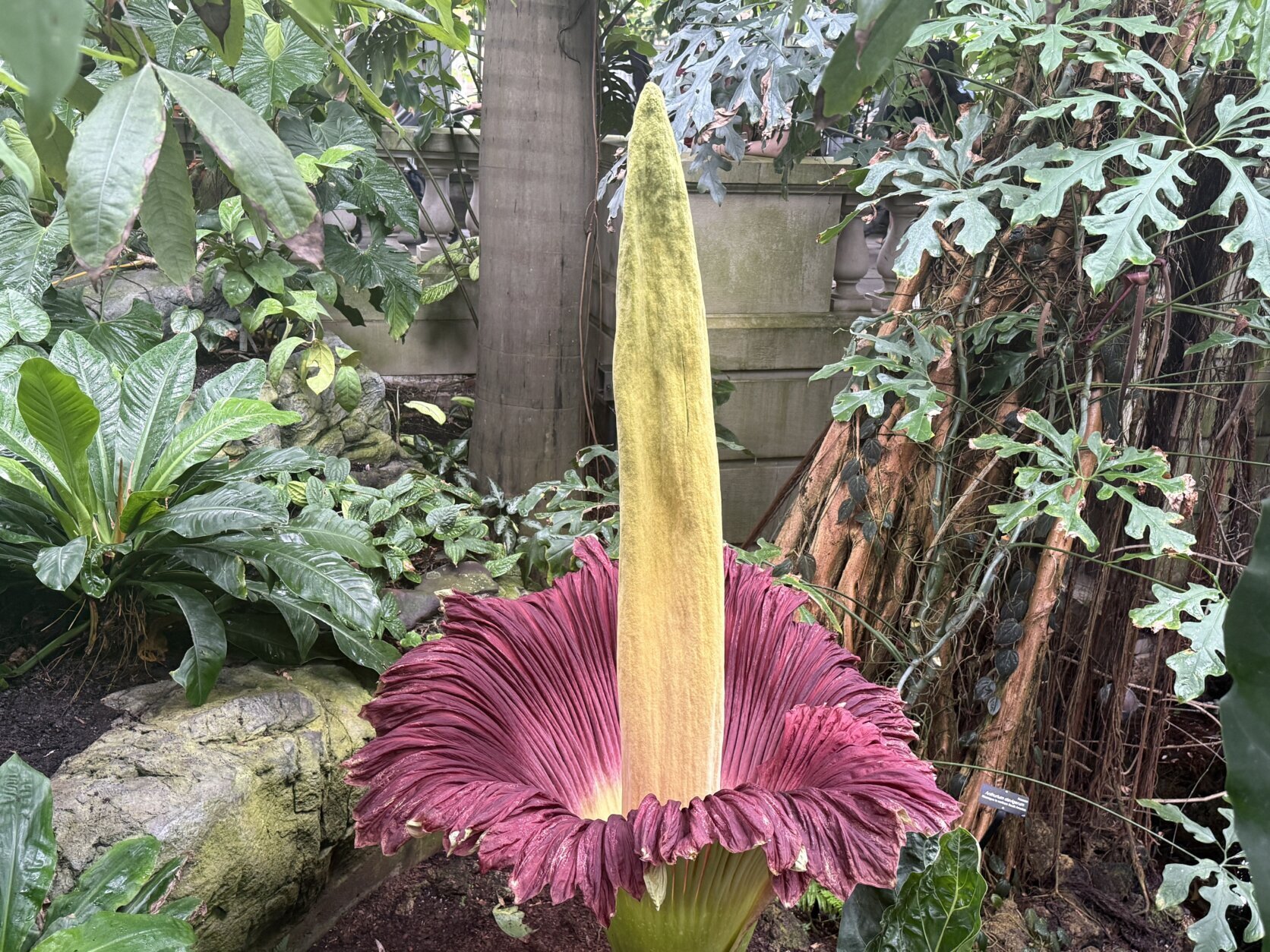
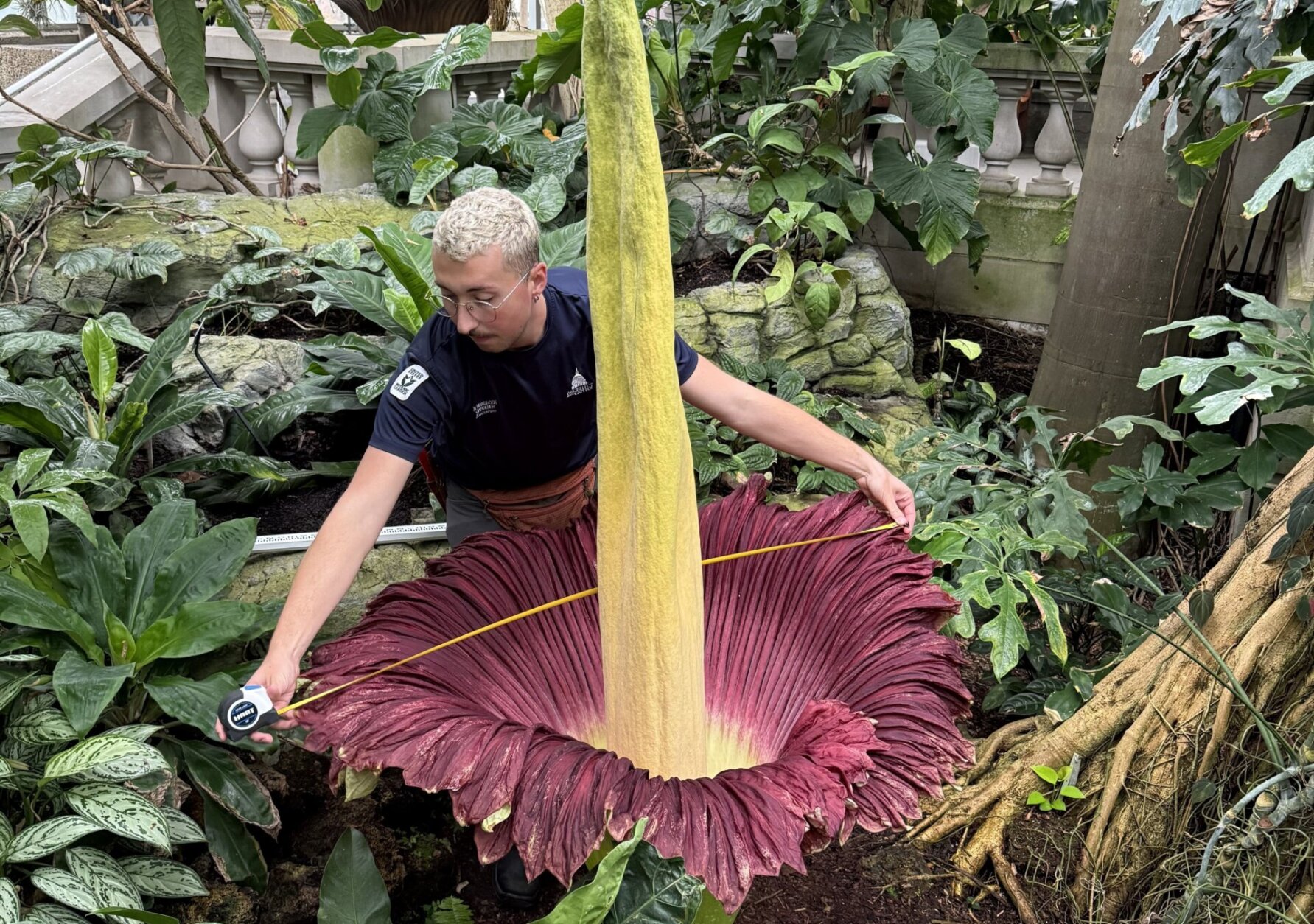
The scientific name for the giant plant is Amorphophallus titanum. But it’s most commonly known as the corpse flower and it’s currently in bloom at the United States Botanic Garden.
“Smells great if you like the smell of corpse and anything rotting,” D.C. resident Evan Kinnevan said.
“It smelled pretty bad,” Bethesda resident Rob Allegar said. “It smells like rotting garbage and diapers put together.”
“It smells like rotten food or like garbage that’s been left out,” D.C. resident Vianne Singh said.
Late Tuesday night, it smelled like “way past just a dead mouse,” Devin Dotson, a spokesman for the United States Botanic Garden said. “You’ve got multiple, like, five and six dead mice in one room that’s died.”
He also described the smell inside the greenhouse this morning as “a trash can in the middle of the summer, and it was really bad, and full of stinky trash that was hot and stinking” with dead mice attached to it. He added it smelled fishy and garlicky.
That’s a lot of different aromatic sensations.
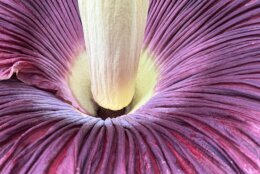
“It goes through different smell cycles,” Dotson said, as chemicals ramp up and rise through the central spade of the plant.
So, why does it do this?
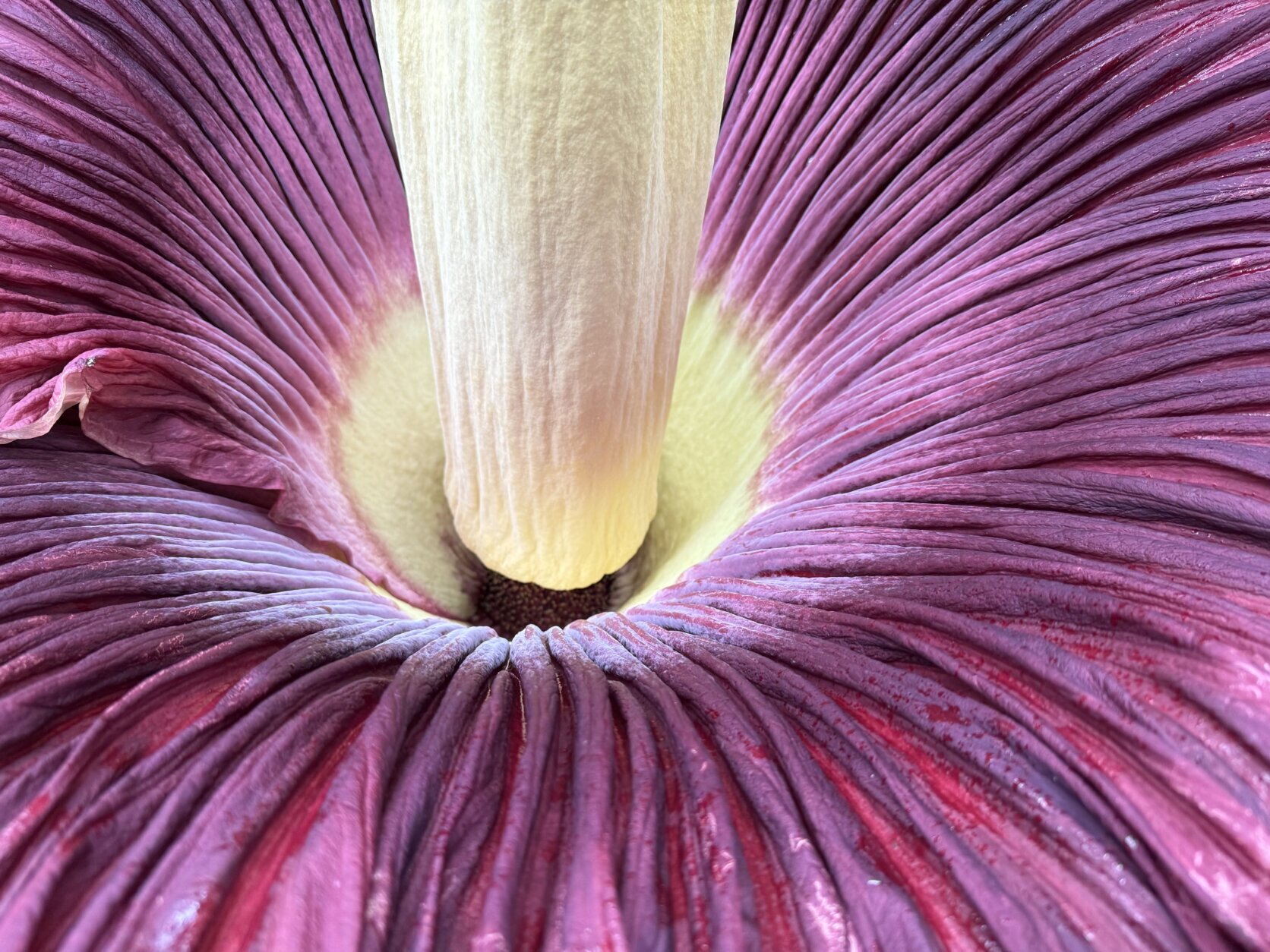
“Unlike some things you might think want to attract bugs to eat, this is not trying to eat them,” Dotson said. “It’s trying to use them for pollination. It’s the same reason it’s red colored on the inside. It’s trying to mimic a dead animal. And it’s trying to bring things that normally would come and lay their eggs in a dead animal carcass to have their larvae feed on the dead animal.”
Not everyone who showed up thought it smelled as bad as they expected, and it does fade as you get used to the air in the greenhouse. However, it also has a really short “peak bloom” period, and the pungent aroma starts to fade as the flower starts to close up again. By the weekend, this particular smell and bloom will be just a memory, and it’ll be a few years before this one blooms again.
However, Dotson said he’s hopeful that other corpse flowers they have on hand will bloom this summer. If not this summer, there’s always next summer.
Get breaking news and daily headlines delivered to your email inbox by signing up here.
© 2025 WTOP. All Rights Reserved. This website is not intended for users located within the European Economic Area.