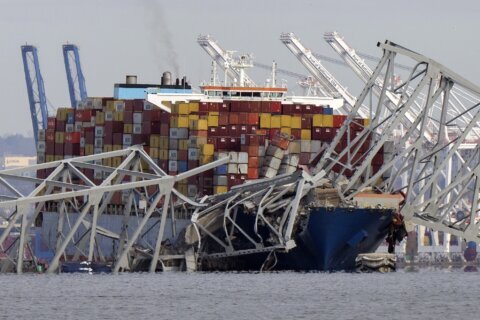
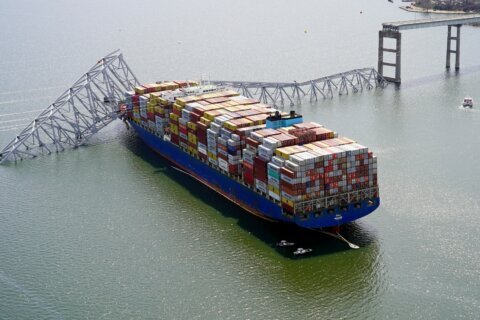
When the Francis Scott Key Bridge in Baltimore collapsed two years ago, everyone knew life was going to change.
“I actually did not believe it,” said Gloria Nelson, who lives in the Turner Station neighborhood of Dundalk.
She lived close enough that people in her neighborhood were calling in the middle of the night.
“The bridge was a lifeline connecting us from point A to point B. It was just … naturally there. We just automatically went across the bridge every day, each day,” she added.
That’s no longer the case, and Laura Quintana, who owns a jewelry shop in Dundalk called Little Crystal Bijoux, can attest to that as much as anyone.
“A lot of my regular guests either work in the city or in Baltimore County, but they live in Anne Arundel or (Prince George’s) County, and my shop was on their way home,” Quintana said.
“If … they just needed to pick up a gift or something for a friend, I was only maybe 15 minutes away. But with the bridge coming down, I’m no longer on their way home. In fact, I’m out of their way.”
The bridge collapse resulted in a 40% drop in business, Quintana told reporters on a call organized by the Maryland Transportation Authority.
“The issue is out of sight, out of mind … and I became an inconvenient place to shop,” she said. “Most of my business these days is on my website, whereas before it was mostly foot traffic.”
Nelson said she’s accepted the change as her “way of life for the next several years.”
She said accidents involving trucks happen with more frequency than before, though she doesn’t blame them for turning Dundalk into an industrial cul-de-sac. Without the bridge, there’s only one way in and out of the port.
“They’re trying to make money. But nevertheless, when that happens, it’s an accident somewhere that stops all of the traffic,” Nelson said.
Because of that, she and others have altered driving patterns. During the afternoon rush, she said, it’s just not worth leaving if you don’t have to.
“It’s a disconnect for our community,” Nelson said. “Because folks that were commuting back and forth no longer commute. … It takes an additional 45 minutes to an hour to go around, and it depends on traffic. So we have had the challenge of feeling disconnected.”
She credited state leaders with keeping the community informed about what’s going on with the bridge redevelopment project, especially when the construction might be noisy or disruptive. It’s a lifestyle adjustment, but one Nelson said she’s looking forward to being able to leave behind when a new bridge is built.
“There are challenges, and I tell you, next year this time, it may be a different challenge,” Nelson said. “But we are survivors. We will make it through this.”
Get breaking news and daily headlines delivered to your email inbox by signing up here.
© 2026 WTOP. All Rights Reserved. This website is not intended for users located within the European Economic Area.