D.C. health officials are lifting a recreational advisory on the Potomac River, citing an improvement in water quality after a sewage line collapsed in January.
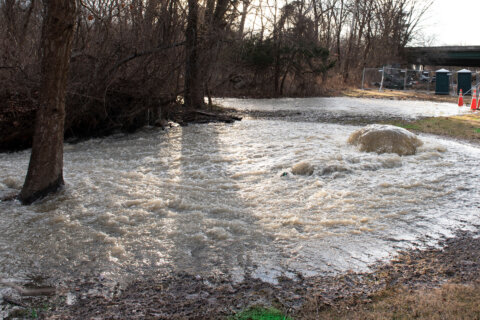
A section of the Potomac Interceptor collapsed Jan. 19, spilling hundreds of millions of gallons of untreated sewage into the river and creating a stinky environmental disaster.
D.C. Health lifted the advisory Monday and said daily testing showed bacterial levels are within safe ranges for recreational activities nearby the collapse.
Swimming isn’t allowed in the Potomac, unless you’re given special permission. But health officials had warned people to avoid contact with the water, and to take special care with activities such as fishing nearby the spill.
D.C. Water, which operates the 54-mile long sewer line, has been monitoring the water quality at multiple sites along the Potomac River and the Anacostia River.
“After careful review of the last three weeks of water quality data, we are confident that conditions in the District’s portion of the Potomac River no longer pose an elevated public health risk,” Dr. Ayanna Bennett, D.C. Health’s director, said in a statement. “This advisory applies only to waters within the District of Columbia, and we encourage residents to follow guidance from neighboring jurisdictions for areas outside the District’s boundaries.”
According to D.C. Health, E.coli levels have stayed within a normal range for the past 21 days and met standards set by the Environmental Protection Agency.
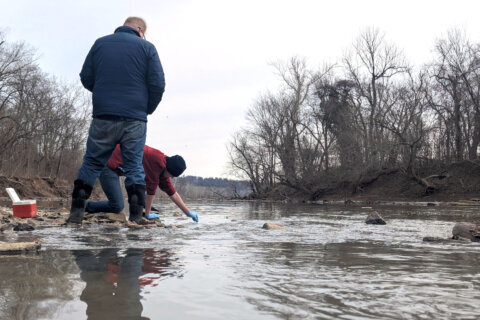
Testing by scientists with the University of Maryland measured E.coli levels 4,000 times above recreational water standards in early February. Those tests also detected staphylococcus aureus and the antibiotic resistant strain of staph aureus.
A professor with the university told WTOP in February the bacterial levels could be dangerous to humans.
Officials have said the quality of drinking water was not impacted by the collapse. Drinking water in D.C. is pulled from upstream of where the collapse occurred.
The 72-inch pipeline burst Jan. 19, sending 250 million gallons of untreated sewage into the Potomac River in the first five days.
The repairs were slowed by a rock dam that was discovered after the initial collapse. That obstruction meant crews had to stabilize the area and then cut into the top of the pipe so machinery could remove the remaining debris.
The CEO of D.C. Water has said the repairs and clean up will cost about $20 million.
Late last month, President Donald Trump approved emergency assistance to help D.C. address the leak.
Get breaking news and daily headlines delivered to your email inbox by signing up here.
© 2026 WTOP. All Rights Reserved. This website is not intended for users located within the European Economic Area.