SEOUL, South Korea (AP) — The U.S. and South Korean militaries were wrapping up their annual drills six days earlier than initially scheduled on Friday in a conciliatory gesture toward North Korea, though the North said the step isn’t enough to convince it to return to talks.
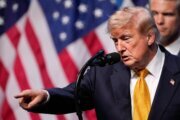
U.S. President Donald Trump had earlier abruptly ordered the Pentagon to “substantially reduce” the Ulchi Freedom Shield exercises just before they began Monday. Trump cited what he described as a good relationship with North Korean leader Kim Jong Un and South Korea’s refusal to support him over the war in Iran.
Kim Yo Jong, the influential sister of North Korean leader Kim Jong Un, brushed aside Trump’s overture on Wednesday, saying “the provocative, aggressive nature of the drills” won’t change only with the reduction of their duration and size.
The next day, North Korea fired about 10 short-range ballistic missiles toward the sea, apparently following through with its previous threat to respond to the U.S.-South Korean drills that it views as an invasion rehearsal.
The U.S. Pacific Command said the events didn’t pose an immediate threat to U.S. territory or its allies. The command said the U.S. remains committed to the defense of the U.S. homeland and its allies in the region.
Kim Yo Jong’s statement dampened hopes for an early resumption of talks between Trump and Kim Jong Un, whose earlier nuclear diplomacy collapsed in 2019. Kim Jong Un has used the diplomatic stalemate to increase his leverage by modernizing his nuclear and missile programs and aligning with Russia over its war against Ukraine. Kim Jong Un suggested last year that he won’t return to talks unless the U.S. drops its demand for North Korean denuclearization as a precondition for diplomacy.
Kim Yo Jong still used relatively measured language, avoided typical harsh North Korean rhetoric and touched upon what she called an “excellent” relationship between her brother and Trump. This suggests North Korea doesn’t want to completely shut the door for future talks and may seek to win bigger U.S. concessions, such as international recognition as a nuclear state and broad sanctions relief.
With its supply of ammunition and troops to Russia, North Korea is likely receiving economic and military assistance in return, and its expanding ties with Russia provides it with leverage to ask for greater support from China, its biggest trading partner.
“After this strategic play has run its course, Kim may seek further economic and reputational benefits from Washington,” said Leif-Eric Easley, a professor at Ewha University in Seoul. “But that will probably be after the U.S. midterm elections when Trump is expected to be in a weaker domestic political position and in search of headline-grabbing foreign policies.”
Kim Dong-yub, a professor at the University of North Korean Studies in Seoul, said that Kim Yo Jong’s statement showed North Korea’s position that a personal relationship between her brother and Trump “can’t be a factor that moves current North Korean-U.S. relations.” He said Kim Yo Jong likely aimed to head off speculation that Trump’s move can restore diplomacy so as not to fully take the blame when it doesn’t happen.
Kim Yo Jong denied Trump’s claim that Kim Jong Un had responded to his request for a conversation. When asked by reporters Wednesday if he would be meeting with Kim Jong Un this year, Trump said that “Yeah, I will be.”
The Ulchi Freedom Shield is one of the main military exercises conducted by the U.S. and South Korea annually to enhance their ability to cope with potential North Korean aggression. Its downsizing has caused worries about joint U.S.-South Korean readiness.
Copyright © 2026 The Associated Press. All rights reserved. This material may not be published, broadcast, written or redistributed.