This article was reprinted with permission from Virginia Mercury.
After a decrepit pipe burst in Maryland last month and sent hundreds of millions of gallons of raw sewage spewing into the Potomac River, a Virginia lawmaker is now urging the state’s health department to take concrete steps to address the environmental disaster’s potential health risks to residents.
“This one will trickle down over time, and I’m very worried about the contamination as it goes,” Sen. Richard Stuart, R-King George, said in an interview Friday.
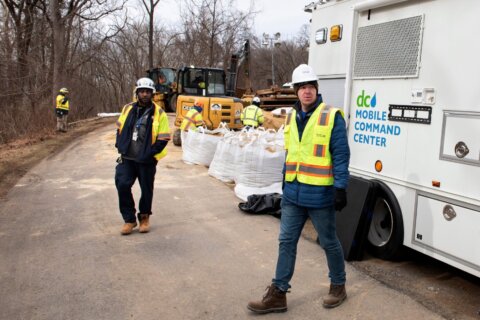
The DC Water system owns the pipe that broke in Montgomery County, Maryland on Jan. 19 and leaked over 243 million gallons of sewage into the waterway. The agency estimates it will take about six weeks for a temporary fix on the pipe – and nine months for a permanent solution.
Meanwhile, the Virginia Department of Health has issued a recreational advisory for 72.5 miles of the Virginia coast along the river, urging people to avoid touching the water and to be cautious when preparing seafood harvested from the river.
VDH has not issued any warnings for drinking water and Maryland has issued a shellfish closure only for the Port Tobacco River region down to the Harry W. Nice Bridge.
After one of his constituents asked VDH about potential contamination, Stuart said he was concerned to learn that the agency was not testing the water given the magnitude of the spill.
“VDH will not conduct water sampling. The agency does not operate a freshwater bacterial monitoring program for recreational waters, and the Potomac River falls under Maryland’s jurisdiction for water quality oversight,” VDH’s Feb. 14 letter read.
Stuart then sent his own letter to State Health Commissioner Dr. B. Cameron Webb.
“Virginians who fish, crab, boat, and recreate on the Potomac deserve proactive protection and transparency, not a declaration that no testing will occur because another state holds primary authority,” Stuart wrote to Webb on Wednesday. “Furthermore, there are miles of creeks and tributaries branching off the Potomac River that are unquestionably Virginia waters, directly impacting the health of our marine resources and shoreline communities that I represent.”
By Friday, Stuart said, the state’s top environmental agency had taken preliminary steps to test state waters.
“I have since learned that (Department of Environmental Quality) is engaged, and they are doing sampling in various places. They were sampling on the edge,” Stuart said Friday. “I asked them if they would please go out into the channel and do various water columns to determine if it’s on the top.”
The Virginia Department of Environmental Quality said in a statement that on Tuesday, the agency collected 25 surface water samples across the recreational advisory area from above the sewer line break to Potomac Creek in Stafford County. The results of those samples are pending.
The agency also said VDH staff “conducted a routine seawater sampling run for shellfish growing areas from Colonial Beach to the 301 (Harry Nice) Bridge, collecting 36 water samples in total. Based on their laboratory analyses, there were no elevated fecal coliform bacteria concentrations, with the vast majority of the samples at or below the detection limit for the test.”
VDH replied to Stuart on Wednesday in a letter obtained by The Mercury.
“We will continue sharing information, including sample results, between VDH, DEQ, Alex Renew, DC Water, MDE and VDEM. VDH staff are also maintaining communication with seafood industry stakeholders and watermen to provide timely, accurate information,” Lance Gregory, Director of VDH’s Office of Environmental Health Services, wrote.
Gregory also said that the agency, in partnership with the Marine Advisory Board, “developed a mapping resource that illustrates the spill’s geographic scope relative to other productive waterways in the Commonwealth. This tool supports affected watermen in communicating clearly about the limited proximity of the incident to other harvesting areas and helps preserve confidence in Virginia seafood.”
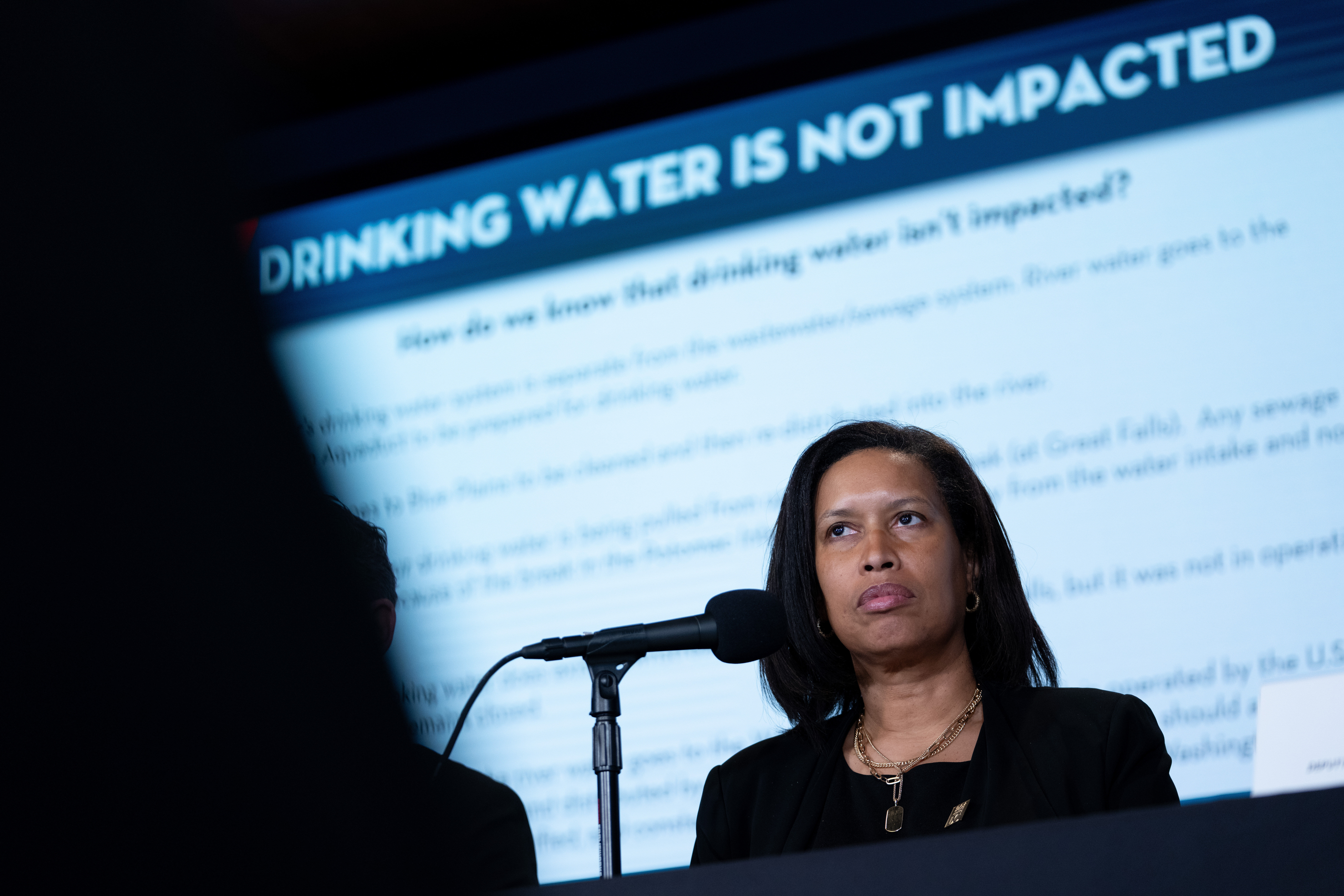
The state’s chief executive also weighed in on the disaster on Friday and said the state’s drinking water is safe.
“I’m encouraged that EPA and FEMA have begun coordinating with DC Water to respond to the sewage spill in the Potomac,” Gov. Abigail Spanberger said in a statement. “Amid the response, our state agencies are conducting water quality testing and monitoring the status of repairs. Our focus is on Virginians’ health and safety. Virginians should know that the spill is not impacting our drinking water.”
Members of Virginia’s congressional delegation, along with Maryland officials, have written to DC water about their concerns over the health and environmental impacts of the spill. Still, Stuart is pushing for the state to do more.
“Maryland owns the Potomac, but a lot of people in Virginia make their (livelihood) on it, and we eat a lot of the seafood that comes out of it. It’s a very productive river, despite how badly we treated it over the years,” Stuart said.
Conservation group Potomac Riverkeepers Network agrees with the senator that this extreme of a situation calls for different approaches on how to handle it.
“The historic sewage spill and the ongoing risk of intermittent overflows demands a departure from the status quo,” said David Flores, the Vice President of the Potomac Riverkeepers Network. “Virginians deserve more, not less, water quality monitoring and long-term assessments to protect their safety and the Commonwealth’s natural resources. This responsibility should not be deferred to another state.”